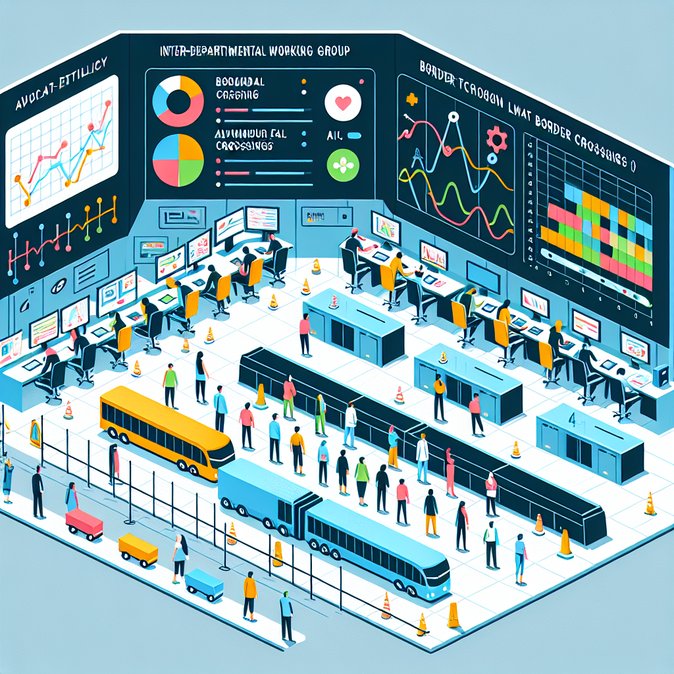
Hong Kong’s Immigration Department (ImmD) has issued its first quantitative forecast for the forthcoming Labour Day Golden Week, projecting a staggering six million inbound and outbound passenger movements across the city’s air, land and sea checkpoints between 1 and 5 May. Five million of those trips are expected to occur at land boundary control points, underscoring how deeply business and leisure ties with neighbouring Guangdong have rebounded since border reopening. Based on data exchanged with Shenzhen’s General Station of Exit & Entry Frontier Inspection, ImmD believes the single-busiest days will be Saturday, 2 May, and Sunday, 3 May, when crossings could hit 636,000 and 688,000 respectively. Lo Wu Station, gateway to the East Rail Line, is forecast to handle 246,000 daily passengers, while the Lok Ma Chau Spur Line will see around 227,000, and Shenzhen Bay control point 172,000. To cope, the department has cancelled non-essential leave for frontline officers, opened temporary counters and reconfigured vehicle channels to flexible “swing” modes that can be toggled between arrivals and departures. A new Joint Command Centre—staffed by Police, Customs and MTR personnel—will sit physically inside Lo Wu, giving commanders a single picture of crowd density, e-Channel utilisation and shuttle-bus queues. ImmD is also leaning on technology. The Security Bureau’s “Easy Boundary” one-stop portal now publishes live wait-time estimates for every land port, the HZMB Gold Bus and the Huanggang Yellow Bus. Corporates can scrape the API to feed wait-time data into their travel-management systems, allowing real-time itinerary tweaks for roaming executives or service engineers. For firms running just-in-time supply chains or field-service rosters, the forecast translates into potential delays of 30-45 minutes at peak hours unless staff depart earlier or shift to the Express Rail Link. Travel managers should circulate contingency guidance and lock in hotel rooms near client sites on the Mainland side in case late-night returns become impractical.
Source: news.gov.hk