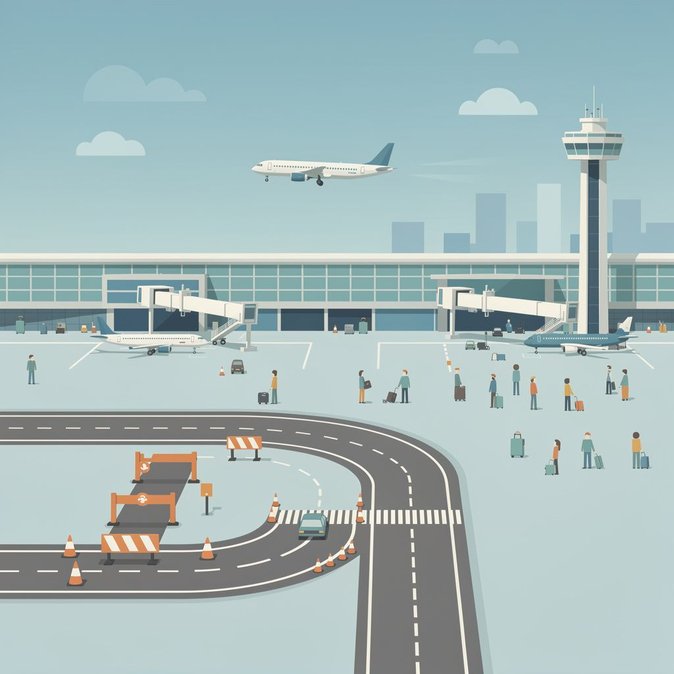
Municipal leaders from São José do Rio Preto met federal regulators in Brasília on 11 June 2026 to push the Professor Eribelto Manoel Reino State Airport from its current ad-hoc international status to full, year-round certification. Representatives of ANAC, the Ministry of Ports and Airports, the Ministry of Finance and Brazil’s customs, health-inspection and agriculture agencies reviewed passenger-flow studies and cargo projections for the agribusiness-rich northwest of São Paulo state. The field currently holds a temporary waiver that allows international charter flights during Mirassol FC’s Copa Libertadores matches. For permanent status, authorities requested upgrades to the customs inspection area, the installation of a dedicated Federal Police post and a reverse-flow baggage scanner that meets ICAO standards. The city pledged R$28 million—half financed through the state development bank—to complete works by February 2027. Airlines Azul and Gol signalled interest in launching seasonal services to Santa Cruz de la Sierra and Asunción if the airport receives its new code designation. Local exporters of fresh produce, pharmaceuticals and high-tech medical devices anticipate logistics savings of up to 20 % versus routing through Campinas (VCP) or Guarulhos (GRU). From a mobility standpoint, a fully international Rio Preto hub would create a northern gateway for corporate travellers in interior São Paulo, reducing surface transfers and freeing capacity at congested hubs. Human-resources teams should update travel-policy matrices once customs operations and e-gate immigration channels go live, projected for Q3 2027. The move aligns with the federal strategy of decentralising Brazil’s international air network, encouraging regional airports to absorb future World Cup traffic and rising demand from Chinese and Mexican visitors benefiting from recent visa waivers and eVisa schemes. Businesses with operations in the agro-industrial corridor should begin scenario planning for direct exports and inbound technical missions via the new port-of-entry.
Source: Correio da Manhã