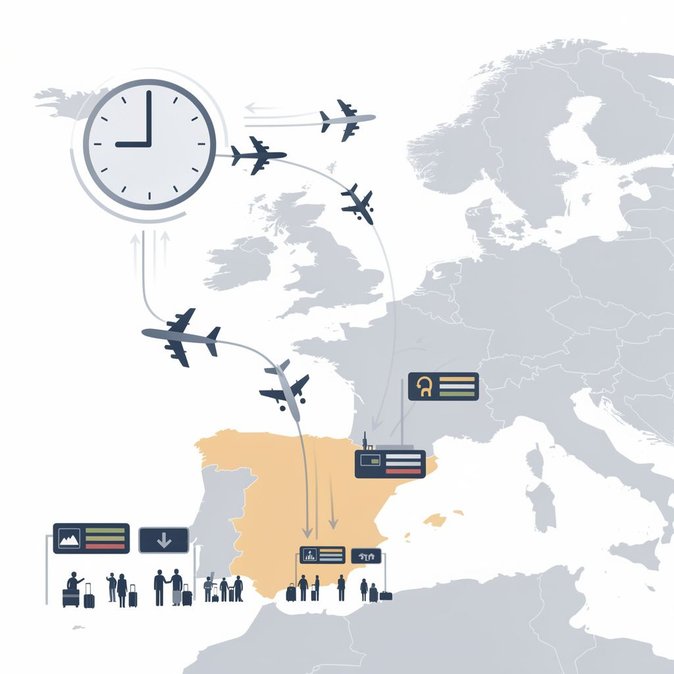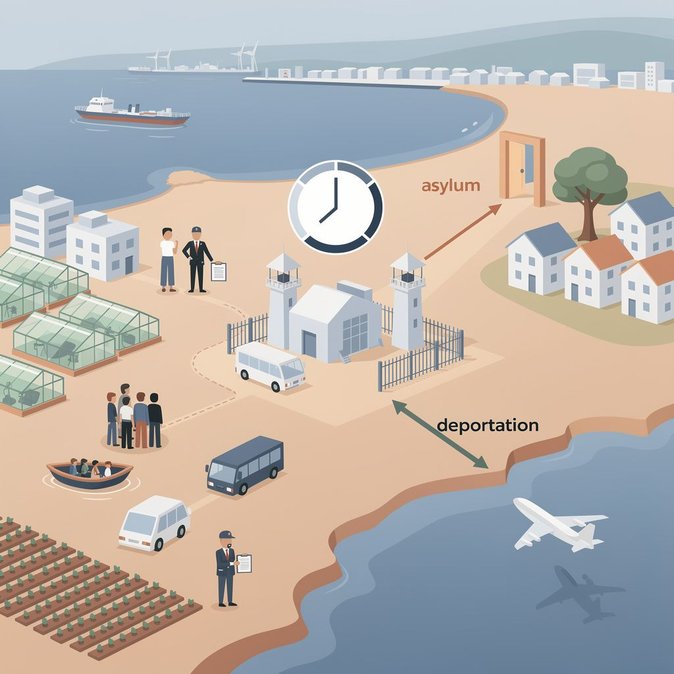
Spanish authorities have confirmed that the annual Operation Paso del Estrecho (OPE) will begin on Monday, 15 June, with more than 3.5 million passengers and 850,000 vehicles expected to move between Spain and North Africa during the summer peak. The 36th edition of the operation coincides with the first mandatory use of the EU Entry/Exit System (EES) at the ports of Algeciras and Tarifa. Under the EES, non-EU travellers will provide fingerprints and facial images at self-service kiosks before boarding ferries. The government has invested €14 million in additional lanes, signage and mobile passport units to avoid bottlenecks. Police are authorised to suspend biometric capture for up to six hours if queues threaten safety, reverting temporarily to manual checks. Port operators warn that the new process effectively creates two parallel flows—EU and non-EU—that must be channelled through separate infrastructure. Logistics firms moving just-in-time automotive parts between Tangier and Spanish factories have been advised to schedule crossings outside the busiest “red days” (late July, late August) when wait times could double. Coordination with Moroccan authorities has intensified; joint drills were held last week to test data links between Spain’s police databases and Morocco’s migration directorate. Authorities say lessons from the 2025 record year—3.5 million passengers—have informed contingency plans for heatwaves, medical emergencies and potential ferry breakdowns. For companies relocating staff to Morocco or Algeria, mobility teams should brief travellers on EES registration, encourage digital ticket purchases and allow buffer time on either side of the Strait in case of biometrics-related delays. Car-hire firms are also updating contracts to reflect possible extra ferry-queue surcharges.
Source: Cadena SER