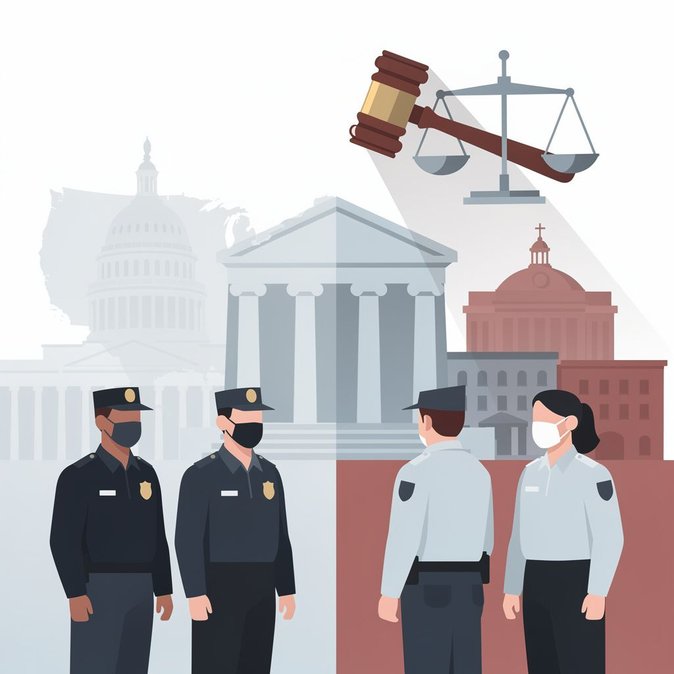
The U.S. Justice Department on June 13 filed suit in the Eastern District of Virginia to block two state statutes that restrict how federal immigration agents operate inside the Commonwealth. One measure—set to take effect July 1—bans federal officers from wearing face coverings while on duty and requires visible name or badge identification. A companion law bars state and local police from entering or renewing 287(g) agreements with U.S. Immigration and Customs Enforcement (ICE) unless strict public-hearing conditions are met. Federal lawyers argue the provisions violate the Supremacy Clause by regulating the manner in which federal officers perform immigration duties. The 34-page complaint warns the mask ban would expose ICE agents to doxing and retaliation and force DHS to conduct riskier street arrests if local jails can no longer honor detainers. Virginia’s Democratic Governor Abigail Spanberger defended the statutes as transparency measures that build trust with immigrant communities. Immigrant-rights advocates say the laws mirror so-called “sanctuary” standards already upheld elsewhere, while Republican critics call them an “open-border gift.” For employers, the legal showdown could affect workplace enforcement patterns. If ICE loses local cooperation, agents may pivot to I-9 audits as an alternative to field arrests. Conversely, a federal victory would reaffirm Washington’s ability to override state limits, potentially emboldening cross-deputization programs in other jurisdictions. The case will be closely watched by multinational firms with operations across multiple states: a ruling clarifying the boundary between state sovereignty and federal immigration power may set precedent for how future state-level data-privacy or labor-rights laws can—or cannot—constrain federal enforcement activity.
Source: The Washington Post