Ireland spends €1.6 million on deportation flights in first four months of 2026
42 South-African citizens removed from Ireland on special charter flight
Passport Service Warns of Summer Rush as 400,000 Documents Already Issued in 2026
Latest News
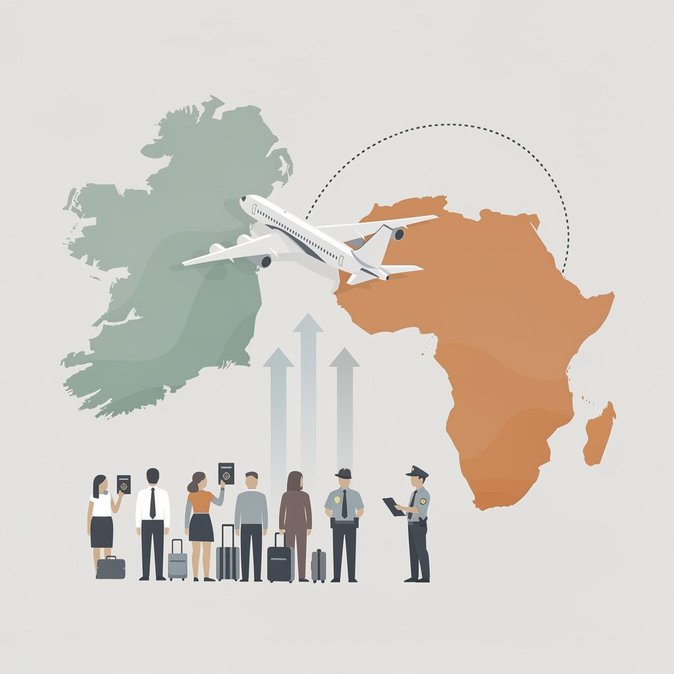
Ireland Operates Fourth Deportation Charter of 2026, Signalling Tougher Enforcement
Ireland deported 42 people to South Africa on 18 June, its fourth charter removal of 2026 amid a sharp rise in deportation orders. The Government says tough enforcement underpins public confidence as asylum reforms bed in.

Charter Flight Removes 40 Irregular Migrants to South Africa in First Large-Scale Deportation of 2026
Ireland executed its first large-scale deportation of 2026 on 19 June, flying 40 South Africans out of Dublin on a government-chartered aircraft. The move underscores a ramp-up in enforcement ahead of the busy 20 June travel weekend and foreshadows additional charter removals. Employers must maintain tight compliance on immigration permissions to protect assignees.

Stricter Financial Thresholds Introduced for Non-EEA Family Reunification
Effective 12 June, Ireland has tightened its Non-EEA Family Reunification Policy, raising income thresholds for Irish sponsors and adding accommodation-proof requirements for employment-permit holders. Refugees must wait two years before applying to reunite with family. The changes add cost and complexity to dependent moves starting 20 June and may affect talent retention.

EU Migration Pact Begins; Ireland Adopts 12-Week Border Procedure
The EU Migration and Asylum Pact took effect on 12 June, obliging Ireland to issue decisions on ‘safe-country’ asylum claims within 12 weeks. The accelerated timetable is already live under a Citywest pilot and may tighten carrier-liability rules affecting corporate travel. NGOs fear due-process shortcuts, while employers should monitor knock-on effects for staff seeking protection status.

International Protection Act 2026 Takes Effect, Introducing Accelerated Border Procedure
Commencing on 12 June 2026, the International Protection Act introduces biometric screening, a three-month Border Procedure for low-recognition-rate nationalities and a new appeals tribunal, aligning Ireland with the EU Migration and Asylum Pact. The accelerated timelines will affect employers of asylum-seekers and increase compliance scrutiny.

Family-Reunification Rules Tighten: Higher Income Thresholds and Two-Year Wait for Refugees
Sweeping amendments published on 12 June 2026 raise the income bar for Irish citizens sponsoring family and impose a two-year residency wait plus financial conditions for refugees seeking reunification. Employers and assignees must budget carefully for accommodation evidence and higher earnings benchmarks.

Data Show 90 % of Asylum Seekers Enter Ireland via Northern Border
GNIB data suggest 90 % of asylum applicants enter the Republic through the Northern Ireland land border, reigniting debate over the Common Travel Area. Any future border checks could slow cross-border commuter flows critical to multinational employers. Companies should watch for summer enforcement activity beginning around 20 June.

Family-Reunification Rules Tighten: Higher Income Thresholds and Two-Year Wait for Refugees
Revised family-reunification rules impose a €75,000 income requirement on Irish citizens and a mandatory two-year wait for refugees before applying. Sponsors in supported accommodation are ineligible.

Employment-Permit Lists Updated to Ease Housing, Health and Transport Skills Shortages
Ireland has added 32 roles to its employment-permit eligibility lists and signalled flexibility on the 50:50 local-hire rule, helping employers recruit overseas talent for construction, healthcare and transport projects.
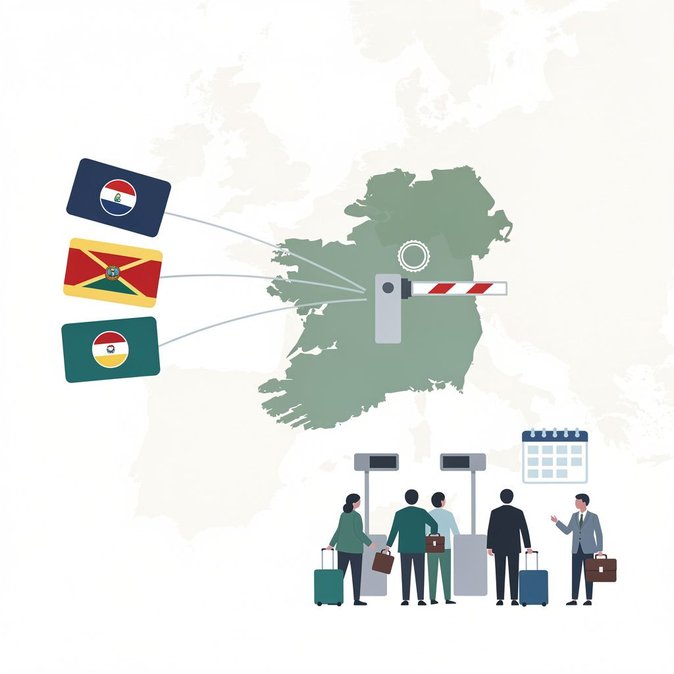
Ireland Tightens Visa Regime for Nicaragua, Saint Kitts & Nevis, and Saint Lucia
From 15 June 2026, nationals of Nicaragua, Saint Kitts & Nevis and Saint Lucia become visa-required for Ireland, ending their previous visa-waiver status. Transitional arrangements run until 14 July, but companies should plan on a six- to eight-week lead time for future trips. The change further aligns Ireland with UK/Schengen policy and may affect summer business travel itineraries.

Cindy Carroll Named First Chief Appeals Officer of New TARA Tribunal
Cindy Carroll has been appointed Chief Appeals Officer of the new Tribunal for Asylum and Returns Appeals (TARA), which handles all appeals lodged under the International Protection Act 2026. Her task is to embed paperless case-management and deliver decisions within 12 weeks.
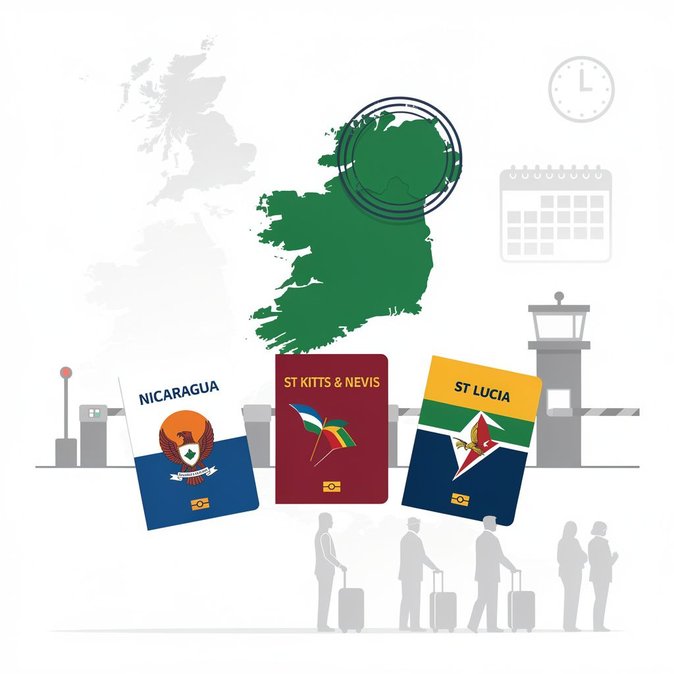
Ireland Adds Nicaragua, St Kitts & Nevis and St Lucia to Visa-Required List
Ireland has introduced visa requirements for nationals of Nicaragua, St Kitts & Nevis and St Lucia, effective 15 June with limited transitional relief until 14 July. The decision, announced on 11 June, brings Ireland’s visa list in line with the UK and Schengen and forces employers and tour operators to factor in extra lead-time for C-type visas. Companies with short-notice assignees from the three countries now face processing delays and higher compliance risk.

Government Expands Employment-Permit Occupation Lists Across Construction, Health and Transport
Ireland has opened 32 new roles to employment-permit sponsorship and upgraded six of them to the Critical Skills list, effective immediately. The 11 June update eases hiring across construction, healthcare, transport and agri-food just as organisations finalise summer intake plans. Global mobility teams should cross-check recruitment pipelines and salary offers against the revised lists before lodging applications.
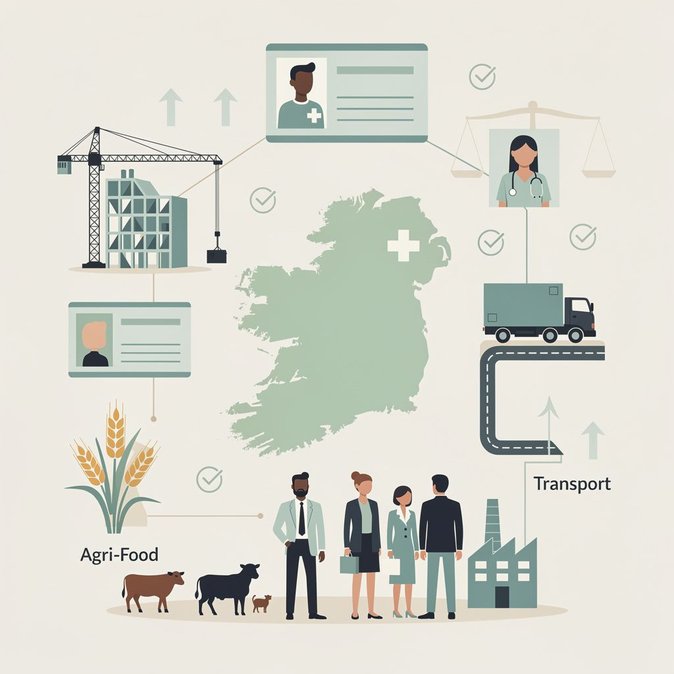
32 Occupations Added or Upgraded in Major Irish Employment-Permit Overhaul
Enterprise Minister Peter Burke has added 32 roles to Ireland’s employment-permit eligibility lists—six to Critical Skills, nine to General Employment, two new quota categories, and 15 quota renewals—effective immediately. The move targets labour shortages in construction, healthcare, transport and agri-food and foreshadows flexibility in the restrictive “50:50” rule.
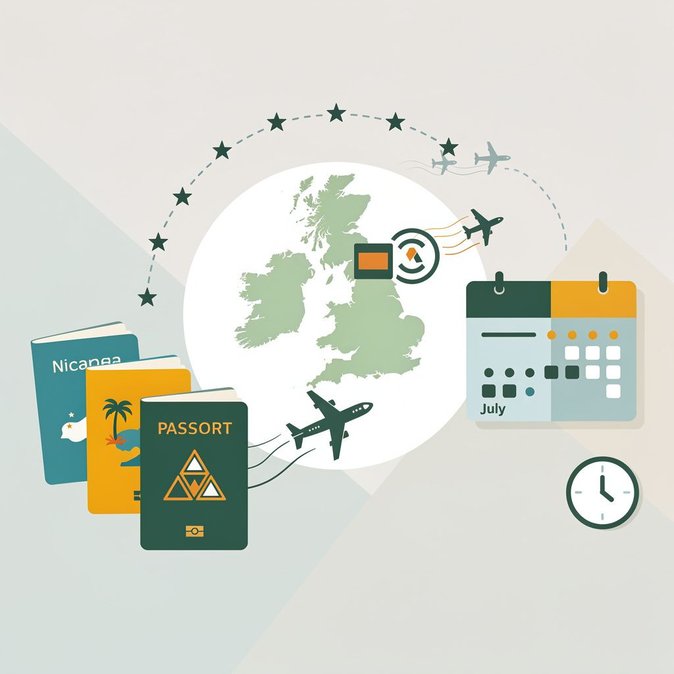
Ireland Imposes Visa Requirement on Nicaragua, St Kitts & Nevis and St Lucia Nationals
From 15 June 2026, citizens of Nicaragua, St Kitts & Nevis and St Lucia must obtain an Irish visa—including for transit—before travelling. A narrow concession covers tickets purchased before 15 June for arrival by 14 July. Companies must now build extra lead-time into travel plans and ensure dual-visa compliance for Schengen connections.
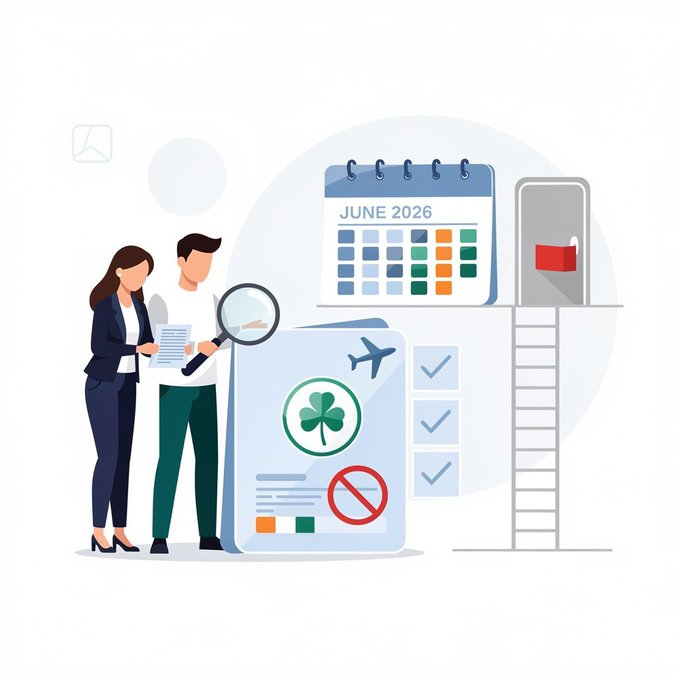
Appeal Rights Removed for Irish Short-Stay (Type C) Visa Refusals
From 1 June 2026, refusals of Irish short-stay visas are final—no administrative appeal is permitted except for EU free-movement cases. Businesses must intensify up-front due diligence as remediation now means re-applying, not appealing.

Appeal Route Axed for Most Irish Short-Stay Visa Refusals
Effective 1 June 2026, Ireland no longer allows appeals against most short-stay (Type C) visa refusals. Applicants who are not family members of EU/EEA/Swiss or UK citizens must file a brand-new visa application and pay another fee if refused. Corporations should strengthen initial document packages and add time buffers for Irish business-travel visas.
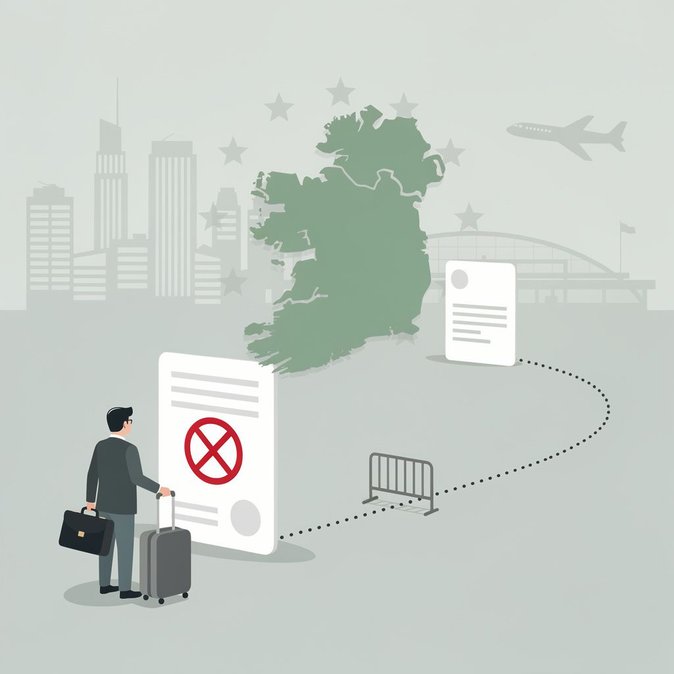
Ireland Scraps Appeals for Most Short-Stay Visa Refusals
From 1 June 2026, Ireland has eliminated the administrative-appeal route for almost all short-stay (Type C) visa refusals, leaving affected travellers to submit a brand-new application instead. The change reallocates resources to long-stay cases but increases risk and lead-time for business visitors.

Dublin Airport Deploys 25 Next-Generation eGates to Speed Arrivals
Twenty-five new eGates went live at Dublin Airport on 25 May 2026, promising a 30 % throughput boost and new ID-card functionality. The upgrade should ease summer arrival queues and prepares Ireland for the EU-wide Entry/Exit System.