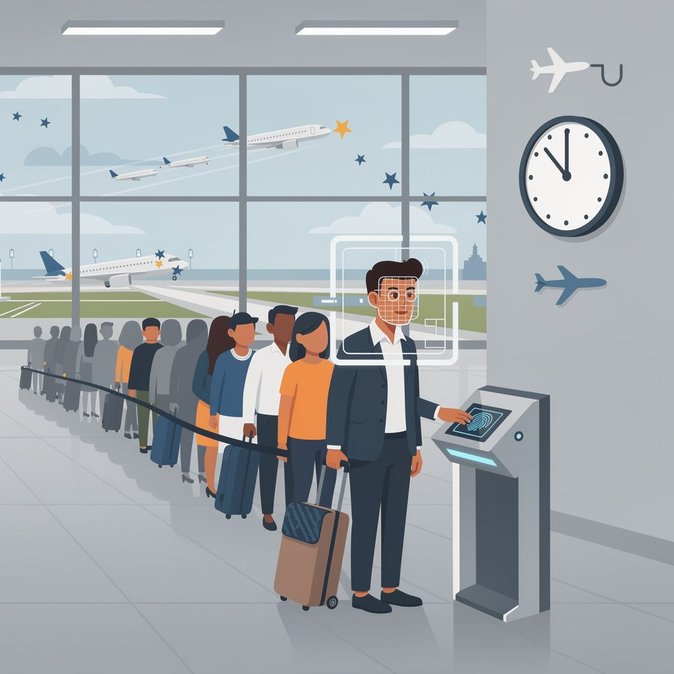
Europe’s long-planned Entry/Exit System (EES) chalked up another milestone on 23 June when Rome-Fiumicino became the latest hub to switch off manual passport stamping and require fingerprints and facial scans from all non-EU travellers. Paris CDG, Frankfurt, Amsterdam Schiphol and Barcelona completed the transition earlier this quarter, meaning most major airports on the Delhi-to-Europe route are now fully biometric. For Indian citizens—Europe’s second-largest long-haul market— the change adds a new procedural layer. First-time visitors must enrol four fingerprints and a live facial photo at an automated kiosk before seeing a border guard. The data are stored for three years and replace the old passport ink-stamp that proved hard to track for over-stayers. Airlines reported peak-hour wait times of 60-90 minutes at Fiumicino on day one, echoing scenes in Paris and Frankfurt earlier in the spring. Airports are rushing to install more kiosks and pre-enrolment pods, but staff unions warn that summer-holiday loads could overwhelm capacity. Travel risk managers are already advising Indian corporate travellers to allow at least two extra hours for connections inside Schengen. EU officials insist the system will strengthen security, automate over-stay calculations and eventually speed repeat visits because data are re-used. Yet tour operators fear first-time leisure groups may miss rail links or onward low-cost flights, inflating package prices. The Indian mission in Rome has opened a dedicated EES helpline and urged travellers to carry clear print-outs of onward itineraries to convince officers of their intent to exit within 90 days. Looking ahead, the European Travel Information and Authorisation System (ETIAS)—a paid electronic pass for visa-exempt nationalities—remains scheduled for late 2026. Indian travellers will continue to require a Schengen visa, but the combination of higher processing fees, ETIAS for stop-overs and now EES biometric queues means Europe’s regulatory burden is at its heaviest in decades.
Source: Travel and Tour World