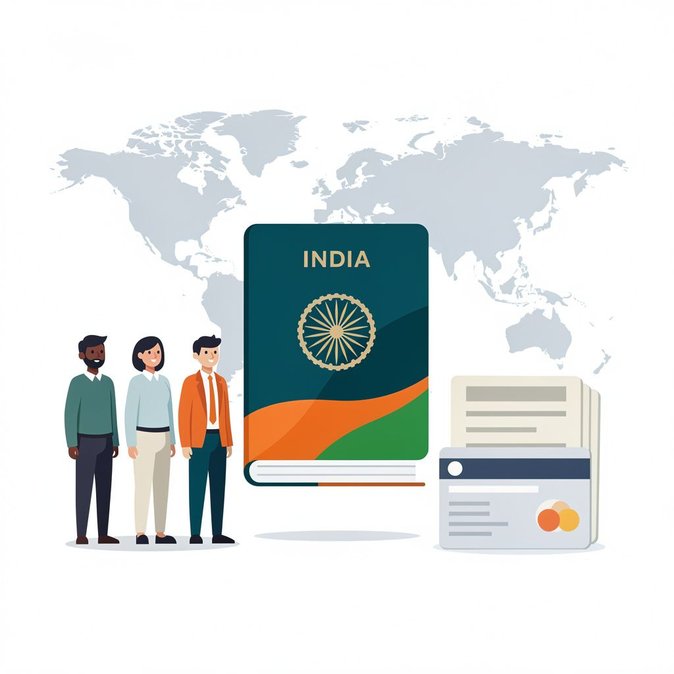
Celebrations marking Passport Seva Divas on 24 June—the anniversary of India’s Passports Act, 1967—took an unexpected turn when the Ministry of External Affairs (MEA) clarified that an Indian passport is "merely a travel document and not, in itself, conclusive proof of citizenship." The remark, made during a press briefing and later amplified in regional media on 25 June, has prompted questions about documentation requirements for Overseas Citizen of India (OCI) holders and applicants under the newly digitalised e-OCI system. MEA officials stressed that the statement is administrative, not political: citizenship in India is governed by the Citizenship Act, 1955, and relevant rules—not by passport issuance. Yet advocacy groups fear the clarification could complicate renewal drives for the diaspora, especially minors who now face a ban on holding dual passports under rules notified in May 2026. Regional Passport Offices used the occasion to showcase the roll-out of Passport Seva 2.0, which integrates police verification, biometrics and courier tracking into a single dashboard. The Pune office reported a 35 % drop in average processing time since adopting the new platform. For travellers, the practical takeaway is unchanged: airlines and immigration treat a valid passport as the primary travel credential. However, lawyers advise Indian expatriates—particularly those in Gulf Cooperation Council states—to retain birth certificates and old passports when applying for OCI cards or proving lineage. The debate underscores a broader global-mobility trend: as governments digitise border systems, legal definitions of identity and nationality are increasingly decoupled from physical booklets, forcing mobile professionals to maintain layered documentation.