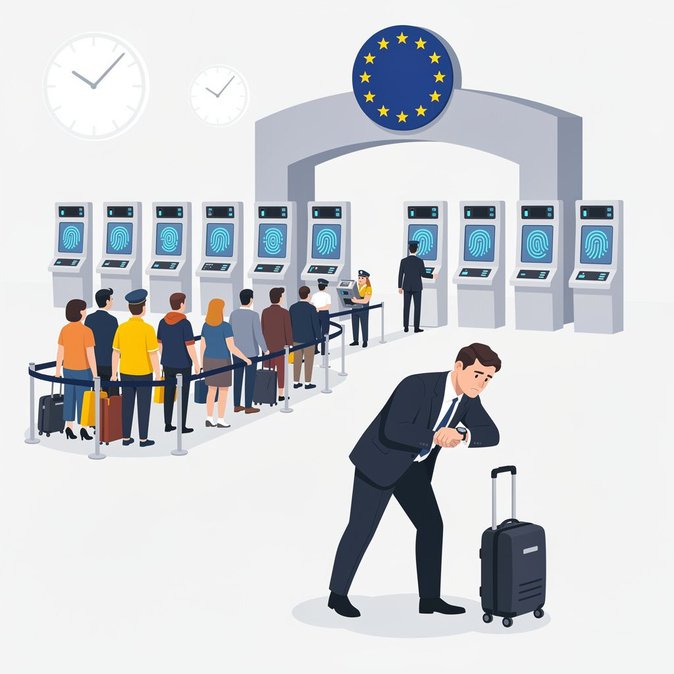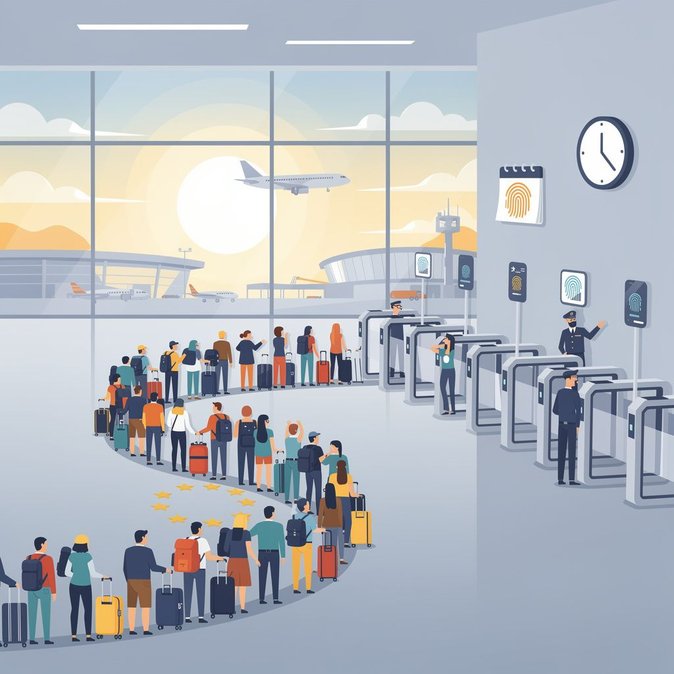
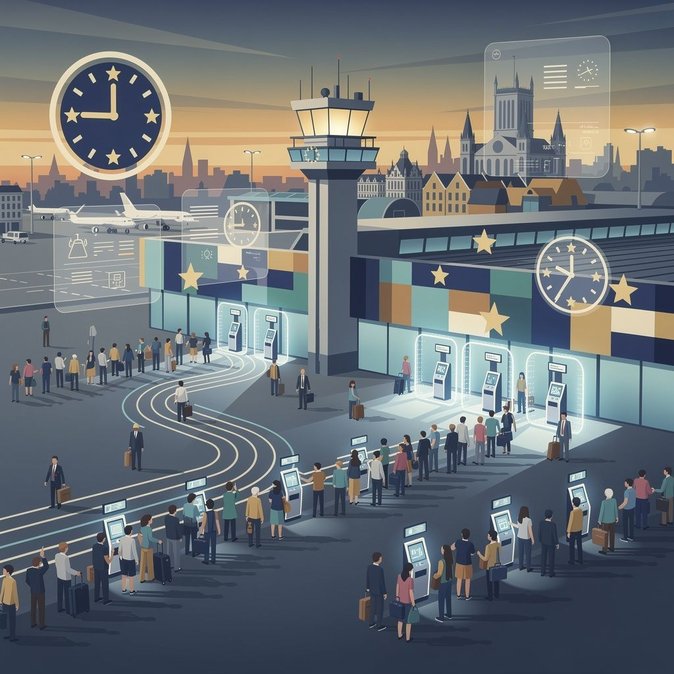
Echoing the Europe-wide appeal led by ACI Europe and IATA, Belgian aviation stakeholders on 1 July 2026 formally asked the European Commission to authorise suspension of the biometric Entry/Exit System (EES) whenever passenger volumes exceed capacity. The statement – issued jointly by Brussels Airport Company, ground-handlers and trade union representatives – warns that queues could top five hours during July-August unless the regulation is eased. Brussels Airport has already added two border-control points and installed 60 self-service kiosks, but spokesperson Nathalie Pierard said ‘hardware alone will not solve the staffing bottleneck’. Interior Minister Bernard Quintin pledged maximum federal-police staffing but confirmed Belgium would also make use of the Commission’s derogation to pause fingerprint capture for first-time arrivals should queues exceed 45 minutes. Industry concern is fuelled by forecasts that Brussels Airport passenger volumes will rise 6 % year-on-year this summer, with long-haul capacity returning to 2019 levels. Airlines fear missed connections will spike, triggering compensation claims under EU261 and straining customer-care teams already stretched by post-pandemic rehiring challenges. For employers, the upshot is continued uncertainty around inbound and outbound processing times. Mobility teams should warn travelling staff to build extra layover buffers and consider routing critical trips via less-congested gateways such as Amsterdam or Luxembourg when feasible.
![Belgian aviation sector backs EU-wide call to suspend biometric border checks]()
For organisations needing to juggle revised itineraries and last-minute documentation, VisaHQ’s online platform (https://www.visahq.com/belgium/) offers a one-stop service for Belgian and other Schengen visas, helping travellers secure the right paperwork quickly so that any rerouted or rescheduled flights stay compliant. By monitoring embassy requirements in real time, the service can lighten the load on HR and mobility teams already grappling with EES uncertainties.
HR departments overseeing global-graduate schemes that start each September may also need to adjust arrival schedules if EES delays drag into early autumn. The Commission has convened an extraordinary meeting with industry for 7 July. Should no compromise emerge, Belgian operators have hinted they might invoke national-security clauses to revert temporarily to manual stamping – a move that would require real-time IT re-configuration and could itself cause teething problems.
For organisations needing to juggle revised itineraries and last-minute documentation, VisaHQ’s online platform (https://www.visahq.com/belgium/) offers a one-stop service for Belgian and other Schengen visas, helping travellers secure the right paperwork quickly so that any rerouted or rescheduled flights stay compliant. By monitoring embassy requirements in real time, the service can lighten the load on HR and mobility teams already grappling with EES uncertainties.
HR departments overseeing global-graduate schemes that start each September may also need to adjust arrival schedules if EES delays drag into early autumn. The Commission has convened an extraordinary meeting with industry for 7 July. Should no compromise emerge, Belgian operators have hinted they might invoke national-security clauses to revert temporarily to manual stamping – a move that would require real-time IT re-configuration and could itself cause teething problems.