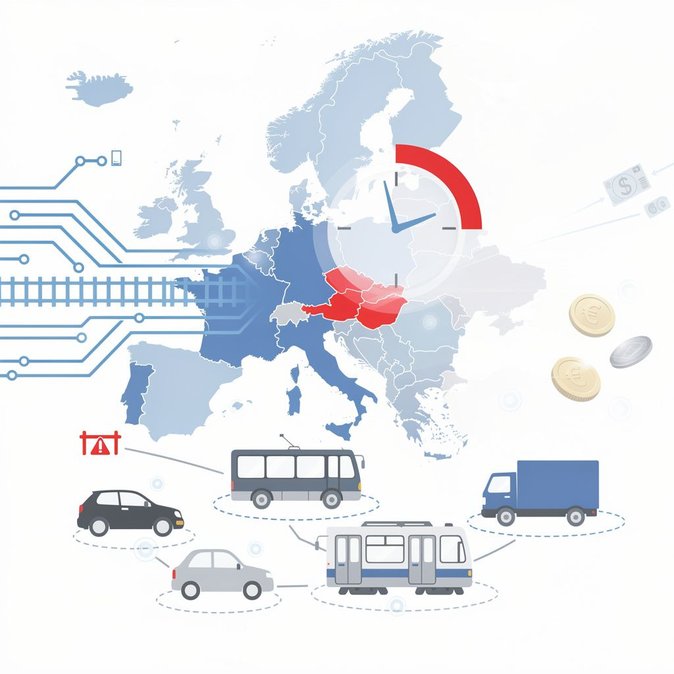
In its July infringement package released on 8 July, the European Commission issued a formal ‘reasoned opinion’ to ten member states—including Poland—for not implementing Directive (EU) 2023/2661 on Intelligent Transport Systems (ITS) by the 21 December 2025 deadline. Poland now has two months to notify full transposition or face referral to the Court of Justice and possible daily fines under Article 260 TFEU. The amended ITS Directive underpins the roll-out of connected-car data, multimodal ticketing apps and automated mobility services across the EU. For multinational employers the rules are key to corporate fleet management, road-charging solutions and employee mobility platforms. Warsaw has drafted an ITS Bill, but parliament has yet to schedule a second reading amid a crowded legislative calendar. Gaps remain around open data standards and the use of anonymised vehicle information—areas where Poland’s powerful Data Protection Authority has raised privacy concerns. If the law is delayed further, Poland could fall behind on EU funding opportunities tied to the Connecting Europe Facility 3 (2027-2030), which will require member states to have national access points for mobility data. Vendors developing MaaS (Mobility-as-a-Service) solutions should monitor the timetable closely, as late transposition can slow certification and market entry. Companies already operating ITS pilots in Poland—such as toll-road operator Autostrada Wielkopolska and the city of Kraków’s connected corridor—do not immediately lose legal cover, but long-term scaling may require the missing legislation.