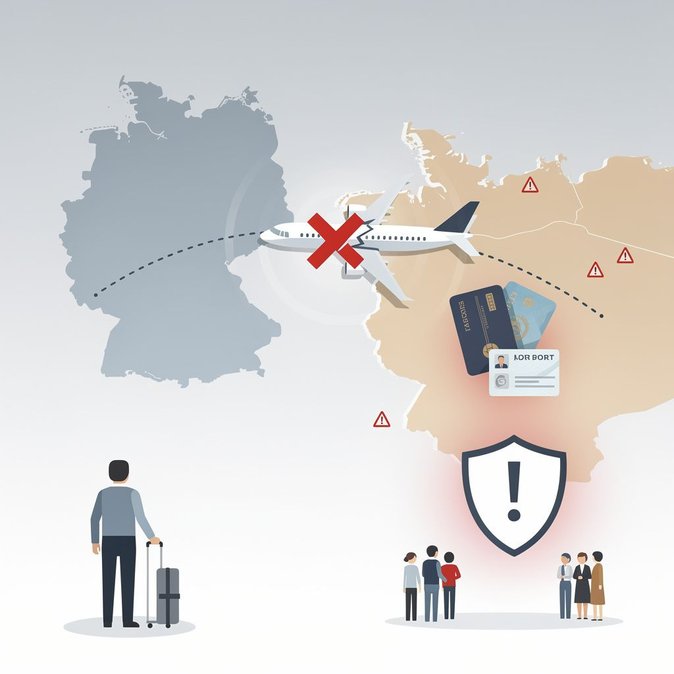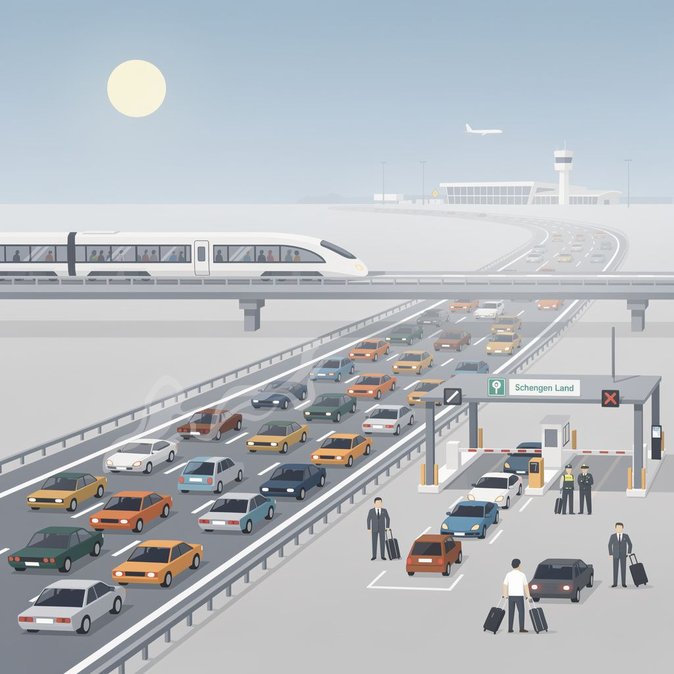
Germany’s school holidays have begun in several Länder and that traditionally means packed autobahns, long tailbacks at construction pinch-points and queues at Schengen borders. By dawn on Saturday, 18 July, traffic-monitoring services already flagged heavy congestion on the north–south axes A3, A5, A7, A8 and A9 as families and business travellers mixed with holidaymakers heading for Austria, Italy and the North Sea. The travel desk of news portal Reisereporter reported stop-and-go traffic for hundreds of kilometres and advised motorists to carry extra water and to avoid peak hours if possible. Border procedures added to the delays. Although Germany remains inside Schengen, temporary checks that were re-introduced for security reasons are still in force until at least mid-September 2026. At busy crossings into Austria and the Netherlands cars were funneled through narrow control lanes, causing additional wait times of up to 45 minutes. Freight forwarders told the press that delivery schedules had to be re-planned and that just-in-time supply chains faced weekend disruption. Motoring clubs ADAC and Touring predicted the situation would deteriorate through Saturday afternoon before easing overnight. In Bavaria, authorities introduced weekend access bans on rural roads to keep rat-running holiday traffic off village centres; violators risk on-the-spot fines. Further north, roadworks near Fulda and Kassel are forcing ICE and lorry detours, compounding motorway stress. For corporate mobility managers the immediate advice is to postpone non-essential road travel, book rail where possible, and build generous buffers into airport transfer schedules. Employees driving pool cars should activate real-time navigation and be reminded of Germany’s mandatory two-warning-triangle kit in case of breakdowns. Companies operating shuttle vans must also respect the Saturday HGV ban that runs from 07:00 to 20:00 during the school-holiday period. On the positive side, the Federal Transport Ministry confirmed that new digital traffic signs on the A3 and A5 are fully operational; these signs can dynamically open the shoulder lane to ease jams—something fleet operators may factor into their routing algorithms over the next eight summer weekends.