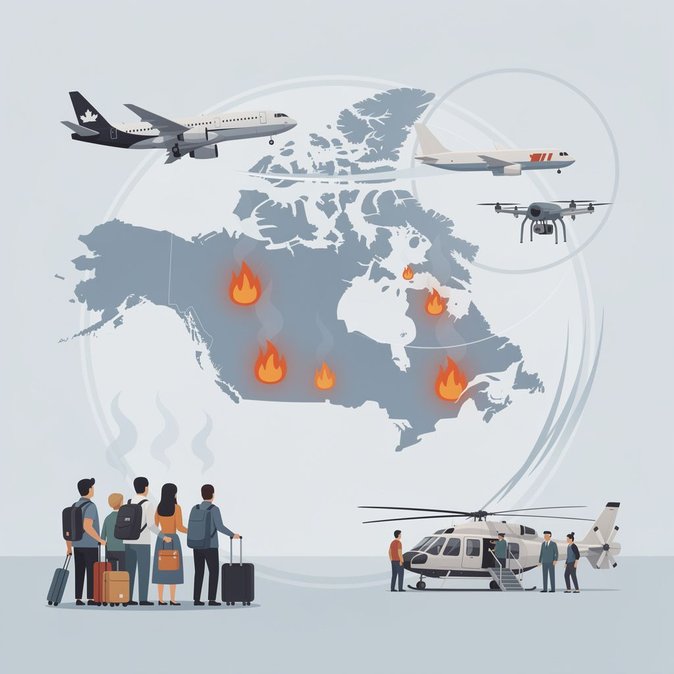
Prime Minister Mark Carney convened the Incident Response Group on July 22 to address Canada’s worst wildfire season on record, with more than 300 blazes burning across every province and territory. In the official read-out, the PM asked the public to “avoid non-essential travel to impacted regions” so hotels and transport corridors remain available for evacuees and firefighting crews. Travel guidance of this nature is rare and carries weight for businesses running rotational workforces in the North. Mining camps in the Yukon and forestry operations in Northwestern Ontario may have to delay shift changes if regional airports are commandeered for evacuation flights. Mobility managers should liaise with Transport Canada, which is granting priority slots to water-bomber fleets. The federal government confirmed that nearly 300 aircraft—from CC-130 Hercules transports to Mexican firefighting crews—are now integrated into a national air-fleet command. This heightened air-traffic volume can trigger sudden temporary flight restrictions (TFRs), grounding corporate charters with minimal notice. Companies sending essential staff into affected zones must carry letters of critical-work exemption, a practice adopted during the 2021 British Columbia fires but not yet codified into regulation. Local authorities in Ontario’s Red Lake district have already turned back non-resident visitors to preserve fuel and lodging. Finally, the read-out highlights the use of drones and AI-driven thermal imaging. Operators should confirm that commercial-drone permits are valid under emergency airspace rules, which were tightened after incidents of hobby drones interfering with water bombers in Alberta last year.