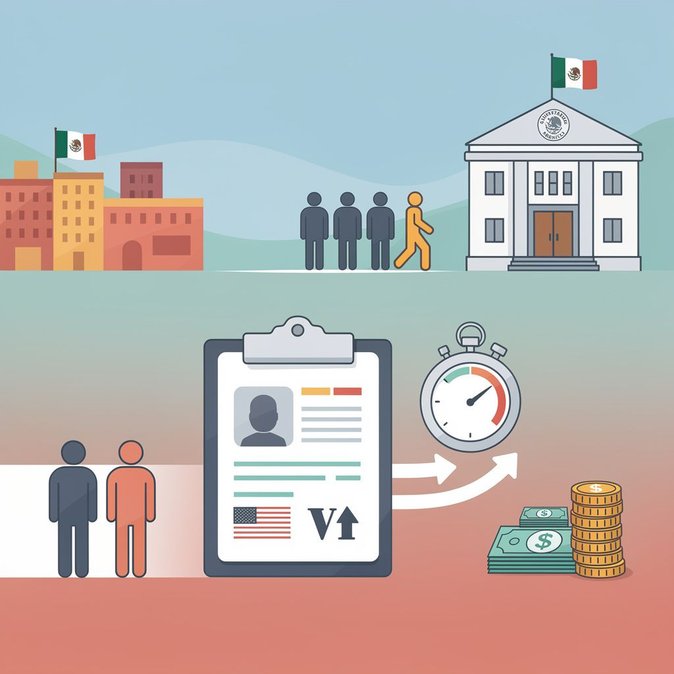
In a surprise move to tame the still-bulging interview backlogs at many U.S. consulates, the Department of State on July 22, 2026 quietly unveiled a “Paid-Expedite” pilot that lets tourist and business (B-1/B-2) visa applicants buy an earlier interview slot for US $750. The programme, detailed in a posting on Travel.State.gov, is running through 31 December 2026 at Mission Mexico and will be expanded to other high-volume posts if successful. Under the scheme, applicants first pay the normal US $185 MRV fee and book the next available appointment. They may then, if eligible, opt to pay the surcharge and re-book within 10 business days—provided the consulate has released a limited allotment of Paid-Expedite slots for that day. The fee is forfeited if the traveller misses the appointment and is non-refundable even if the visa is refused, a point immigration advisers are already flagging for risk-averse corporations. The pilot gives consular managers a revenue stream to fund overtime staffing and, crucially, a data test-bed to judge how price elasticity can be used to smooth demand. Business-travel groups have lobbied for such flexibility since pandemic backlogs pushed waits past 700 days in some cities, forcing companies to reroute itineraries or shelve trips entirely. Critics, however, say the programme effectively monetises access to U.S. mobility and may disadvantage small businesses and family visitors who cannot shoulder another US $750 per traveller. For global mobility teams, the immediate takeaway is that emergency-appointment justifications (medical, funeral, humanitarian) are no longer the only route to a fast B-visa. Companies with urgent deployments to Mexico—particularly oil-field services, automotive and near-shoring suppliers—can build the Paid-Expedite option into project budgets. Policy-wise, the move signals that the State Department is willing to experiment with market-based tools; if the pilot brings down average waits without inflating refusal rates, expect pressure to replicate it for F, H and L categories where backlog pain is most acute.