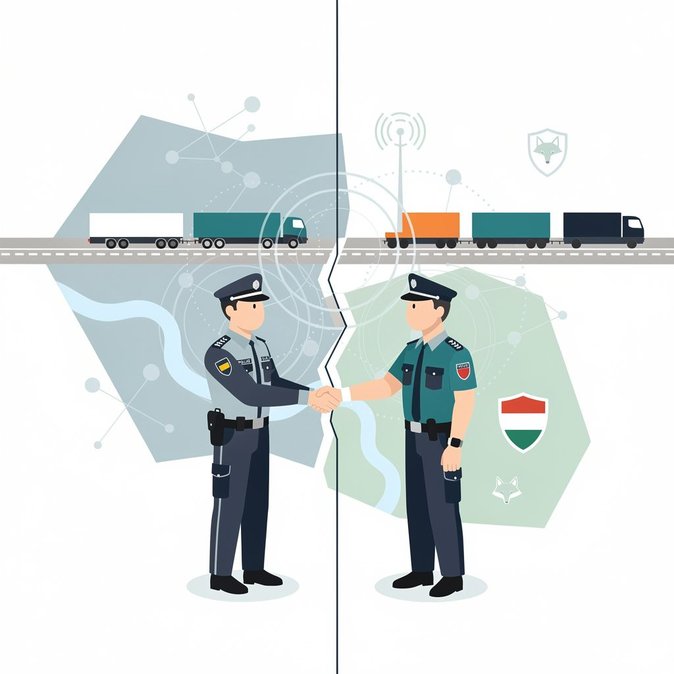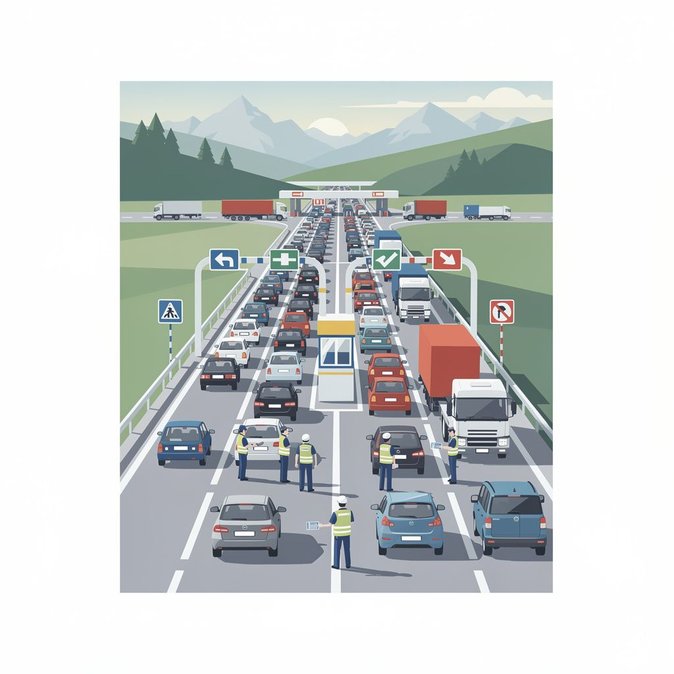
Austria’s province of Salzburg is bracing for what traffic officials are calling the most intense weekend of the 2026 summer-holiday season. According to the motoring clubs ÖAMTC and ARBÖ, congestion is expected to peak on 27-28 July as millions of German and Dutch holiday-makers head south the moment schools close in North-Rhine-Westphalia and parts of the Netherlands. The epicentre of the disruption will once again be the Westautobahn (A1) at the Walserberg crossing between Salzburg and Bavaria, where outbound and inbound passport checks—re-introduced during Austria’s ongoing internal-border controls with Germany—already slow traffic to a crawl. Local authorities are keeping in place strict “Abfahrts- und Durchfahrtsperren”, legal orders that forbid transit vehicles from leaving the motorway to dodge jams through village roads. Police will staff every exit ramp and turn back anyone who cannot prove a local destination. Experience from previous summers shows that even a minor incident can cripple the network: last weekend a caravan accident on the Tauernautobahn (A10) generated kilometre-long tailbacks within minutes. Several special events will compound the load: 100 000 spectators are expected in neighbouring Styria for the Ennstal Classic, while tens of thousands of Dutch fans travel to the Hungarian Grand Prix via Salzburg. The motoring clubs advise business travellers to avoid driving on Friday afternoon and from Saturday morning until late afternoon, and to carry plenty of drinking water in case of stand-stills. For corporate mobility managers the message is clear: allow extra lead-time for airport transfers to Munich, Linz or Vienna, instruct employees to keep fuel tanks topped up, and verify that hotel reservations along the A1/A10 corridors offer flexible check-in. Road hauliers moving time-critical goods between Germany and South-eastern Europe should consider night-time departures or alternative rail freight routings via the Brenner. More strategically, the Salzburg restrictions illustrate how national security border controls—currently prolonged until 15 September—continue to undermine the frictionless travel that Schengen guarantees on paper. With the EU Entry/Exit System (EES) set to go live in April 2027, the Walserberg crossing is fast becoming a test-bed for how much ID checking capacity will really be needed when biometrics move from spot-checks to every non-EU arrival. Companies with high volumes of cross-border staff moves should monitor whether Austria and Germany announce further extensions beyond September, as that would virtually lock the controls in place for a fourth consecutive winter.
Source: Salzburg24