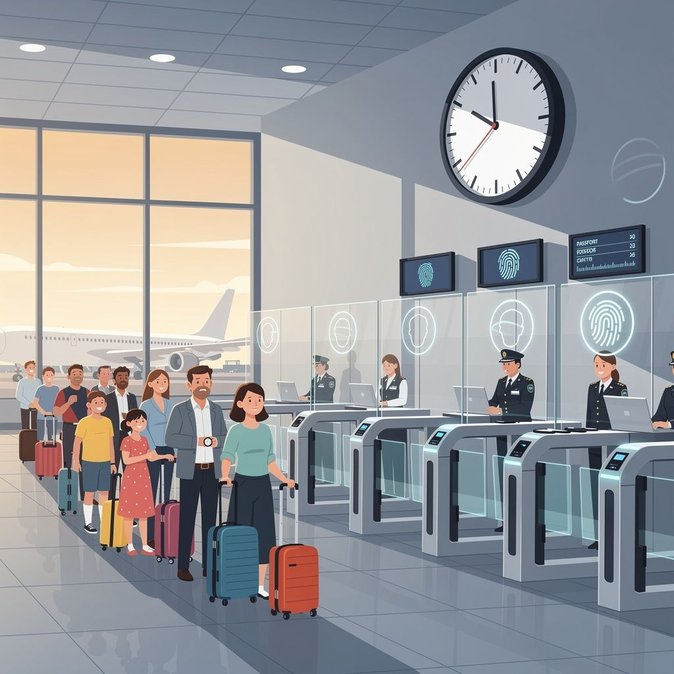
Passengers flying out of Brussels Airport on Wednesday 22 July faced passport-control lines of more than two hours after a perfect storm of peak-season demand and teething problems with the European Union’s new Entry/Exit System (EES). According to Belgian daily Het Nieuwsblad, the back-ups built rapidly during the morning departure peak as thousands of non-EU travellers had their fingerprints and facial images captured for the first time under the biometric regime. Airport operator Brussels Airport Company confirmed that queues stretched out of the border-control hall and into the main departures concourse before extra police officers were redeployed at manual booths and electronic e-gates were switched to “EU only” mode to clear the backlog. The EES, fully operational across all Belgian external Schengen borders since 10 April 2026, is designed to replace passport stamping with a central database that automatically tracks the 90/180-day stay limit for third-country nationals. While Belgian authorities opted for a phased introduction in spring, only 35 % of travellers were being enrolled each day; from 1 July every non-EU passport now requires biometric capture, tripling processing times during peaks. Industry groups had repeatedly warned that the first big leisure wave of the summer – amplified this week by the start of the Tomorrowland festival and Brussels Airport’s busiest days of the year – risked overwhelming border posts unless the regulation was paused. Airlines for Europe and ACI Europe again urged the European Commission to allow a “switch-off window”, arguing that five-hour queues could damage the Schengen brand. Belgian migration minister Anneleen Van Bossuyt rejected that plea, saying the focus is on adding staff and more self-service biometric kiosks. For businesses, the disruption is more than an inconvenience: missed connections force expensive re-routing of staff, jeopardise time-critical cargo carried in the belly hold, and erode confidence in Brussels as a hub for meetings and EU institutions. Corporate travel managers are telling assignees and consultants to arrive at least three hours before departure for non-Schengen flights and to keep boarding passes handy, because police have begun triaging passengers by departure time inside the queue. Practical take-away: companies should brief all non-EU visitors and employees transiting Brussels that biometric registration is now mandatory on first entry or exit, e-gates are not yet available to third-country nationals, and delays remain likely through August. Travellers who have already completed EES enrolment on an earlier trip should see faster processing, but they should still build in extra buffer time until additional lanes and kiosks come online in September.
Source: Het Nieuwsblad