Spain declares national emergency over Madrid & Ávila wildfires; 35 roads closed and 88,000 people displaced
63,000 evacuated as Madrid region battles worst wildfire on record
Virgin Voyages warns cruise guests of longer disembarkation in Barcelona under EU biometric checks
Latest News

Palma readies road closures and bus diversions for 26 July anti-tourism march
An anti-tourism protest will wind through central Palma on Sunday, 26 July, forcing road closures and diversions on more than twenty city-bus lines, including the key A1 airport route. Business travellers, cruise passengers and corporate event planners should adjust transfer schedules and brief participants on alternative stops. The demonstration is further evidence of mounting political pressure to limit visitor numbers in the Balearics.
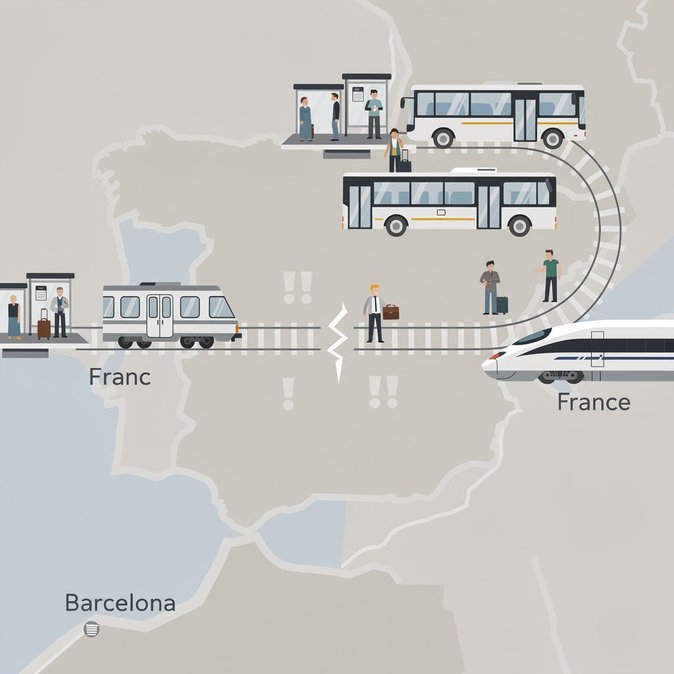
Signalling failure halts Rodalies R3—Renfe offers bus bridge to French border
A signalling failure has shut down Catalonia’s Rodalies R3, prompting Renfe to substitute buses between Barcelona and the French border. The suspension affects commuters and travellers connecting with French rail services, and could last beyond 25 July if repairs prove complex. Employers with cross-border staff should circulate back-up itineraries and monitor Adif updates.

Spanish government opens 2026 grant call for Voluntary Return projects
Spain’s Migration Ministry has opened the 2026 funding round (up to €5 million) for NGOs that organise Voluntary Return of non-EU migrants. The call, published 25 July, will finance travel, counselling and reintegration grants, offering companies and migrants a subsidised route home as regularisation winds down.
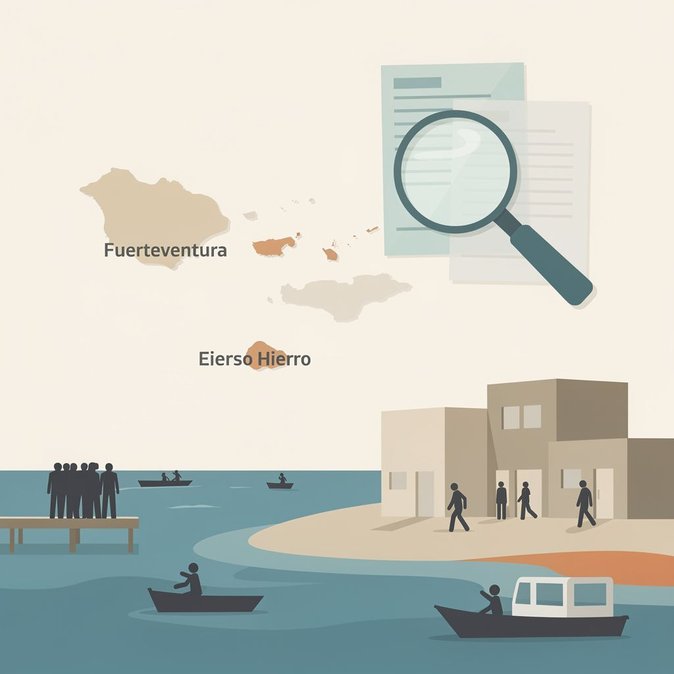
Spain Declares Emergency Contracts to Expand Migrant Reception Facilities in Canary Islands
Spain’s Interior Ministry has fast-tracked two emergency contracts, published in the 24 July BOE, to add reception and processing infrastructure in Fuerteventura and El Hierro after migrant sea arrivals to the Canary Islands jumped 126 % year-on-year. The move will ease overcrowding but raises transparency and human-rights questions.

EU re-introduces border checks for G7 summit; Spain–France crossings affected 24–26 July
France will re-establish Schengen checks between 24-26 July around the G7 summit, meaning ID inspections at Spain–France land, air and sea borders. Business travellers and freight operators should expect delays on key routes.
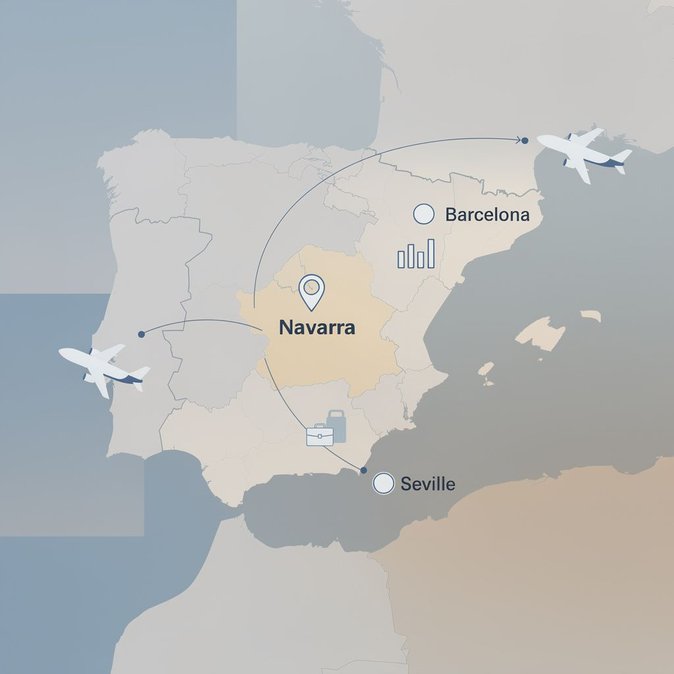
Navarra receives two bids to operate subsidised Pamplona–Barcelona and Pamplona–Seville routes
Two airlines have tendered to run PSO flights from Pamplona to Barcelona and Seville, a key step toward restoring direct links that are vital for Navarra’s business community. The €5 million contract will mandate twice-daily services and fare caps.

Spanish migration ministry drafts extranjería offices to tackle 1.2 million regularisation backlog
With Spain’s extraordinary regularisation overwhelmed by 1.2 million cases, the government has enlisted provincial extranjería offices to process files on paid overtime, aiming to prevent deadline breaches that could jeopardise applicants’ provisional work rights.

Twenty Maghreb migrants reach Fuerteventura aboard a converted fishing boat
A boat carrying 20 Maghreb men landed at Gran Tarajal (Fuerteventura) on 24 July. All passengers were taken for police and health screening. The case highlights the persistent Atlantic migration route and the knock-on effect on airport operations and corporate travel planning.

Police warn that 400,000 applications in Spain’s mass regularisation may be fraudulent
A leaked National Police report claims 400,000 files in the current extraordinary regularisation may include forged proof-of-residence, blaming an ‘effect call’ and document-fraud rings. The allegation raises questions about compliance checks and could lead to future cancellations of provisional permits, an issue employers need to monitor closely.
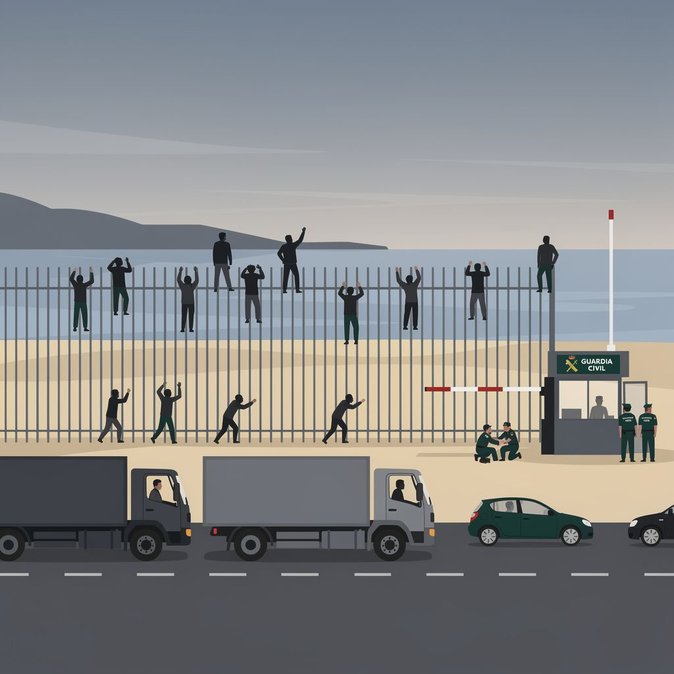
Guardia Civil officer injured during irregular entry attempt at Ceuta fence
About 70 people attempted to scale the Ceuta fence at Benzú early on 24 July; a Guardia Civil officer was injured and two migrants were detained. The incident triggers tighter controls that could delay cross-border commuting and freight.

Schengen watch: G7 security prompts temporary border controls that include Spain–France frontier
France’s current internal-border suspension—prolonged for G7 security—covers all crossings with Spain until 31 October 2026, meaning random ID checks remain possible on flights, trains and roads. Travellers must carry passports/IDs and, where relevant, posted-worker documentation.

Ten migrants reported missing after attempting to swim from Morocco to Ceuta
Local reports say ten Moroccan nationals are missing after overnight swimming attempts to reach Ceuta (24 July). The risky coastal route reflects continued migration pressure and could trigger temporary tightening of land-border freight flows.

Italian G7 security triggers temporary Schengen controls affecting Spain-bound travellers
Italy has reinstated Schengen border checks from 24 to 26 July for G7-related security, meaning Spanish citizens and residents travelling overland or by air may face document inspections. Companies should factor in extra transit time and ensure staff carry passports and residence permits. Although temporary, the measure underscores how quickly the open-border regime can be suspended.

Castellón NGOs Warn ‘National Preference’ Clause in Valencia Budget Could Exclude Migrants
Valencian draft budget language giving Spanish nationals priority in social programmes has prompted alarm from Castellón-based NGOs, who say it could marginalise migrants, including recent regularisation beneficiaries. Legal challenges are being prepared, and employers should watch for potential impacts on relocation support.

Migration Ministry drafts extranjería offices to clear 250,000 backlogged regularisation files
To avoid deadline breaches in the mass regularisation, Spain’s Migration Ministry has enlisted 1,300 provincial extranjería officials to process 250,000 pending files during paid overtime. The measure should speed up approvals and give employers greater certainty, though lawyers caution that rapid data-entry must be matched with robust quality control.

Spain issues over 800,000 provisional work-and-residence permits under the extraordinary regularisation drive
Madrid has already granted provisional work-and-residence permits to 822,000 migrants—70 % of the 1.17 million files submitted in the extraordinary regularisation that closed on 30 June. The influx of newly authorised workers is boosting Social-Security registrations and easing labour shortages, giving companies a larger pool of legally employable staff. The permits remain provisional pending final checks, but lawyers expect few cancellations.

Interior Ministry invokes emergency procurement to expand migrant-reception capacity in the Canary Islands
Spain’s Interior Ministry has issued emergency contracts—published 24 July—to build additional reception infrastructure in Fuerteventura and El Hierro after a 126 % jump in Atlantic-route arrivals. The fast-track works will add 1,200 beds and aim to prevent a humanitarian bottleneck, but may temporarily strain local administrative services that expatriates rely on.
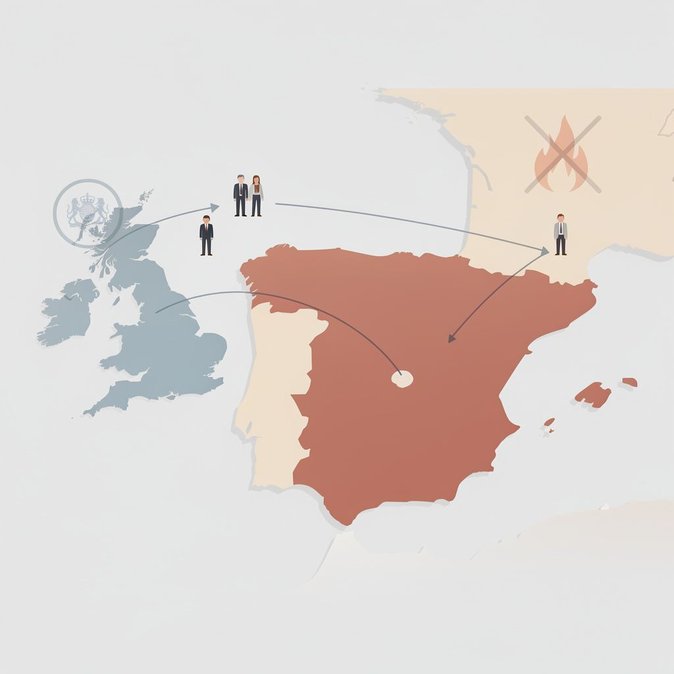
UK updates Spain travel advice; highlights route checks through France and Gibraltar
Britain’s FCDO Spain advice, current as of 24 July, removes Almería wildfire alerts but warns travellers to check French and Gibraltar border requirements. The notice is relevant to HR teams moving UK staff on short-term assignments.

Conservative-run regions boycott Spain’s sectorial immigration conference, deepening policy rift
All Partido Popular-led regions boycotted the 24 July sectorial immigration conference, blocking agreement on integration funding and highlighting deep divisions over the government’s regularisation and migrant-relocation policies. Companies counting on publicly subsidised language and training schemes should prepare for possible delays.

Correos Opens Dedicated Desks in Navarra for Regularisation File Corrections
Until 30 September, three Correos branches in Navarra will accept in-person document corrections for Spain’s migrant regularisation, offering a faster, no-appointment option that should reduce file-rejection risk and ease pressure on extranjería offices.