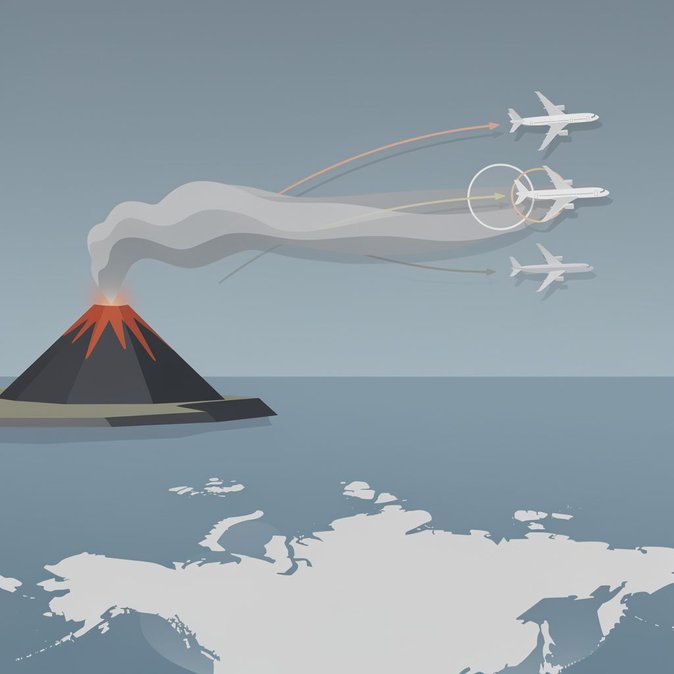
The Bureau of Meteorology’s Darwin Volcanic Ash Advisory Centre (VAAC) released multiple advisories on 26 July after Russia’s Sheveluch volcano sent ash clouds to cruising-altitude levels on the North Pacific corridor. Although the eruption is nearly 6,000 km from Australia, Darwin VAAC is responsible for monitoring ash over large portions of the Asia-Pacific and flagged potential contamination at flight levels used by trans-polar services between Australia and North America. Qantas and several Asian carriers routinely file contingency routes that skirt the Kamchatka Peninsula during such events. While early imagery from Himawari satellites suggested the ash cloud was dissipating, the VAAC warned that upper-level fragments could remain undetectable by onboard radar and pose a risk to high-bypass turbine engines. Airservices Australia has issued a notice advising operators to review engine-ingestion thresholds and ensure flight-deck crews carry the latest Significant Meteorological Information (SIGMET) bulletins. For corporate travel teams, the immediate impact is minor—no Australian departure had to divert on 26 July—but risk managers should note that polar routes are heavily used for freight and urgent engineering parts. If ash activity continues, carriers may need to add fuel stops in Japan or Alaska, extending overall transit times. Travel insurance policies often classify ash events as ‘weather-related’, so re-routing costs may be at the traveller’s expense unless the policy includes natural-hazard clauses. The incident reinforces the value of monitoring VAAC advisories, which are updated around the clock and integrated into many flight-tracking platforms. Mobility managers moving fly-in crews to North America this week should stay alert for further bulletins and build flexibility into rosters.