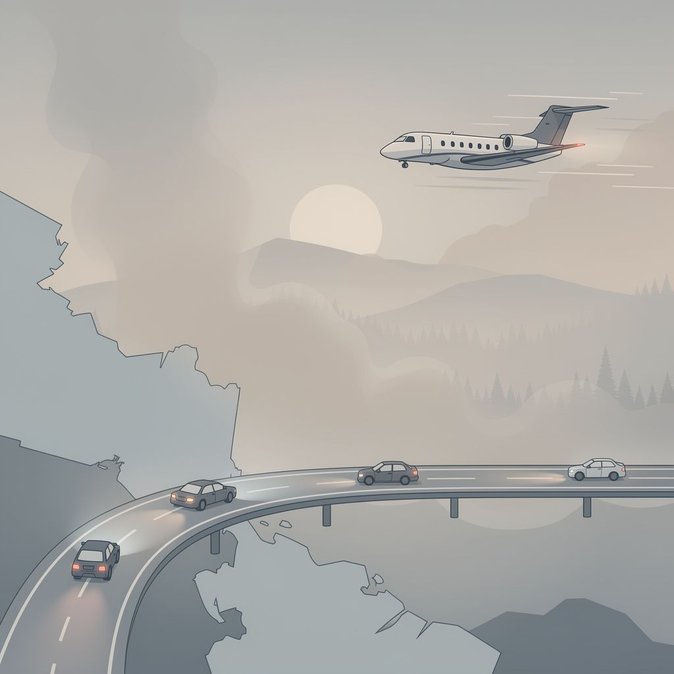
Environment and Climate Change Canada (ECCC) issued multiple orange-level Air Quality Health Index (AQHI) bulletins across British Columbia and the Northwest Territories on 28 July, citing wildfire smoke and stagnant atmospheric conditions. Advisories were posted overnight and updated throughout the day, cautioning residents and travellers that visibility may be reduced and respiratory irritation can occur even at moderate exertion levels. In B.C., the warnings cover the Cariboo, Okanagan and parts of the Lower Mainland, while the Northwest Territories alert extends to Yellowknife and surrounding communities. Several regional airlines, including Pacific Coastal and First Air, have signalled possible schedule changes if visibility drops below minimums. Highway operators also report localized speed reductions on stretches of Highway 97 and the Yellowknife Highway. Travellers with imminent flights should monitor airline notifications and allow extra time for security screening; face masks are recommended in smoke-affected terminal areas. Corporate mobility managers moving staff into resource-rich northern regions are advised to adjust work-rotation plans and to supply N95 respirators to field teams. The AQHI reached 8 (high risk) in Quesnel and 7 in Yellowknife by Tuesday afternoon. Health authorities recommend that vulnerable groups—including pregnant travellers, young children and those with asthma—re-evaluate non-essential trips until air-quality readings improve. ECCC’s next update is due on 29 July, but officials warn that conditions could persist for several days unless winds shift. With Canada’s wildfire season starting earlier and ending later in recent years, travel-disruption clauses tied to air-quality alerts are becoming a fixture in corporate travel policies. Companies should verify whether client contracts allow schedule slippage when AQHI exceeds threshold values and confirm that travel-insurance riders cover wildfire-related delays.