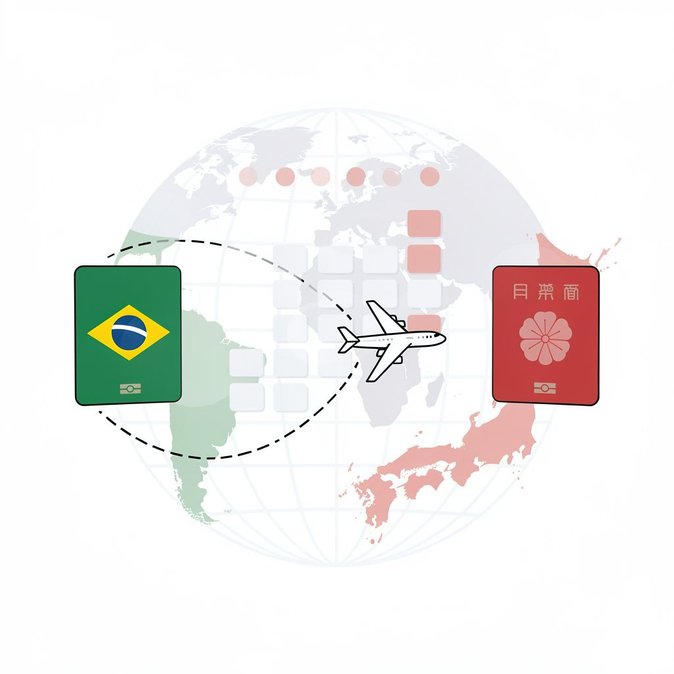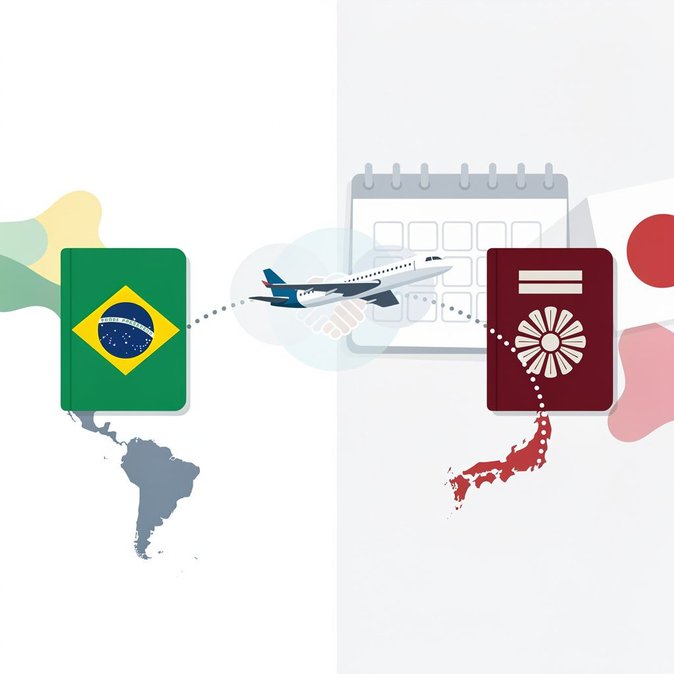
Brazilian travelers will continue to enjoy visa-free entry to Japan for another three years. In a notice published in today’s Diário Oficial da União and circulated by the Embassy of Japan in Brasília, Tokyo confirmed that the current 90-day visa-waiver scheme for holders of ordinary Brazilian passports will be prolonged from its original expiry of 29 September 2026 until 29 September 2029. The diplomatic note, signed by Ambassador Noguchi Yasushi and acknowledged by Brazil’s Foreign Ministry, was shared widely on travel forums within hours of publication. Background: Japan first introduced unilateral visa-free access for Brazilians with ICAO-compliant electronic passports in September 2023 to mark 115 years of Japanese immigration to Brazil. The measure sparked a surge in two-way tourism and simplified corporate travel between the strategic partners. Under the scheme, Brazilians may enter Japan for up to 90 consecutive days for tourism, business meetings, or family visits, provided they do not engage in remunerated activities. The waiver was due to lapse next year, creating uncertainty for travellers and for airlines that had scheduled additional Brazil–Japan capacity for 2027-2028. Key points of the extension include: (1) validity from 30 September 2026 to 29 September 2029; (2) continued requirement that travelers carry a biometric (IC) passport; (3) exemption does not cover employment, entertainment or other paid work; and (4) Tokyo retains the right to suspend the arrangement on public-health or security grounds with 30 days’ notice. No changes were announced on the Brazilian side, which has given Japanese nationals reciprocal visa-free entry since 2023. Practical implications: • Business travel—Brazilian executives can keep scheduling multi-year project trips, site visits and trade-fair delegations without the lead time and cost of obtaining visas. • Aviation—LATAM, Qatar Airways (São Paulo–Doha–Tokyo) and Japan Airlines’ forthcoming Narita–São Paulo codeshare can market seats confident that demand will not be dampened by new bureaucratic hurdles. • Mobility programmes—HR teams managing expatriate rotations between Brazil and Japan need not budget for short-term visa fees, though staff posted for remunerated assignments will still require the appropriate status of residence. Analysts note that the decision underscores deepening economic ties—the stock of Japanese direct investment in Brazil topped US$ 20 billion in 2025—and comes as Brazil prepares to host the 2027 World Expo in Belém, an event expected to attract a large Japanese delegation. Travel agents advise clients to check that their passports meet IC standards and to carry proof of onward or return travel, as Japanese immigration officers have stepped up spot checks during the post-pandemic tourism rebound. Looking ahead, diplomats from both countries have hinted at negotiations to broaden mobility channels, including a potential youth working-holiday quota and streamlined procedures for engineers and researchers—an agenda that could appear on the table at the next Brazil–Japan High-Level Economic Dialogue in early 2027.