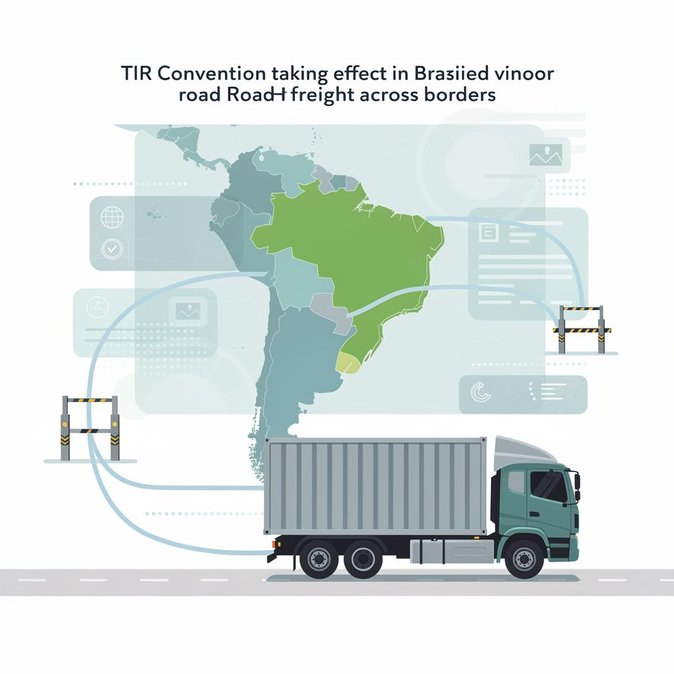
From 30 July 2026, Brazil is formally bound by the United Nations Customs Convention on the International Transport of Goods under Cover of TIR Carnets (commonly called the “TIR Convention”). The milestone is the culmination of a six-year accession process that began with Brazil’s signature in 2020 and progressed through congressional approval and presidential ratification earlier this year. The UN Economic Commission for Europe (UNECE) confirmed Brazil’s entry into force in its circular ECE/TRANS/WP.30/344, noting that the Convention now counts 79 contracting parties worldwide. What changes today? Brazilian customs posts can now accept and issue TIR carnets—standardised, internationally-guaranteed transit documents that allow sealed freight to cross multiple borders with a single security and without paying duties or taxes en-route. In practice, lorry drivers departing São Paulo for destinations such as Buenos Aires, Santiago or even Rotterdam will be able to clear outbound Brazilian customs once, travel across intermediary countries without additional guarantees, and pay any duties only at their final destination. That dramatically reduces paperwork, inspection delays and insurance costs for shippers. The Federal Revenue Service (Receita Federal) and the National Land Transport Agency (ANTT) have spent the past six months training officers, upgrading IT interfaces and certifying authorised consignors at the Portos Secos (dry ports) of Foz do Iguaçu, Uruguaiana, Corumbá and the Port of Santos. IRU, the world road-transport organisation that administrates the TIR guarantee chain, has appointed the Brazilian Association of International Road Transport (ABTI) as the issuing and guaranteeing body for carnets. ABTI expects to release the first 3 000 Brazilian-issued TIR carnets within the next quarter, targeting agribusiness exporters moving soy, beef and poultry to the River Plate region. For multinationals that rely on Brazil-centred supply chains, the move brings practical mobility advantages for staff and goods alike. Corporate relocation teams will see fewer delays on household-goods shipments, while project managers overseeing cross-border installations can consolidate spare-parts consignments instead of arranging separate customs bonds in every Mercosur country. Logistics providers estimate that door-to-door lead times on the busy São Paulo–Buenos Aires trucking corridor could fall from four days to three, with cost savings of 10-15 per cent once procedures stabilise. Two immediate compliance considerations stand out for businesses. First, only pre-authorised transport operators may use TIR, so companies should verify that their carriers hold ABTI accreditation. Second, Brazil has retained its existing electronic manifesto (MDFe) requirement for domestic legs; operators must therefore ensure that MDFe filings reference the TIR carnet number to avoid fines. Over the longer term, Brasília plans to integrate TIR with the SISCOMEX Single Window so that transit data populate automatically—another signal of Brazil’s push to modernise border controls ahead of the 2027 Mercosur customs-union deadline.
Source: UNECE (ECE/TRANS/WP.30/344)