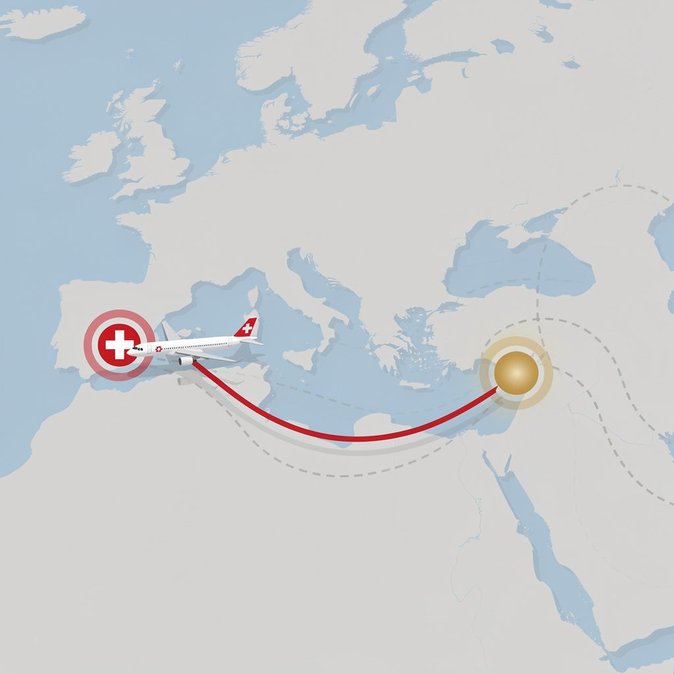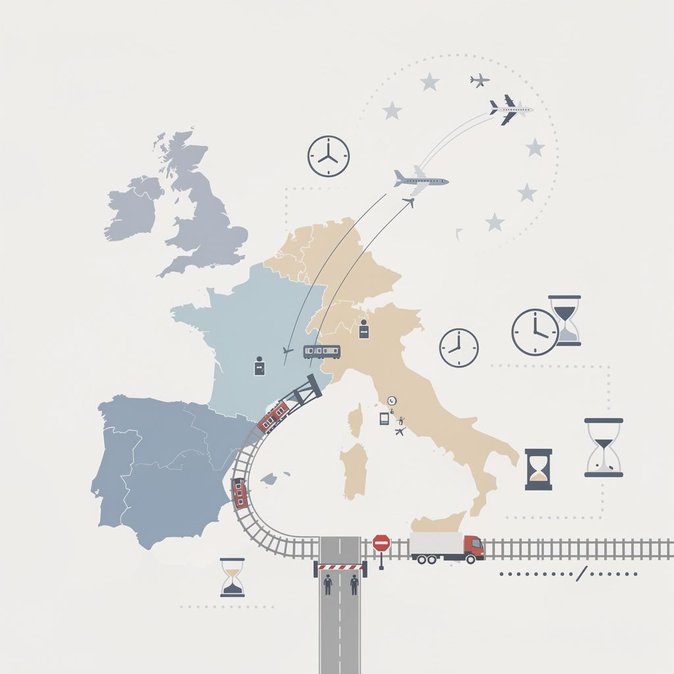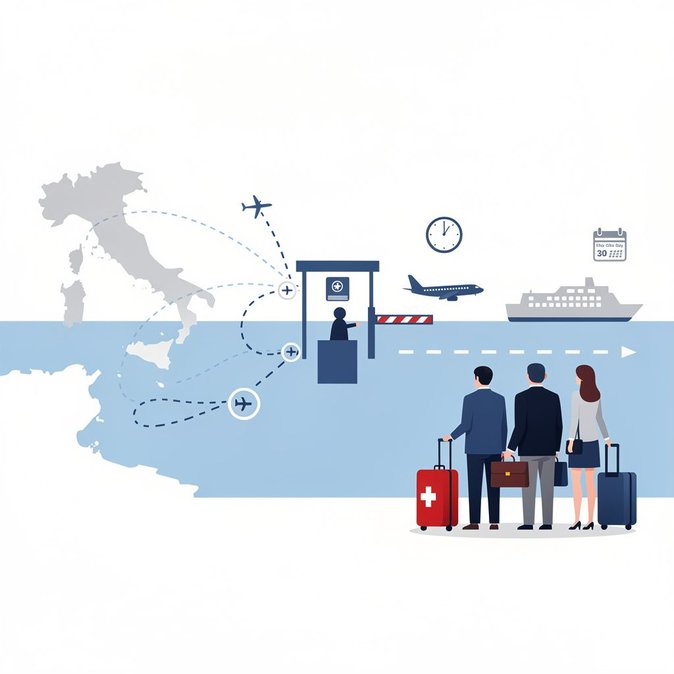
Late on 31 July 2026 Italy’s interior ministry announced that, with immediate effect, it is re-introducing systematic passport controls on all air and sea connections arriving from Spain for an initial period of 30 days. The decree—published in Italy’s official gazette minutes before midnight—invokes Articles 25 and 28 of the Schengen Borders Code, which allow a member state to reinstate internal border checks when faced with a serious threat to public order. The trigger was what Rome describes as an “exceptional and sudden” influx of more than 60,000 irregular migrants who reached the Spanish enclave of Ceuta between 26 and 31 July, overwhelming Spanish reception centres. Although Switzerland is not mentioned in the Italian text, the measure has immediate knock-on effects for Swiss companies and residents because Italy is a key hub for flights between Switzerland and Spain as well as a major transit route for Swiss holiday-makers driving to Spanish Mediterranean ferry ports. Airlines operating the high-frequency Zurich-Milan-Madrid triangle reported having to implement manual document checks at departure gates this morning, causing average delays of 45 minutes on the first wave of flights out of Zurich. Swiss International Air Lines and easyJet both issued travel advisories urging passengers bound for Spain via Italian airports to allow extra time for check-in. Legal experts note that while the Schengen Code obliges Italy to keep the disruption “proportionate”, the re-imposition of checks effectively ends friction-less intra-Schengen travel on the affected routes. Because Switzerland has no direct land border with Spain, the Italian move also severs what is for many Swiss firms the fastest connection to Spanish manufacturing bases in Catalonia and Aragon. Freight forwarder Kuehne + Nagel told Swiss public television SRF that just-in-time deliveries of automotive components from Zurich to Zaragoza now face an additional compliance layer that could force rerouting via France. Swiss cross-border commuters are watching the situation closely as well. While the decree targets Spain-Italy flows, Swiss labour unions fear that if controls at Italy’s seaports and airports create bottlenecks, Rome could expand spot checks along the land frontier with Ticino to intercept secondary movements. Italy temporarily tightened controls on the Chiasso corridor during the 2025 refugee spike, leading to two-hour delays for thousands of Italian residents who work in Lugano. For mobility managers the practical steps are clear: brief travellers that even direct intra-Schengen itineraries can now involve full border formalities; build extra slack into connection windows; and verify that biometric passports are valid for at least three months beyond the intended date of return, as Italian border police interviewed by *Euronews* said they will apply external-border rules when processing Spanish-origin passengers. Companies moving time-critical cargo should map rail and road alternatives that bypass Italian territory or pre-clear customs in France. With Spain expected to retaliate politically, further adjustments to Schengen travel rules cannot be ruled out over the coming days.
Source: Euronews