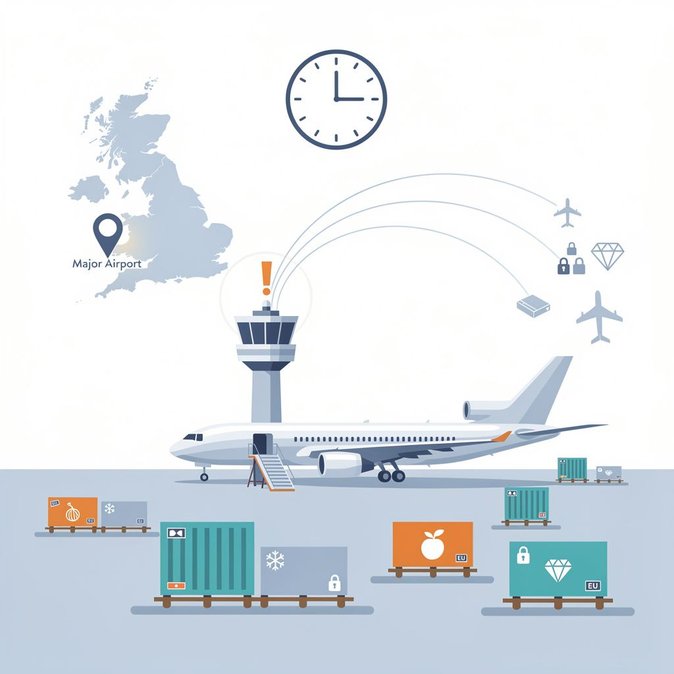
The British International Freight Association (BIFA) has cautioned members that residual disruption from last week’s air-traffic-control (ATC) failure could extend well into the current week despite the return of normal flight operations. In a briefing on 14 September, the trade body said cancelled passenger services had created a short-term capacity crunch for belly-hold freight moving through Heathrow. BIFA’s Policy and Compliance Director Pawel Jarza explained that pharmaceuticals, perishable produce and automotive components are most at risk because they rely on same-day uplift and temperature-controlled storage. Carriers have been forced to re-route shipments via continental hubs such as Frankfurt and Paris CDG, adding 24–48 hours to lead times and increasing trucking costs. Forwarders are prioritising consignments under Incoterms DDP and FCA and exploring sea-air solutions through Dubai and Singapore to keep supply chains moving. Jarza urged shippers to share accurate cargo-ready times, warning that “ground handlers are working at maximum throughput and cannot guarantee late‐cut acceptance.” Heathrow Airport estimates that 42 % of the UK’s non-EU air freight by value travels in passenger aircraft holds; even modest schedule disruption therefore ripples quickly through retail and manufacturing inventories. Industry analysts say a full return to pre-outage cargo flows may not occur until the weekend, once repositioning flights clear the backlog. Enterprises dependent on just-in-time deliveries—particularly in life-sciences and high-tech—should consider activating contingency stock or alternative routings this week. Mobility and relocation teams moving time-sensitive personal effects by air may likewise experience delays.
Source: FAN Transport Insights