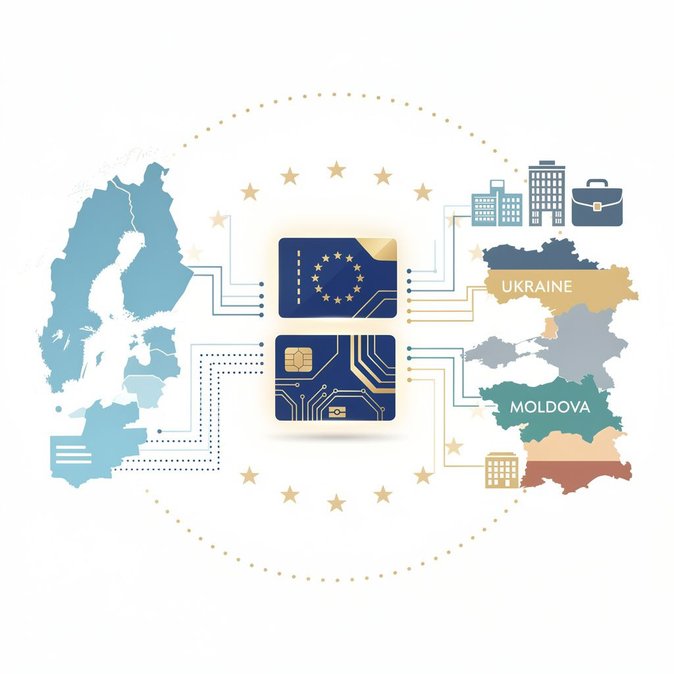
European Commissioner for Enlargement Marta Kos spent 18 September in Helsinki meeting Foreign Minister Elina Valtonen and Europe Minister Joakim Strand. While the official agenda centred on Ukraine, Moldova and the Western Balkans, Finnish officials used the opportunity to underline mobility priorities that would accompany any future accession rounds. Speaking after the talks, Minister Valtonen said Finland supports gradual integration of candidate states into the EU’s single market for labour but wants “robust, digital border management tools” in place first. She cited Finland’s experience rolling out the Entry/Exit System and upcoming ETIAS travel authorisation as examples of how technology can enable secure, visa-free travel without overwhelming border resources. Commissioner Kos toured the Finnish Immigration Service’s new automated-case-management centre in Pasila, where asylum and work-permit applications from Western Balkan nationals have fallen 12 percent in 2026 following stricter documentation checks. Officials demonstrated how AI triage flags incomplete files, a system Kos said could be replicated in candidate countries with EU funding. The delegation also celebrated the 30-year anniversary of TAIEX, the EU’s technical-assistance programme. Finland pledged to second additional customs and digital-identity experts to help Ukraine and others harmonise data standards—seen as a prerequisite for reciprocal recognition of professional qualifications once free-movement rights expand. For multinational employers the message is two-fold: enlargement remains politically alive despite geopolitical distractions, and when it comes, the free movement of workers will hinge on high-tech identity management. Companies with operations in the candidate states should monitor pilot projects funded through TAIEX and prepare HR systems for eventual, phased alignment with EU labour-mobility rules.