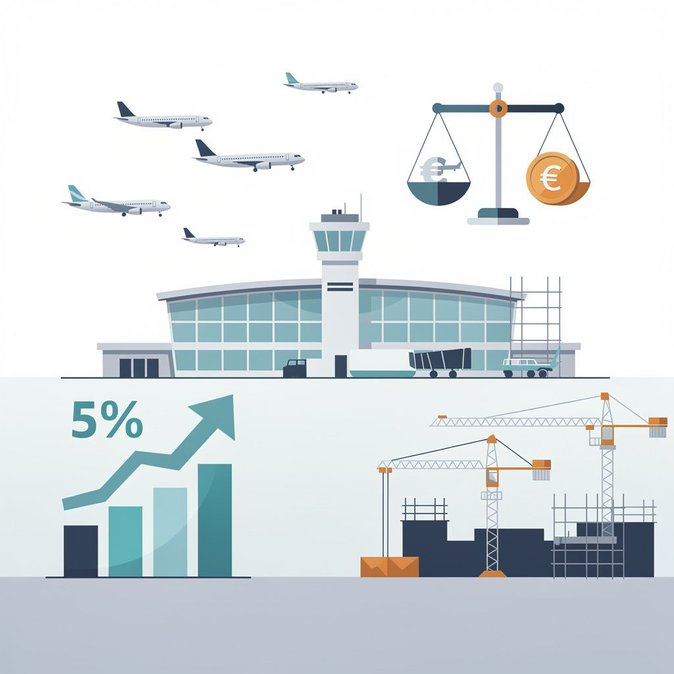
Airport operator daa has posted a robust first-half 2026 performance, moving 19.6 million passengers through Dublin and Cork airports—up 5 % on the same period last year—and lifting EBITDA by 16 % to €187.3 million. Turnover reached €561.9 million despite a 6 % dip in after-tax profit caused by Middle-East retail headwinds. Chief executive Nick Cole said the figures vindicate daa’s aggressive capital-expenditure plan: €153 million has already been spent this year on airfield upgrades, next-generation security lanes and expanded seating, with a record multi-year programme to follow. Much of that investment hinges on lifting Dublin Airport’s statutory 32-million-passenger cap; daa is “continuing to engage” with An Bord Pleanála and the Irish Aviation Authority on parallel processes to raise the ceiling toward 40 million annual passengers. For corporate travel managers the numbers send a mixed signal. More seats and revamped fast-track lanes should ease peak-hour congestion ahead of the 2027 summer season, yet daa warns that a proposed reduction in allowable airport charges could crimp its ability to finance future works. If regulators do not agree a balanced funding model, service-quality gains could stall just as trans-Atlantic demand is rebounding. From a mobility-tax perspective, the investment in U.S.-pre-clearance lounge expansion may shorten connection times and reduce duty-of-care exposure for Irish-based executives routing to the United States. However, airlines are already lobbying for guaranteed slot increases before committing additional wide-body capacity—a negotiation that will remain in limbo until the passenger-cap issue is resolved. HR relocation teams should monitor the regulatory timeline; a final decision on aeronautical charges for 2027-31 is expected from the IAA in Q2 2027. If charges rise rather than fall, airfares out of Dublin could climb just as Ireland’s graduate-tech hiring cycle accelerates.
Source: daa