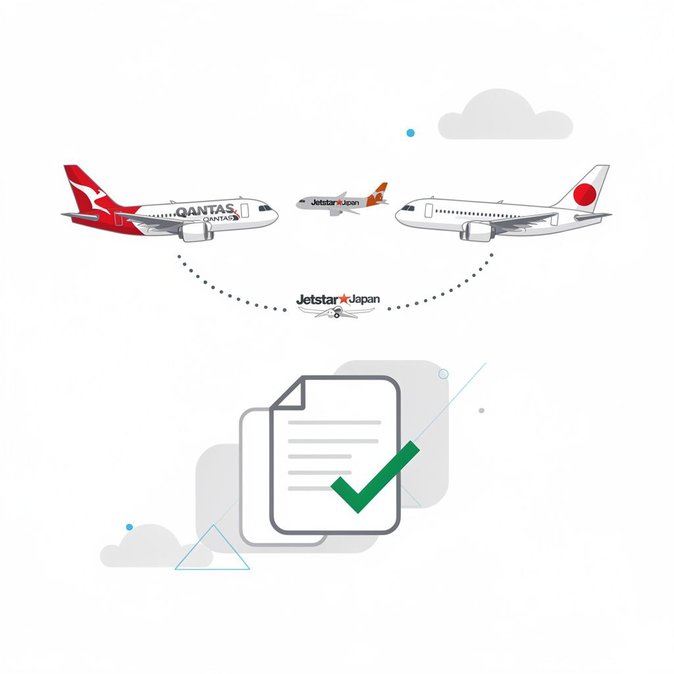
Qantas on 25 September confirmed its intention to divest its minority shareholding in low-cost carrier Jetstar Japan (JJP) to joint-venture partner Japan Airlines, pending regulatory approvals. The move is part of a broader portfolio review that sees the group sharpening its focus on long-haul premium growth and domestic market consolidation after reporting record FY26 results. Jetstar Japan was launched in 2012 as a three-way venture between Qantas, JAL and Mitsubishi Corporation. While the airline has grown into Japan’s second-largest budget carrier, its domestic-centric network no longer aligns with Qantas’ capital-allocation priorities, group CFO Vanessa Hudson told analysts. JAL already runs the day-to-day operation and is expected to assume full operational control once the transaction closes in early 2027. Qantas stressed that the sale will have “no impact” on existing Qantas or Jetstar Airways flights between Australia and Japan, nor on reciprocal codeshare arrangements with JAL. Frequent-flyer earn and burn rates, as well as status benefits, will remain unchanged. The Australian carrier will continue to sell through-fares that connect its long-haul services into JJP’s domestic network under an expanded interline agreement. For global-mobility teams the announcement removes uncertainty that often accompanies equity shake-ups, while offering a clearer picture of capacity on key corporate routes such as Sydney–Tokyo (Haneda) and Melbourne–Tokyo (Narita). Travel buyers should nevertheless monitor fare buckets over the next six months as JAL may re-optimise pricing once it has full control of the budget unit. Regulators in both countries are expected to scrutinise the deal for competition concerns, but analysts believe approval is likely given Qantas’ modest 33 per cent stake and the highly fragmented Japanese LCC sector. The transaction will free up capital Qantas can redeploy into its ultra-long-haul ‘Project Sunrise’ programme and domestic fleet renewal.
Source: Qantas Travel Updates