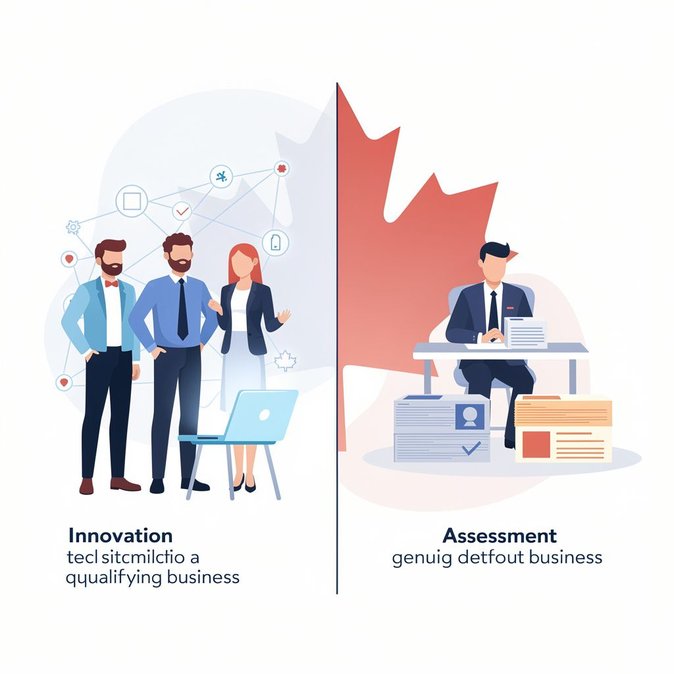
A new Federal Court decision, Punjwani v. Canada (Citizenship and Immigration), 2026 FC 1033, has provided long-awaited guidance on how immigration officers must assess technology start-ups seeking permanent residence through Canada’s Start-Up Visa (SUV) programme. Writing for Law360 Canada on 25 September, immigration lawyer Vahid Yeganeh explains that the court admonished officers for conflating two distinct legal tests: the qualifying-business criteria in section 98.06 of the Immigration and Refugee Protection Regulations and the anti-“artificial transaction” test under paragraph 89(b). In Punjwani, an applicant backed by an approved angel-investor group was refused because the officer found the venture lacked “substance.” The court ruled that whether a company meets the qualifying-business definition (for example, being incorporated and having essential operations in Canada) is a separate enquiry from whether the arrangement is a sham designed solely for immigration purposes. Failure to keep the analyses distinct, Justice Fothergill held, constitutes a reviewable error. Practically, the judgment raises the bar for IRCC officers to justify refusals: they must now articulate which specific test an applicant fails and why. For start-ups and venture-capital partners, the clarity is welcome. It reduces the risk of arbitrary refusals and should speed up adjudication by narrowing the evidence officers must consider. Lawyers advise applicants to organise documentation accordingly—one bundle proving operational presence in Canada, and another demonstrating bona-fide commercial intent. The case also underscores the importance of robust incubator and investor due diligence. Program-design critics have long argued that inconsistent screening standards encouraged “pay-to-stay” entities that sell letters of support without ensuring viable business models. By reinforcing the distinction between business viability and immigration abuse, the court gives policymakers ammunition to tighten oversight of designated organisations rather than impose broader restrictions on genuine entrepreneurs. With global competition for tech founders intensifying—most notably from the United Kingdom’s Innovator Founder route and Australia’s Entrepreneur stream—the decision should help Canada safeguard the SUV programme’s appeal while deterring misuse. Mobility managers supporting entrepreneurial transferees should update checklists to reflect the dual-test approach and prepare clients for more focused but arguably fairer scrutiny.
Source: Law360 Canada