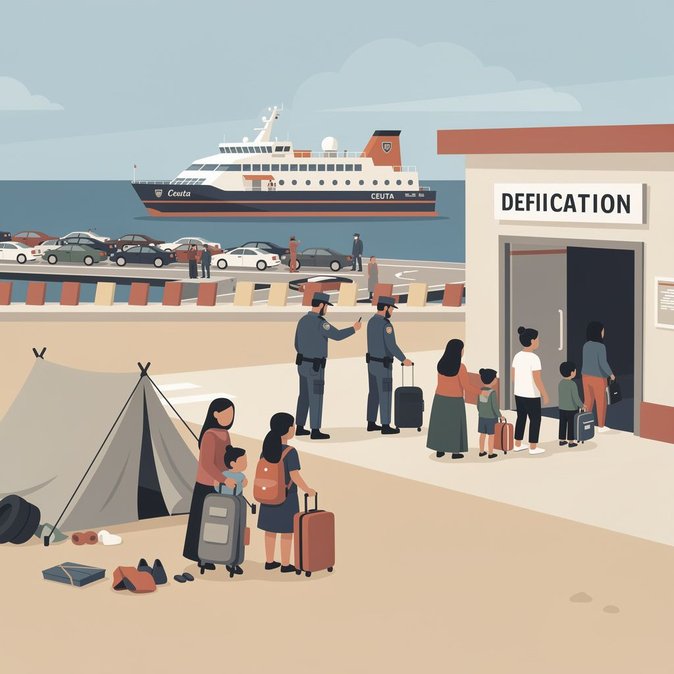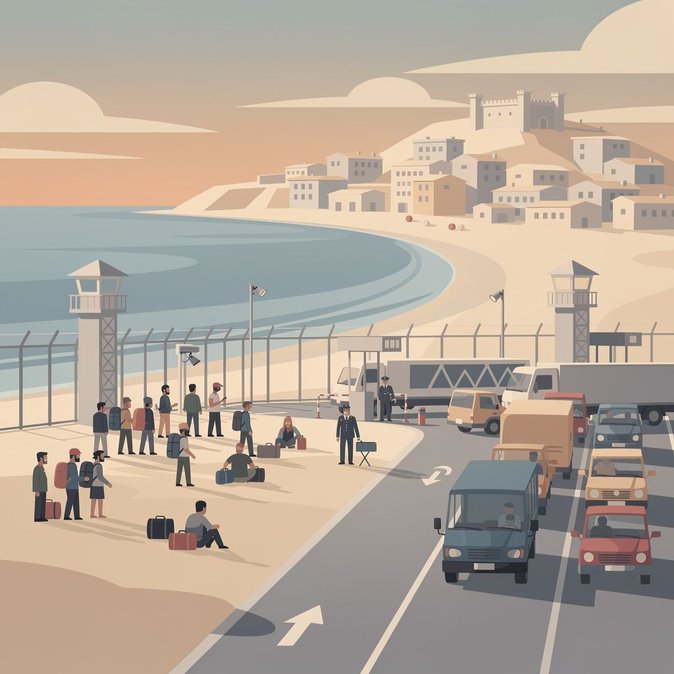
Ceuta is marking the 60-day point since more than 80,000 people entered the Spanish enclave from Morocco in a single week at the end of July. Streets, beaches and makeshift camps still shelter an estimated 10,000 migrants who have not obtained places in the temporary reception centres hurriedly erected by Spain’s Interior Ministry. Residents complain that informal shanties have become semi-permanent settlements, while local officials warn that the approaching rainy season will turn plastic-sheet shelters into mud-soaked health hazards. Behind the delay is the logistical and legal complexity of identifying each new arrival, deciding whether they will be channelled into the asylum system, transferred to mainland facilities or returned to Morocco. So far, the government reports just 364 formal expulsions and roughly 7,000 voluntary returns, a fraction of the overall caseload. Processing has been slowed by shortages of fingerprinting equipment and Arabic-speaking staff, even after the Interior Ministry redeployed officers from mainland cities. For employers that rely on cross-border commuters and for multinationals that base staff in the enclave for tax reasons, the humanitarian gridlock has a direct operational impact. Lorry traffic through the El Tarajal crossing is frequently halted for security checks, and the local Chamber of Commerce says export consignments face delays of up to 48 hours. Shipping firms have added surcharges to cover higher insurance premiums. Madrid is under rising political pressure. The opposition Partido Popular argues that the stalemate hurts Spain’s reputation for border management just as the EU finalises reforms to its migration pact. Business associations want faster screening so that those with work prospects can be moved quickly to mainland provinces that suffer labour shortages, while those who do not qualify can be returned before winter accommodation costs soar. Practical takeaway: companies with assignees or supply chains that pass through Ceuta should expect intermittent closures of the El Tarajal border, prolonged processing times for commercial drivers and heightened ID checks in the port area at least until the first quarter of 2027. Contingency planning—diverting freight via Algeciras or Tétouan and staggering travel outside peak hours—is advisable.
Source: El País