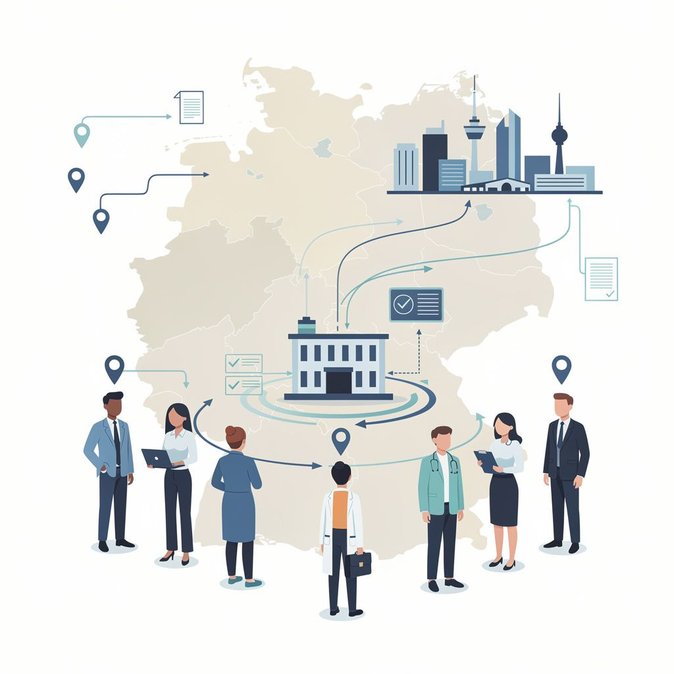
From 1 October 2026, companies in Germany’s financial heartland can file all accelerated skilled-worker visa requests through the new Zentrale Stelle für Fachkräfteeinwanderung Hessen (ZFEH) in Darmstadt. The unit centralises the §81a Residence Act “beschleunigtes Fachkräfteverfahren” for every business establishment located in Frankfurt am Main and, in a second stage, for the rest of the state. Under the fast-lane procedure the local employer – not the overseas applicant – initiates the case, pays a €411 fee, and receives a legally binding pre-approval that the German consulate can issue the D-visa within days. Hesse’s interior ministry says demand is already high: in the first half of 2026 the state issued 1,395 pre-approvals—almost two-thirds of the total for all of 2025. By pulling more examiners into one specialist hub, the ZFEH aims to cut processing times from the current six-to-eight weeks to “well under one month” and to give employers a single point of contact. The authority also offers coordinated family-reunion handling when dependants apply within six months of the main entrant. For corporates, the move removes a longstanding headache: fragmented responsibilities among Hesse’s 29 municipal foreign-immigration offices often produced wildly different interpretations of recognition rules and salary thresholds. Global mobility managers can now submit digital dossiers and communicate in English, something midsized firms without dedicated immigration counsel have lobbied for. The agency will pilot video consultations for HR teams in early 2027. Practical advice for employers: prepare fully translated qualification certificates and make sure foreign hires take the required German A2/B1 exams early—missing paperwork now triggers automatic rejection to keep the pipeline moving. While the ZFEH does not influence consular capacity abroad, it uploads approvals directly to the Federal Foreign Office’s Integriertes Ausländerportal, enabling German missions to issue entry visas without further labour-market checks. Longer term, the Hesse model is expected to serve as a blueprint for other Länder. North Rhine-Westphalia and Baden-Württemberg have already signalled interest in launching similar one-stop units as competition for international talent intensifies across Germany’s regions.
Source: Hessian Ministry of the Interior