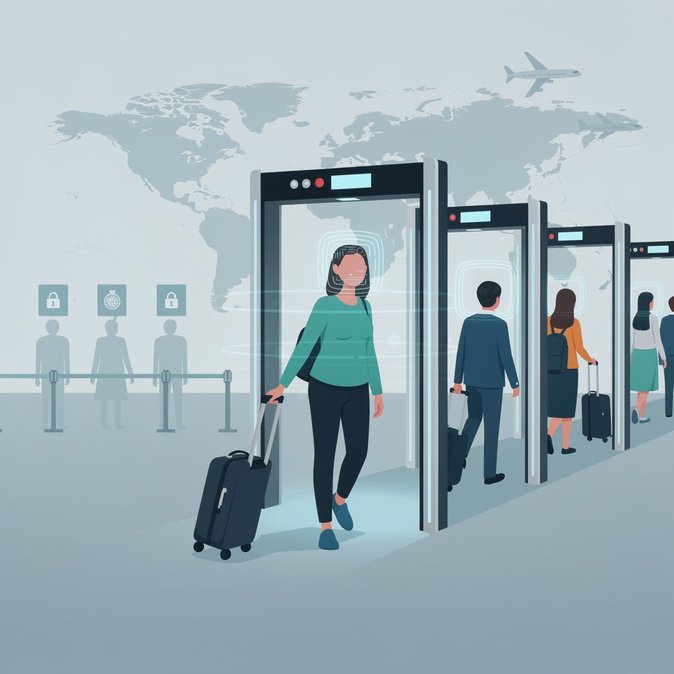
Business travellers arriving in the United Kingdom will begin to experience a completely hands-free immigration checkpoint after the Home Office activated the first ‘contactless eGates’ at East Midlands Airport on 6 October 2026. The new gates capture a live facial image as the passenger walks up, compare it with encrypted passport and travel data that carriers have already supplied, and open automatically if all security checks clear. Travellers keep their passport in their pocket unless Border Force officers need to make additional enquiries. The contactless upgrade is a software replacement for the 290 eGates already installed at 15 UK airports and juxtaposed controls in France and Belgium, meaning there is no large-scale construction programme or disruption to passenger flows. The Home Office confirmed that every eGate should be converted by early 2027, creating what ministers call the “world’s most advanced digital border”. The first phase is limited to British citizens, but other nationalities that are currently eligible for eGates—including US, EU, Australian and Singaporean passport-holders—will be brought into scope over the next 12 months. For companies moving staff in and out of the UK, the upgrade promises quicker throughput at peak times and a reduced risk that valuable minutes are lost queuing at manual desks. Advance data sharing also helps border officers identify higher-risk passengers before arrival, allowing resources to be targeted more intelligently. Employers should nevertheless remind internationally mobile staff that they must still travel with a physical passport, as officers may request to see it and carriers will not let anyone board without one. The contactless project builds on February 2026’s full enforcement of the UK Electronic Travel Authorisation (ETA) scheme, which already requires non-visa nationals to obtain digital “permission to travel” before boarding. Together, ETAs, eVisas and eGates form the backbone of the Home Office’s plan to eliminate physical documents from the immigration system by 2027, mirroring Australia’s SmartGate model but on a larger scale. Airport operators have welcomed the change. Manchester Airports Group—which owns East Midlands, Manchester and Stansted—said early trials showed a 30 % reduction in average transaction time at the gate. Travel management companies are advising clients to update employee travel policies so that staff know which airports currently offer the technology and how to stand correctly for the facial scan.
Source: LexisNexis Legal News