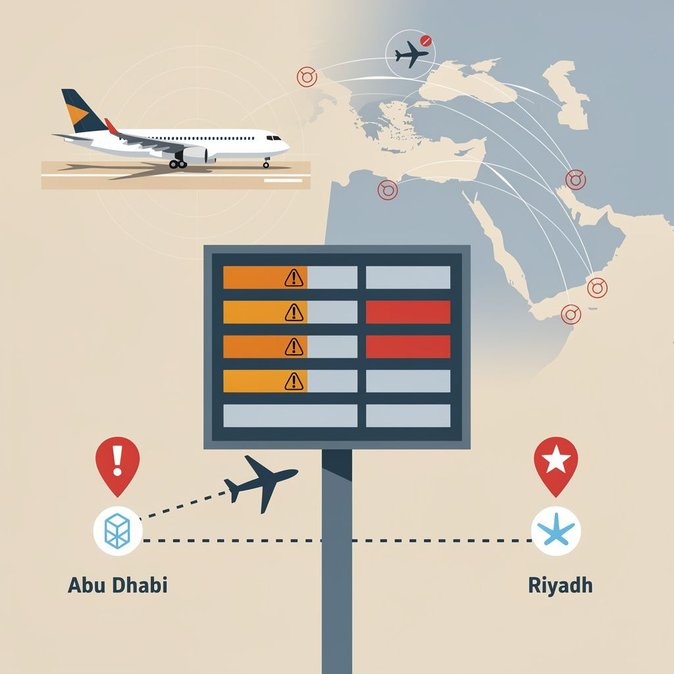
Etihad Airways and flydubai have halted all passenger services between the United Arab Emirates and Saudi Arabia’s capital after Yemen-based Houthi rebels fired ballistic missiles at King Khalid International Airport in Riyadh on the evening of 8 October. In a statement issued at 08:06 on Friday, 9 October, Etihad confirmed that six flights scheduled for the same day and a further two services on Saturday had been cancelled. The airline said the decision was taken “for the safety of guests and crew” while damage assessments continue at Riyadh airport. Flydubai followed with its own advisory, cancelling flights to Riyadh and Yanbu until 10 October and Domestic destination Abha until 11 October. Although the strike caused only minor structural damage, the incident is the first successful hit on Saudi civil-aviation infrastructure since January and has pushed insurers to raise war-risk premiums for aircraft operating in Saudi airspace. UAE carriers must now decide whether to reroute via Dammam or Jeddah, use spare wide-body capacity to protect cargo flows, or accept revenue losses during what is normally a busy holiday travel period for Gulf residents. The cancellations affect business travellers who rely on the two-hour shuttle between Abu Dhabi, Dubai and Riyadh for same-day trips connected to Vision 2030 investment projects. Cargo clients moving perishables and pharmaceuticals through Etihad Cargo’s cool-chain facility in Riyadh have also been advised to switch to Dubai World Central or Muscat until normal operations resume. Travel managers with personnel in the kingdom have been urged to check change-fee waivers published on the airlines’ websites and monitor GACA NOTAMs for further restrictions. Industry analysts caution that an extended suspension could push UAE–KSA yields up by 12-15 per cent in Q4 as capacity tightens across the wider Gulf network.
Source: ARN News Centre