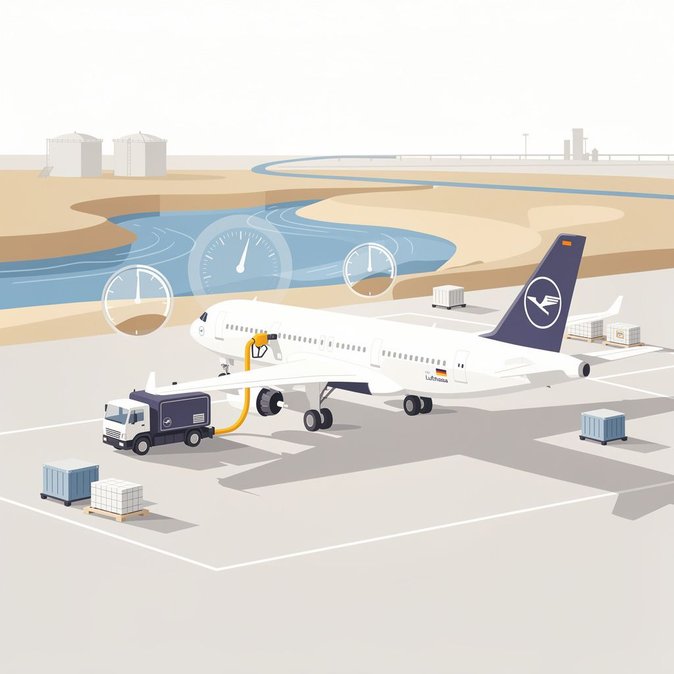
Germany’s busiest hub, Frankfurt Airport (FRA), is grappling with a short-term squeeze on kerosene supplies caused by scheduled maintenance on one of its feeder pipelines and unusually low Rhine water levels that restrict barge traffic. Lufthansa, whose main base is at FRA, confirmed on 15 October 2026 that it has instructed crews to ‘tanker’ extra fuel on inbound legs—loading surplus kerosene at origin airports so aircraft arrive in Frankfurt less thirsty. The airline stresses that the move is purely precautionary: no flights have been cancelled and Fraport, the airport operator, says its large on-site storage tanks and alternative delivery routes safeguard operations. Still, fuel-optimisation teams are recalculating payload limits: Airbus A320 family aircraft may carry up to eight tonnes of reserve fuel, requiring adjustments to freight weight and, in some cases, passenger load factors. For corporate travel planners the message is that schedules remain intact, but luggage and cargo restrictions could appear at short notice. Shippers of temperature-sensitive goods should stay in close contact with freight forwarders; last-minute rerouting via Munich or Zurich is possible if the maintenance over-runs. Sustainability officers may frown on tankering’s higher CO₂ footprint—a reminder that operational resilience can clash with decarbonisation goals. The episode underlines the vulnerability of Europe’s hub airports to single-point infrastructure outages. FRA’s main pipeline normally delivers 50 percent of its daily jet-fuel needs. Industry analysts argue for redundant supply lines and smarter stock-management systems, especially as climate-driven low-water events on the Rhine become more frequent. Lufthansa expects to end tankering within “a few days” once the pipeline is fully back online. Mobility managers should nevertheless flag the situation to travellers, advising generous connection times for intercontinental meetings and monitoring any excess-baggage embargoes issued by the carrier.
Source: Tagesschau