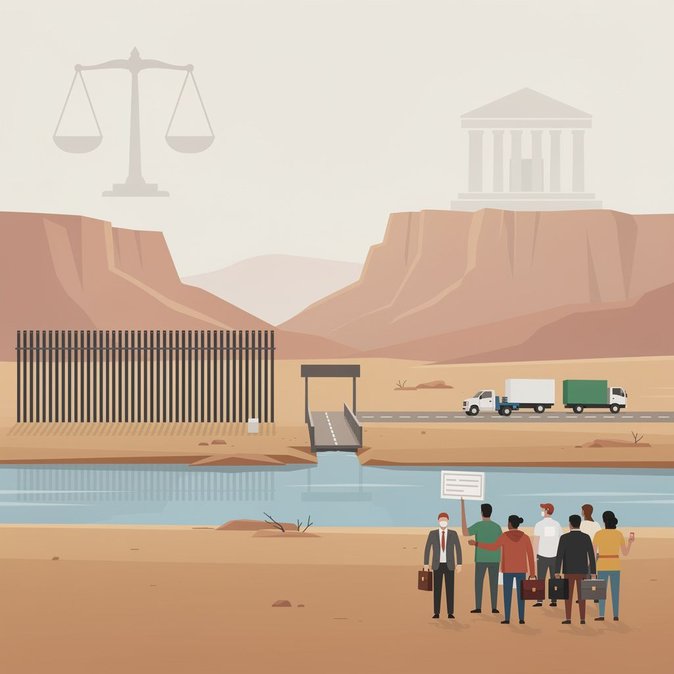
Homeland Security Secretary Alejandro Mayorkas has threatened to seek U.S. Supreme Court intervention after a federal judge halted construction of a 27-mile border-wall segment that would cut through environmentally sensitive areas of Big Bend National Park in Texas. In an Oct. 8 motion, DHS demanded that District Judge Kathleen Cardone stay her 2 October injunction or expect a certiorari petition "within days." The judge has not yet ruled. Cardone found that DHS relied on “misleading” illegal-crossing data to justify the $1.8 billion project and failed to perform the environmental assessments mandated by the National Environmental Policy Act. Her ruling followed a lawsuit filed by a coalition of ranchers, conservation groups and outdoor-tourism businesses that argued the wall would damage fragile desert ecosystems and close off popular rafting access points along the Rio Grande, a key revenue source for local outfitters. For corporate mobility managers, the case matters because the Big Bend segment is one of the first funded under the Trump administration’s 2025 Secure the Border Act, which calls for 200 miles of new barriers and dramatically expands military support for Customs and Border Protection (CBP). If DHS prevails, contractors could move equipment back on-site within weeks, again constricting the Boquillas border crossing that serves as the only legal entry point for Mexican workers who staff hospitality venues in nearby Terlingua and Marathon. Should the injunction stand, DHS would need to restart environmental reviews, a process likely to delay the project for a year or more. The agency argues that further delay will hamper efforts to deter smuggling routes that shifted eastward after new barriers went up in Arizona. Business-travel planners moving staff between West Texas energy sites and Mexican maquiladoras should therefore monitor the Supreme Court docket and prepare contingency routing through Presidio or Laredo if Boquillas closes again. Beyond Big Bend, the legal standoff foreshadows broader litigation risks for dozens of barrier projects planned on federal land. Mobility stakeholders with cross-border operations should track environmental-justice claims as a potential wildcard in project timelines and local port-of-entry staffing levels.
Source: Bloomberg Law