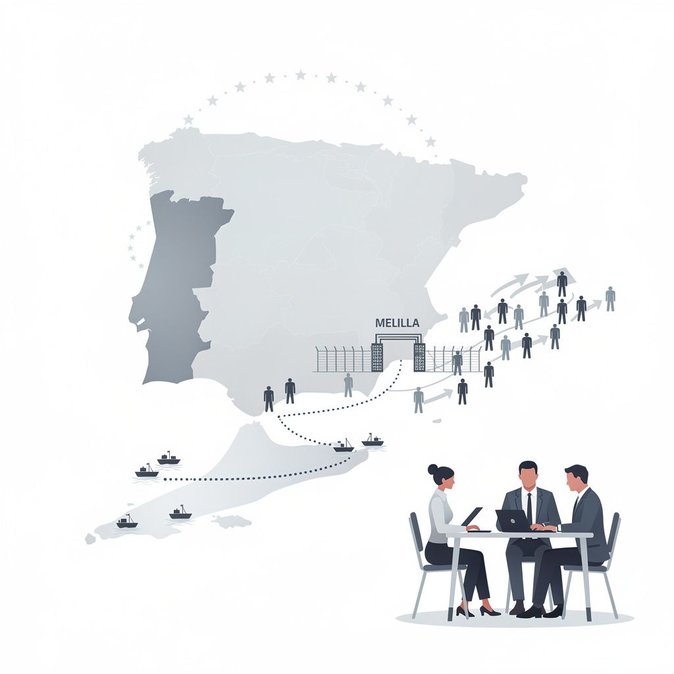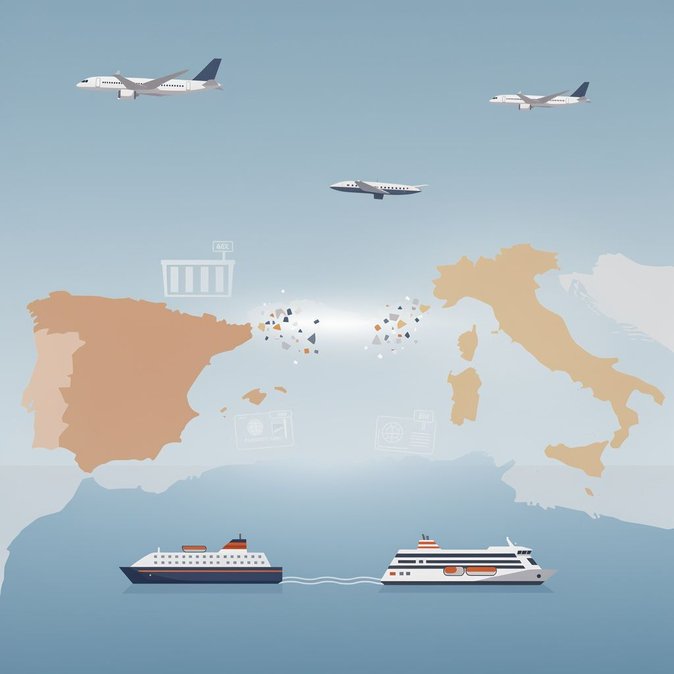
Spain and Italy have struck a long-awaited political deal to dismantle the extraordinary border controls that both countries introduced in August following the mass irregular crossings that overwhelmed Spain’s North-African enclave of Ceuta. The agreement was sealed late on Thursday, 15 October, in the margins of the European Council in Brussels during a one-to-one meeting between Spanish Prime Minister Pedro Sánchez and his Italian counterpart Giorgia Meloni, and confirmed publicly on Friday morning. Under the plan, Rome will keep its current air- and seaport checks on travellers from Spain in force only until 22 October—synchronising with the expiry date of Madrid’s own reciprocal measures—and then scrap them altogether. Interior ministers Fernando Grande-Marlaska and Matteo Piantedosi have been instructed to work on the operational details this week so that airlines, ferry companies and airport authorities receive formal notice in time to adjust their procedures. Both governments say the move is a confidence-building step that will allow business travel and tourism flows—worth an estimated €9 billion a year between the two countries—to return to pre-crisis levels before the lucrative November-January convention season begins. Spanish airport operator Aena calculated that the additional document checks were adding between eight and 20 minutes per passenger at Madrid-Barajas and Barcelona-El Prat, forcing airlines to block extra ground time and increasing crew costs. Spanish Chambers of Commerce report that some corporate travellers had already begun rerouting meetings through Lisbon or Paris to avoid missed connections. The political sub-text, however, is larger than aviation efficiency. Meloni’s government introduced the unilateral controls in August after accusing Spain of lax external-border policing when more than 4,500 migrants landed in Ceuta in a single week. Madrid responded in kind and lodged a protest in Brussels, arguing that the Schengen Borders Code allows internal checks only as a ‘last resort’. The European Commission quietly sided with Spain, warning Italy that any extension beyond two months would require fresh justification linked to a concrete security threat. Facing diplomatic isolation and airline pressure at home, Rome signalled this week that it was ready to de-escalate. For travellers the practical implications are straightforward: from 23 October, passports and EU ID cards should again be accepted at face value on Spain-Italy routes, with no additional police interview or barcode scan. Carriers will still collect advance passenger information as required by EU law, but boarding times and minimum connection windows are expected to fall back to summer 2026 levels. Companies organising events or secondments across the western Mediterranean can therefore plan for the peak autumn-winter season without the buffer days that had become necessary since August.
Source: El País
How VisaHQ can help
VisaHQ simplifies the visa application process for individuals and businesses. Check current travel requirements, prepare the required documents and manage your application online through the VisaHQ Spain portal.More From Spain
View all
Spain and Italy Agree to End Temporary Schengen Border Checks Imposed After Ceuta Crisis

Three Separate Airport Strikes Continue to Hit Spain on 16 October—Barcelona Groundforce Walk-Out Enters Third Month