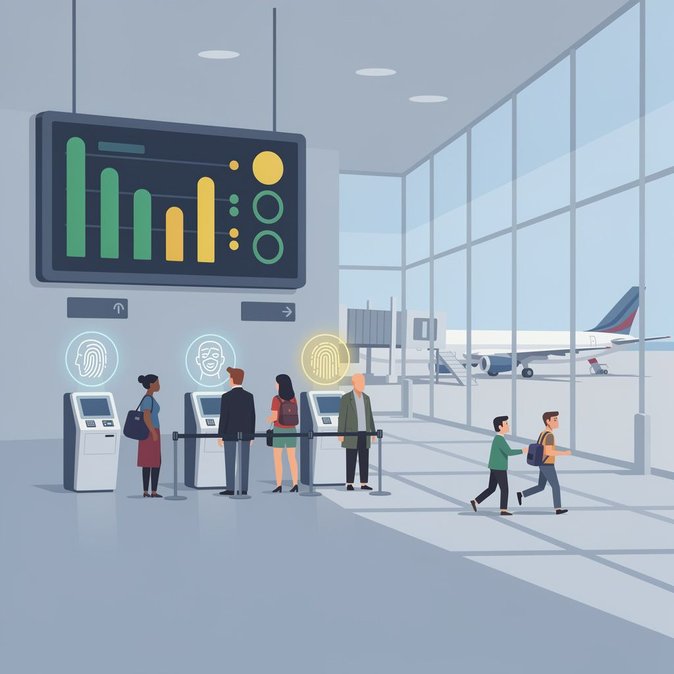
Real-time sensors at Paris-Charles-de-Gaulle showed average passport-control waits of **five minutes** at 10:22 CEST on 18 October, down from peaks of 40-plus minutes recorded earlier in the month as the EU Entry/Exit System (EES) beds in. While today’s flow is ‘green’, airport authorities warn that spikes can occur whenever large waves of long-haul arrivals converge on a limited number of biometric kiosks. Under EES, every third-country traveller must provide four fingerprints and a facial image the first time they cross an external Schengen border, a process that can triple transaction time compared with the old passport-stamp routine. Airlines have started sending push notifications advising non-EU passengers to allow **an extra 45 minutes** for immigration. Corporate-travel departments should mirror that advice, especially for itineraries with tight Schengen connections; a missed onward TGV or regional flight could add hotel nights and carbon costs to mobility budgets. French authorities are gradually expanding the PARAFE e-gate programme to additional nationalities and linking it to EES enrolment records. Until that upgrade is complete, only EU/EEA/Swiss citizens and certain registered frequent travellers can use automated lanes on arrival. Mobility managers should brief relocating staff on the possibility of being redirected for manual processing if biometric capture fails. Keeping passports clean of protective covers and moisturising hands (the literal ‘tips’ now circulating on traveller forums) can help prevent re-scans and bottlenecks.
Source: QSensor (Paris-CDG live data)