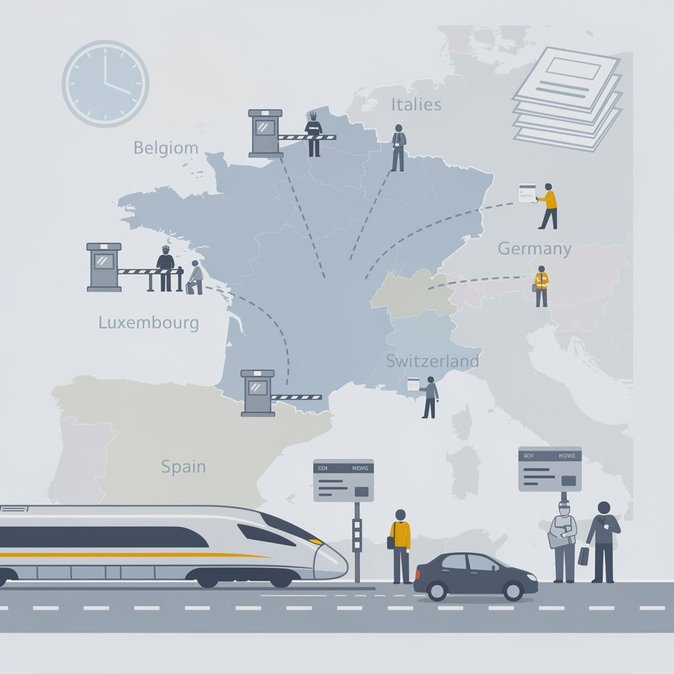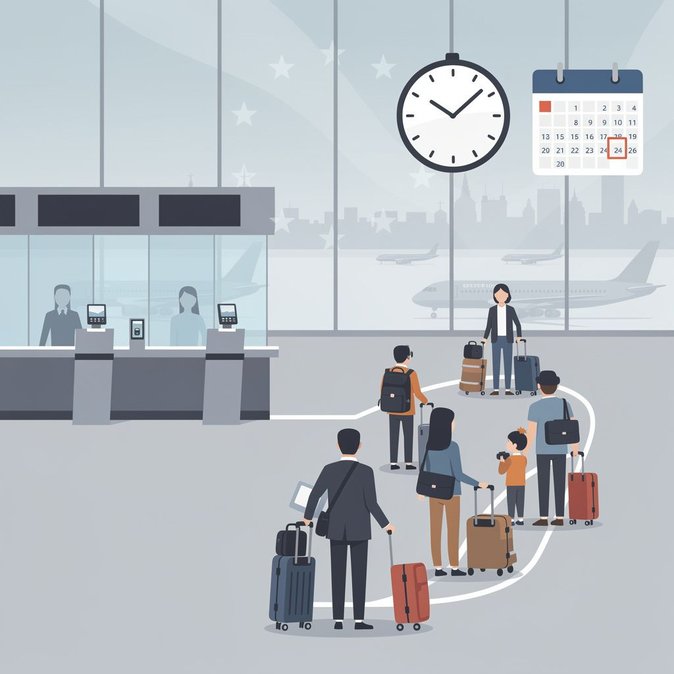
Europe’s aviation industry has delivered an ultimatum to Brussels: fix the border queues created by the new Entry/Exit System (EES) before the Christmas peak or risk lasting damage to tourism and business travel. In a joint release dated 16 October, Airports Council International (ACI Europe) and Airlines for Europe unveiled a six-point action plan and disclosed that EU migration commissioner Magnus Brunner has given member states a Christmas deadline to restore acceptable service levels. The stakes are high for France, which processed some 90 million non-EU arrivals in 2025. Since full biometric capture became mandatory in April, peak wait times at Paris Charles-de-Gaulle have exceeded two hours and regional gateways such as Bordeaux and Nice have struggled with staffing and kiosk outages. The industry proposals include removing duplicate verification steps, optimising biometric capture, preventing duplicate traveller profiles, upgrading the under-used “Travel to Europe” pre-registration app, accelerating e-gate deployment for third-country nationals and, crucially, reinstating a rule that allows border police to suspend biometric capture when queues exceed set thresholds. Commission officials acknowledge the problems but insist security benefits outweigh the pain. A leaked data set cited by ACI Europe shows EES has already logged 230 million crossings and refused entry to 80,000 travellers flagged for serious alerts. Yet business groups warn that the reputational cost is mounting. A survey by MEDEF’s international arm found that 38 percent of French exporters have postponed in-person meetings with clients because of EES-related uncertainty at airports. For mobility managers the message is two-fold. First, plan buffer time. Until staffing, IT stability and automation improve, travellers should arrive at least three hours before departure on Schengen-external itineraries. Second, watch for rapid rule changes. If the Commission re-introduces the flexibility to skip biometrics during peak periods, processes could differ not just by airport but by time of day. Document your company’s compliance assumptions and communicate them to travellers. If the deadline holds, the Christmas period will be the system’s make-or-break moment. Success would restore confidence ahead of the Paris Air Show and the 2027 World Expo bid, both of which hinge on France’s ability to move millions of visitors smoothly through its borders. Failure would embolden calls for a permanent return to passport stamping – a scenario that would undermine the EU’s €1.3 billion investment in smart borders.
Source: Travel Market News