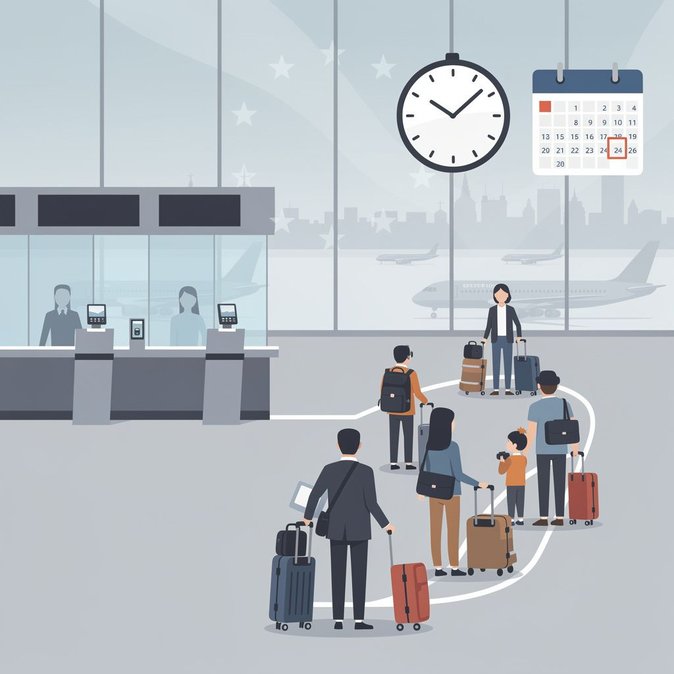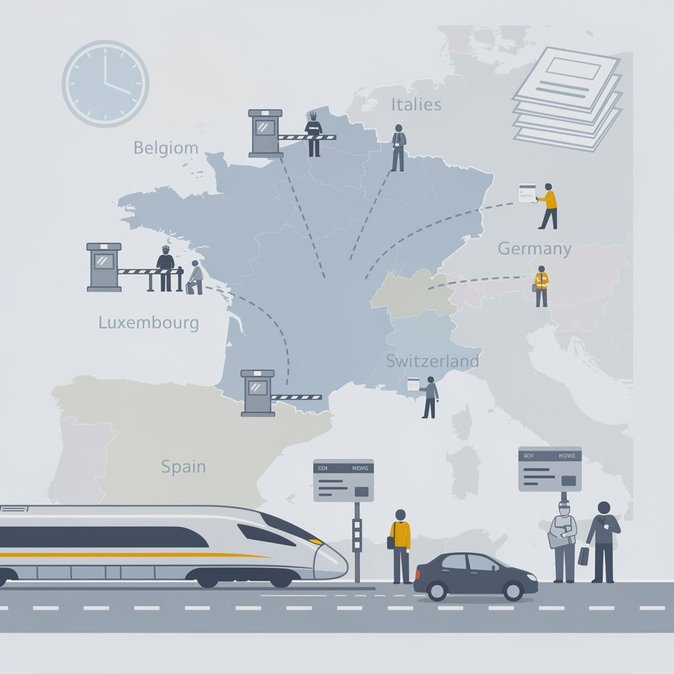
France has formally notified the European Commission that it will prolong internal border controls at all land, air and sea crossings with its six Schengen neighbours (Belgium, Germany, Luxembourg, Switzerland, Spain and Italy) from 1 November 2026 until 30 April 2027. According to the notification published on the Commission’s ‘Temporary Re-introduction of Border Control’ register, the government cites continuing jihadist threats, a rise in antisemitic attacks, growing migrant-smuggling networks around the English Channel, and the security demands created by several high-profile events including the Paris Peace Forum (10-11 November) as justification for the measure. The decision means that travellers arriving by road or rail from neighbouring EU states should expect spot checks and occasional queues similar to those in place since 2015. Airlines operating intra-Schengen flights to Paris-CDG, Paris-Orly, Lyon and Nice told Global Mobility News that they will keep recommending passengers arrive at least 30 minutes earlier than pre-2015 norms. Carriers have not yet adjusted schedules, but business-travel managers should factor in slightly longer door-to-door journey times—especially for Monday-morning departures when volumes are highest. From a compliance perspective, the re-introduction of controls does not affect visa-free movement inside the Schengen Area; it does, however, re-empower border police to request passports or national ID cards at will. Companies moving employees between Belgium and the Paris region by Thalys or Eurostar services are advised to remind staff to carry valid ID and to anticipate random screening at Paris-Nord and Brussels-Midi. Although France is legally allowed to keep internal checks in place only as a ‘measure of last resort’, this is now the fourteenth consecutive six-month extension. EU lawmakers continue to criticise the practice, arguing that it undermines the very rationale of the Schengen Area. The Council is currently reviewing draft reforms that would cap successive extensions at two years and oblige Member States to file detailed risk assessments. For multinationals with cross-border commuter populations—particularly in the Lille-Kortrijk-Tournai, Basel-Mulhouse and Franco-Italian Riviera regions—the extension preserves the status quo. Nevertheless, mobility teams should monitor guidance from local Chambers of Commerce, as any intensification of checks could require recalibrating shuttle-bus timetables or revisiting work-shift patterns.