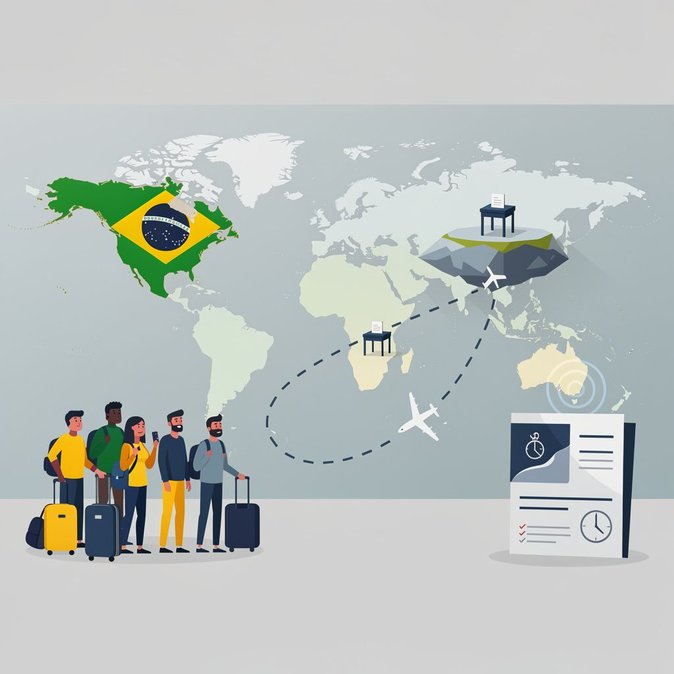
With Brazil’s presidential run-off just days away, fresh data released on 21 October 2026 by the Superior Electoral Court (TSE) and analysed by Folha de S.Paulo show that 62.7 % of the 916,000 Brazilians registered to vote abroad skipped the first-round election on 4 October. The main culprit: geography. Many voters live hundreds of kilometres from Brazil’s 181 foreign polling sites, which are located only in cities hosting a consulate or embassy. While voting is mandatory inside Brazil, it is optional overseas—but fines for abstention still apply. Interviews with expatriates in New York, Paris and Dublin reveal secondary deterrents: the cost of domestic flights, fear of encountering immigration authorities in the United States for those out of status, and, in Europe, rail strikes that disrupted weekend travel. From a global-mobility perspective, the figures matter because proof of electoral compliance is required for several consular services, including passport renewal and some categories of visa for foreign spouses of Brazilians. HR managers assisting Brazilian employees abroad should remind them to justify their absence on the TSE app within 60 days or pay the R$ 3.50 fine to avoid bureaucratic delays. The TSE says it is studying mobile polling sites for 2030 and has asked the foreign ministry for updated data on Brazilian population clusters to possibly open additional sections in tech hubs such as Austin and Eindhoven, where Brazilian talent has grown fastest. NGOs have launched ride-sharing platforms and funding drives to help voters reach consulates on 25 October. Though not a visa story per se, the episode underlines how administrative obligations back home can intersect with mobility planning.
Source: Folha de S.Paulo