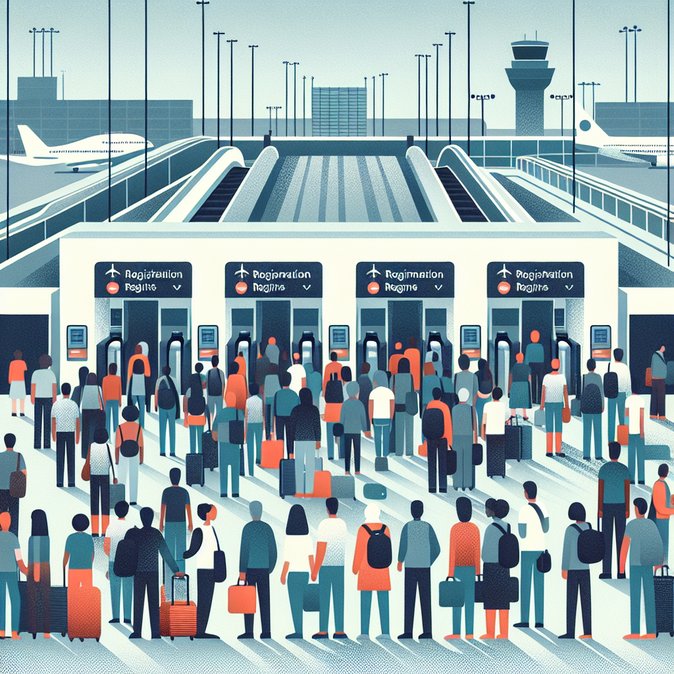
The European Union’s biometric Entry/Exit System (EES) moved into its second implementation phase on 9 January 2026, raising the mandatory registration rate of non-EU travellers from 10 % to 35 %. Reporting on 28 January, industry outlet *Biometric Update* quoted airport associations and analysts who labelled the rollout “a mess”, citing technical glitches, staff shortages and queues of up to 70 minutes during the Christmas peak. Brussels Airport – which has installed 61 self-service kiosks, 12 additional manned booths and 36 new e-gates – is among the hubs struggling to keep pace as volumes rebound.
Under EU rules, the EES must reach 100 % coverage by 10 April 2026. For Belgium, the Federal Police handle enrolment while the airport operator supplies equipment and flow-management staff. Union representatives have already complained that border-control staffing levels are inadequate, raising the spectre of spring-holiday disruption if bottlenecks persist. Airlines fear missed connections and compensation claims, while corporate travel managers worry about unpredictable clearance times for short-haul meetings.
![Airports warn of congestion as EU Entry/Exit System enters 35 % registration phase]()
Belgian authorities say they are evaluating a proposal to allow trusted-traveller nationals from certain third countries to continue using e-gates, a measure that could cut queue times by up to 30 %. Meanwhile, companies are encouraged to brief non-EU assignees to allow extra time on arrival and departure and to ensure passports are machine-readable and undamaged, as manual processing lines move significantly slower.
The EES is the forerunner to ETIAS, the travel-authorisation system now scheduled for late-2026. Together they are set to transform Schengen border management, making biometric data a standard requirement. Employers with regional mobility programmes should therefore update travel policies, monitor wait-time data, and build buffer periods into flight schedules until full stabilisation of the new system.
Under EU rules, the EES must reach 100 % coverage by 10 April 2026. For Belgium, the Federal Police handle enrolment while the airport operator supplies equipment and flow-management staff. Union representatives have already complained that border-control staffing levels are inadequate, raising the spectre of spring-holiday disruption if bottlenecks persist. Airlines fear missed connections and compensation claims, while corporate travel managers worry about unpredictable clearance times for short-haul meetings.

Belgian authorities say they are evaluating a proposal to allow trusted-traveller nationals from certain third countries to continue using e-gates, a measure that could cut queue times by up to 30 %. Meanwhile, companies are encouraged to brief non-EU assignees to allow extra time on arrival and departure and to ensure passports are machine-readable and undamaged, as manual processing lines move significantly slower.
The EES is the forerunner to ETIAS, the travel-authorisation system now scheduled for late-2026. Together they are set to transform Schengen border management, making biometric data a standard requirement. Employers with regional mobility programmes should therefore update travel policies, monitor wait-time data, and build buffer periods into flight schedules until full stabilisation of the new system.
Source: Biometric Update