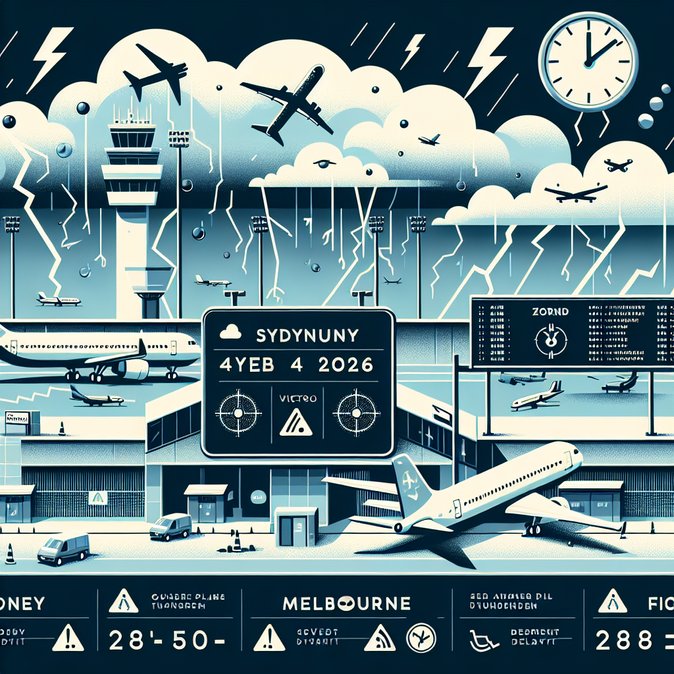
Australia’s aviation sector endured a bruising 4 February after a potent mix of summer thunderstorms, air-traffic-control flow delays and crew-duty limits rippled across Sydney Kingsford-Smith and Melbourne Tullamarine. Industry portal Travel and Tour World counted 218 delays and three outright cancellations by mid-afternoon, affecting airlines ranging from Qantas and Jetstar to Cathay Pacific and Air New Zealand.
Sydney, which is constrained by a legislated hourly movement cap and a single main runway during wet-weather ops, bore the brunt with 102 delays and two cancellations. Melbourne reported 116 delays and one cancellation, but knock-on effects spread nationwide as aircraft and crew missed onward rotations.
![218 flights delayed at Sydney and Melbourne as weather and ATC bottlenecks snarl Australia’s two busiest hubs]()
For globally mobile staff, the disruptions translated into missed connections at key Asian and Middle-Eastern hubs and forced last-minute overnight stays. Travel managers say the incident highlights the fragility of Australia’s peak-summer schedule, when thunderstorms frequently exceed the planning assumptions baked into on-time-performance guarantees.
Airlines invoked their customer-care policies, offering meal vouchers, hotel rooms and fee-free rebooking, yet queues at service desks stretched into the terminals. Sydney Airport reiterated calls for accelerated investment in GNSS-based approach procedures and a review of the movement cap—measures it claims would boost resilience without compromising noise-sharing.
Corporate mobility teams are urged to brief travelling employees on the heightened risk of weather-related disruption until the La Niña-like conditions abate later this month. Contingency buffers of at least six hours are recommended for any same-day international connections through Australia’s east-coast gateways.
Sydney, which is constrained by a legislated hourly movement cap and a single main runway during wet-weather ops, bore the brunt with 102 delays and two cancellations. Melbourne reported 116 delays and one cancellation, but knock-on effects spread nationwide as aircraft and crew missed onward rotations.

For globally mobile staff, the disruptions translated into missed connections at key Asian and Middle-Eastern hubs and forced last-minute overnight stays. Travel managers say the incident highlights the fragility of Australia’s peak-summer schedule, when thunderstorms frequently exceed the planning assumptions baked into on-time-performance guarantees.
Airlines invoked their customer-care policies, offering meal vouchers, hotel rooms and fee-free rebooking, yet queues at service desks stretched into the terminals. Sydney Airport reiterated calls for accelerated investment in GNSS-based approach procedures and a review of the movement cap—measures it claims would boost resilience without compromising noise-sharing.
Corporate mobility teams are urged to brief travelling employees on the heightened risk of weather-related disruption until the La Niña-like conditions abate later this month. Contingency buffers of at least six hours are recommended for any same-day international connections through Australia’s east-coast gateways.
Source: Travel and Tour World
How VisaHQ can help
VisaHQ simplifies the visa application process for individuals and businesses. Check current travel requirements, prepare the required documents and manage your application online through the VisaHQ Australia portal.More From Australia
View all
Sydney Airport reports record 42.5 million passengers for 2025 but urges government to fast-track border-technology upgrades
Air New Zealand strike to disrupt long-haul services, prompts contingency planning for Australia-bound business travellers