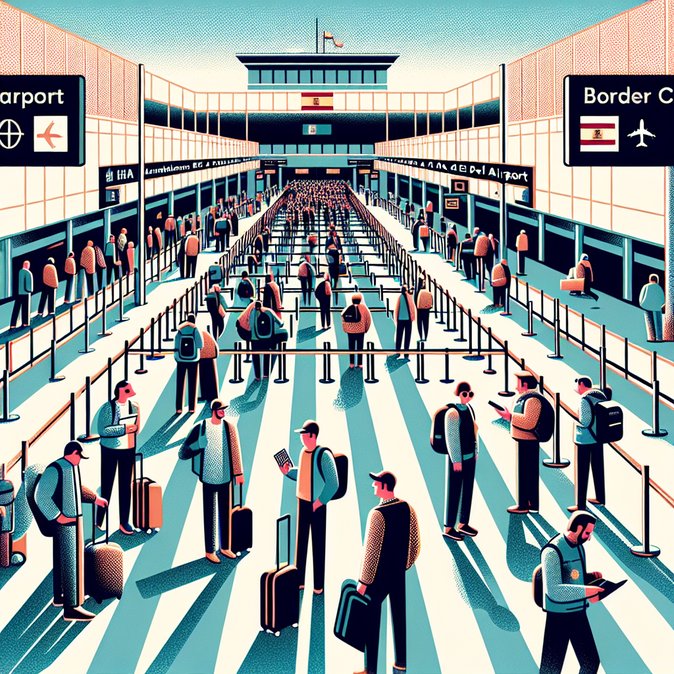
The Port of Barcelona used the public holiday of 28 February to launch two mobility-relevant tenders: a 16-year concession for an 87 000 m² multipurpose cargo terminal on the Príncep d’Espanya quay and, crucially for travel stakeholders, a €4.04 million contract to install automated border-control equipment that complies with the EU’s Entry/Exit System (EES) and forthcoming ETIAS travel-authorisation regime. Awarded to a joint venture between Inetum España and Ambar Seguridad y Energía, the project will retrofit cruise terminals C, E, G and H and the ferry halls with self-service biometric kiosks, e-gates, mobile tablets for officers and dedicated control rooms. Seventy-five per-cent of the financing comes from the EU’s Border Management and Visa Policy Instrument, underscoring Brussels’ determination to have all Spanish sea and air borders EES-ready before the April 2026 deadline. For cruise operators, the upgrade is a game-changer: ships calling at Barcelona will be able to pre-enrol third-country passengers en route and funnel them through segregated lanes on arrival, reducing the hours-long queues seen last autumn when manual data-entry overwhelmed officers. Ferry companies operating to Morocco, Italy and the Balearics will gain similar efficiencies once the kiosks are rolled out to driver-only Ro-Pax facilities. Port directors emphasise that the concessionaire must electrify equipment and install solar canopies, tying the build-out to the harbour’s decarbonisation plan. Logistics firms welcome the mandate that a minimum tonnage of non-containerised cargo be maintained, avoiding a passenger-only monopoly that would push lorry traffic to already congested roads. Companies moving assignees or project cargo through Barcelona should brief travellers on biometric capture (four fingerprints and a facial scan) and ensure that business visitors obtain ETIAS approval once the travel-authorisation system becomes mandatory later this year.
Source: World Port Development