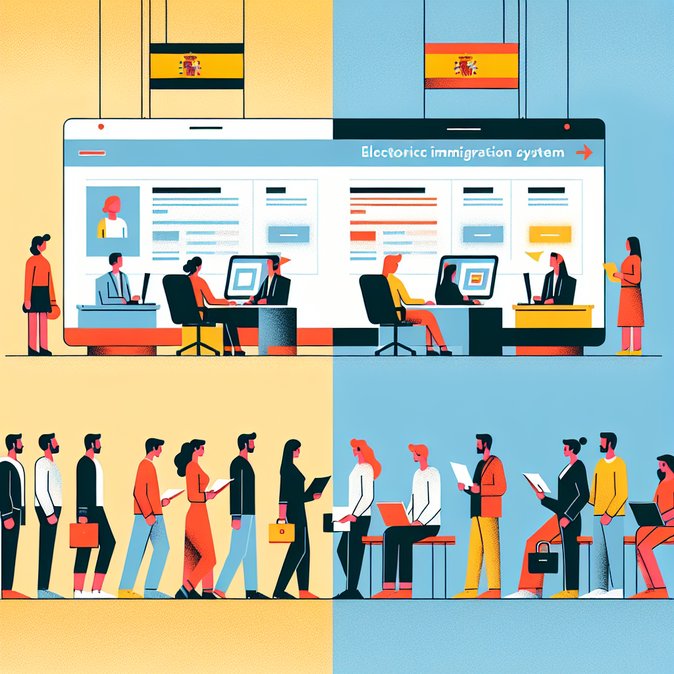
From today, 6 March 2026, Spain’s immigration system takes a decisive step into the digital era with the entry into force of Order ISM/164/2026, which establishes the Registro Electrónico de Colaboradores de Extranjería (Electronic Register of Immigration Collaborators). The new register—managed by the Directorate-General for Migration within the Ministry of Inclusion, Social Security and Migration—allows accredited trade unions and non-profit organisations with proven experience supporting migrants to file residence- and work-permit applications online on behalf of foreign nationals. Until now, most applicants—or their lawyers—had to appear in person at provincial immigration offices, a process that generated long queues, inconsistent document checks and, in some regions, appointment back-logs that stretched for months. By expanding the roster of authorised “collaborators”, the government hopes to ease pressure on over-burdened Extranjería counters, speed up case-lodging and give vulnerable migrants an additional channel for representation. Eligible entities must demonstrate at least two years of continuous work with immigrants, be free of recent sanctions and maintain up-to-date tax and social-security compliance. Once enrolled, they can submit files, receive notifications and track decisions entirely through Spain’s e-administration portal, a change officials say will cut paperwork by up to 30 percent. For employers moving staff to Spain, the change means corporate immigration advisers—if they meet the non-profit or union criteria—can eventually lodge applications without the transferee or an attorney attending in person. Human-resource teams should confirm whether their usual providers intend to register, and update power-of-attorney templates to reference the new electronic channel. Practically, nothing changes for assignees whose files are already in process; however, new applications dated 6 March 2026 or later may be routed through registered collaborators, potentially shortening lead times. The ministry will publish a public list of accredited organisations within 30 days, and says it expects "several hundred" entities to sign up during the first quarter. Companies should monitor that list—particularly in Madrid, Barcelona, Valencia and Málaga, where demand for appointments is highest—to select partners with digital filing capability.
Source: Boletín Oficial del Estado