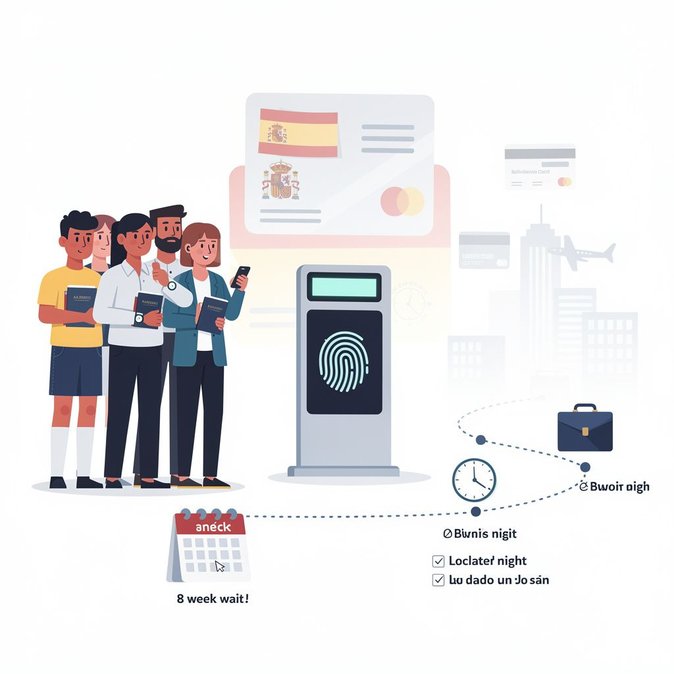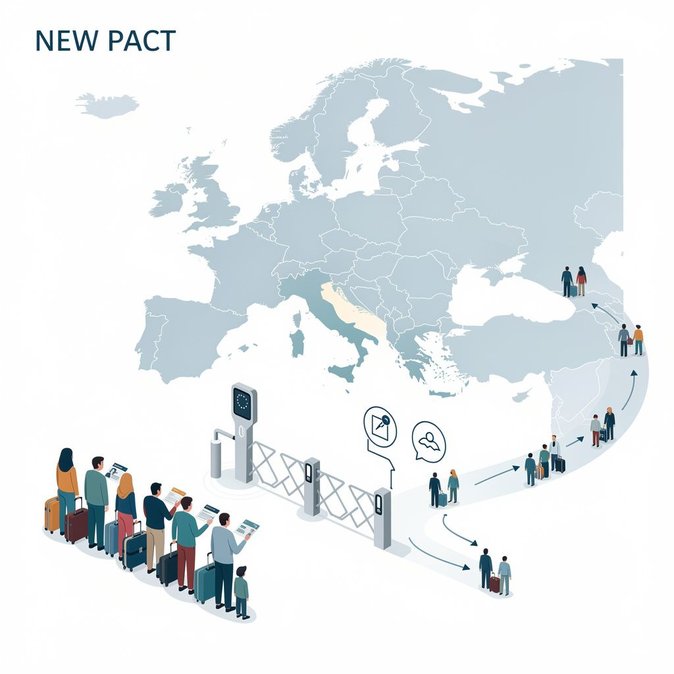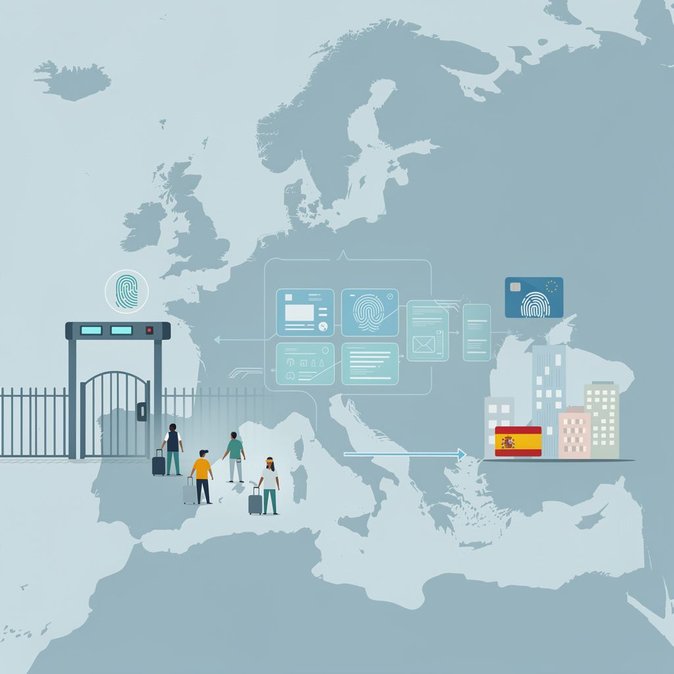
Spain officially switched to the new European Union Pact on Migration and Asylum at 00:00 on 12 June, bringing the country’s immigration and border-management rules into line with a package of ten EU regulations adopted in 2024 and now entering into force. Interior Minister Fernando Grande-Marlaska, speaking from Madrid, said the government would apply the pact “with a guaranteed, rights-respecting approach” while rejecting the idea—authorised in the new EU return regulation—of sending migrants to processing centres in third countries. What changes on the ground? From today, every third-country national intercepted at an external border or arriving irregularly will undergo a compulsory biometric “pre-entry screening” that must be completed within seven days. Spain has installed additional fingerprint and facial-recognition terminals at key hot spots such as Algeciras, Melilla and the Canary Islands to cope with the surge in data collection. The new rules also introduce 12-week border asylum procedures for applicants from ‘safe’ countries and oblige Spain to hold them in dedicated facilities while their claims are fast-tracked. Companies that post workers across borders will need to factor in the possibility of much faster refusal decisions—and removals—if an assignee’s family member is denied protection. Corporate mobility managers should note that information-sharing between Spain’s police, asylum office (OAR) and social-services network will be fully digitalised under the pact’s interoperability requirements. That should shorten waiting times for decisions on ‘highly qualified professional’ and intra-company transfer permits, but it also means that overstays or duplicate applications lodged in another EU state will surface immediately. Any staff rotation strategy must therefore include real-time compliance monitoring across Schengen. For global mobility programmes, the biggest immediate implication is the new solidarity mechanism. Because Spain is listed as a ‘front-line’ state under pressure, other EU members will have to offer either relocation places for asylum seekers or pay a €20,000 contribution per refusal. This could, in theory, release funds for additional staffing at extranjería offices—potentially reducing backlogs in residence-permit renewals that have plagued multinationals in Barcelona and Madrid. Practically, travellers should expect more detailed questions at border entry kiosks and longer secondary checks over the summer peak. Crew schedulers and relocation vendors are already advising clients to build in extra transit time and to carry documentary proof of accommodation, health insurance and onward travel to avoid being channelled into the new accelerated procedure.
Source: El País