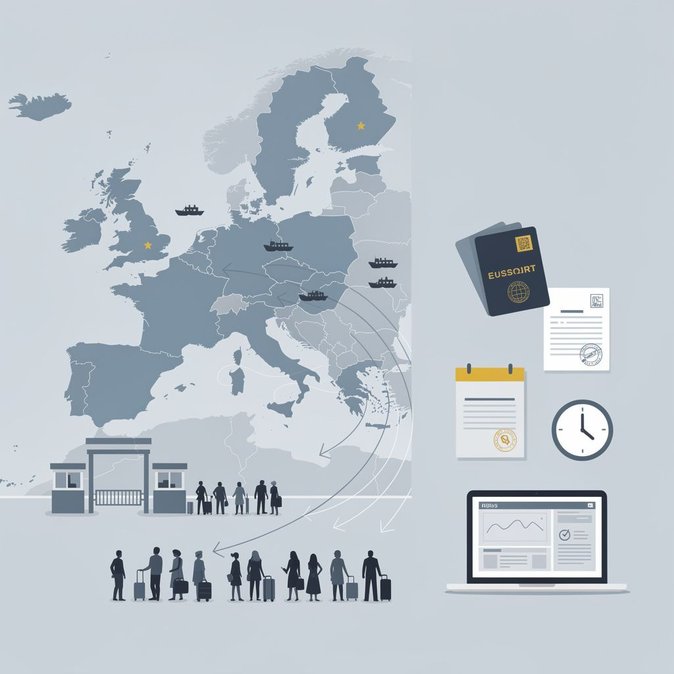
After a decade of wrangling, the European Union’s New Pact on Migration and Asylum became fully operational on 12 June 2026. The reform introduces tighter external-border controls, mandatory biometric screening and faster return procedures for rejected applicants. Although the UK is no longer part of the EU, the changes will reshape the mobility landscape for British companies with EU-based operations. Key elements include a “solidarity mechanism” that obliges member states with lower arrival numbers to accept migrant relocations or provide financial support, and a revamped Eurodac system that captures fingerprints and facial images at the point of entry. Stricter screening at airports and ports is expected to lengthen processing times during the bedding-in period. For UK multinationals, the practical impact will be felt in cross-border assignments where employees travel on British passports but require local work authorisations inside the bloc. Higher scrutiny at land borders — particularly on the Western Balkans and Central Mediterranean routes — could also divert irregular flows towards the UK, increasing political pressure for reciprocal measures. Experts advise mobility teams to brief travellers on potential delays, ensure EU work-permit files are complete for audits and monitor secondary legislation such as digital entry-exit systems (EES) scheduled for October. The pact also heightens the compliance burden on EU subsidiaries that act as hosts for intra-company transfers, as failure to register assignees correctly could attract heavier penalties under national transpositions of the new rules. In short, while the UK will not enforce the pact, British employers cannot ignore its ripple effects across the wider European labour market.
Source: Reuters (via StreetInsider)