Border Checks and Holiday Rush Create Hour-Long Queues at Austria–Slovenia Karawankentunnel
Lane restrictions at Brenner Pass create heavy delays for cross-border traffic
Airlines warn Austria and other Schengen states of ‘four-times longer’ queues as EES goes live
Latest News

Irish EU Council Presidency to prioritise Pact on Migration & Asylum—Austria eyes implementation impact
Ireland’s six-month EU Council Presidency, beginning 1 July 2026, puts full rollout of the Migration & Asylum Pact and tighter action against migrant smuggling at the top of the agenda. Austria, which still operates internal border controls, is watching closely as successful implementation could ease pressure on its frontiers and accelerate reforms that benefit employers hiring non-EU talent.
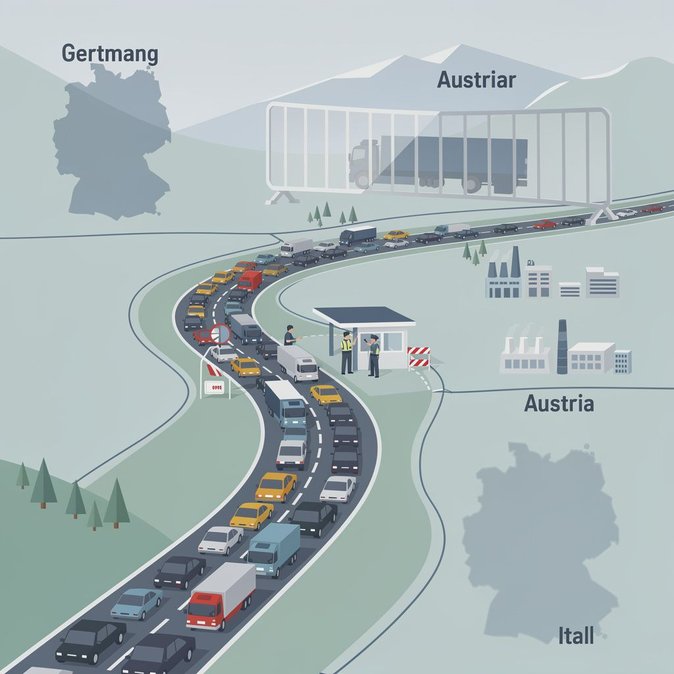
Holiday-eve gridlock on Austria’s Fernpass as border spot-checks and protests collide
Heavy holiday traffic, spot border checks and upcoming protest closures produced significant queues on the Fernpass (B179) today. Authorities warn that a full two-hour closure on 1 August will further disrupt the Germany–Austria–Italy corridor. Businesses moving staff or goods through Tyrol should use alternative routes or night-time slots to avoid delays.

ETIAS, UK ETA and multiple national schemes create a ‘compliance maze’ for Austrian firms moving staff into Europe
Austrian companies will soon juggle the EU’s ETIAS, the UK’s ETA and other national pre-authorisation tools on top of the new EES border database. Different fees, validity periods and data requirements risk trip disruptions if any clearance is overlooked, so firms need robust tracking and employee training.

Austria joins Schengen partners in charging €20 ETIAS fee for UK travellers
Austria confirmed on 30 June 2026 that it will levy the standard €20 ETIAS fee on UK passport holders, aligning with all other Schengen states. The move finalises Austria’s technical and legal preparations for the late-2026 rollout of the EU’s new pre-travel authorisation, affecting holidaymakers and business travellers alike. Firms will need to adjust budgets and compliance procedures, while airlines face new liability for transporting non-authorised passengers.

Demonstration to Close Austria’s Fernpass Route on 1 August; Early Stau Alerts Issued
Protesters will shut the Fernpass B179 on 1 August, the busiest holiday Saturday, forcing a two-hour blockade of the Germany–Austria–Italy road corridor. Business and leisure travellers should divert or expect multi-hour delays, while freight firms may need to reroute time-critical loads. ([reisereporter.de](https://www.reisereporter.de/reisenews/stau-am-fernpass-b179-aktuell-verkehrslage-und-staumelder-im-ueberblick-30-06-2026-TNMTKBOX2REWJGPBCYA6GSJFDY.html?outputType=valid_amp))
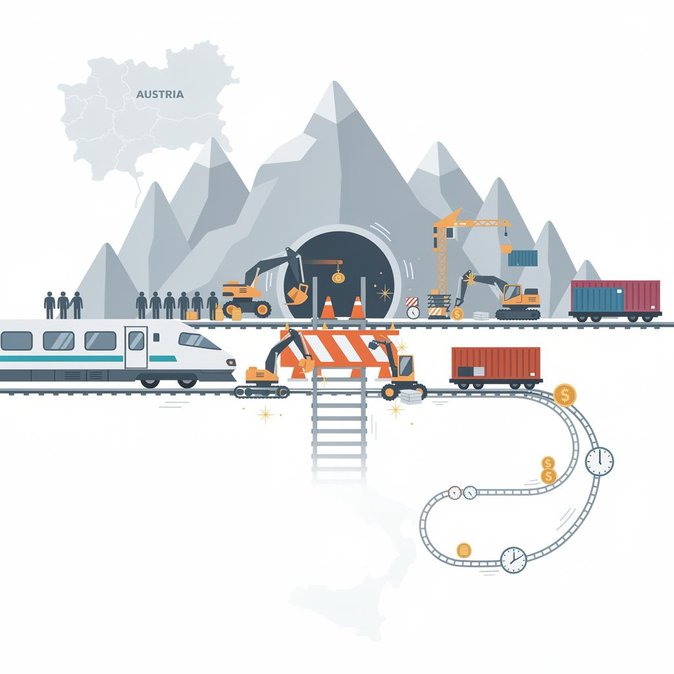
Major Track Works Will Shut Austria–Italy Brenner Rail Corridor for Two Weeks in July
From 18 July to 1 August 2026 the Brenner railway will be closed in two stages for urgent infrastructure works, forcing passenger diversions and adding cost and transit-time uncertainty for freight. The shutdown underlines ongoing capacity problems on the crucial Austria–Italy corridor but should deliver higher performance once finished. ([transportjournal.com](https://transportjournal.com/de/2026/06/30/bauarbeiten-der-oebb-schraenken-brennerstrecke-ein/))

Austrian Supreme Court Outlaws 14 Ryanair Ancillary Fees, Opening Door to Passenger Refunds
The Austrian Supreme Court has struck down 14 Ryanair surcharges – including airport check-in, infant and seat-reservation fees – as unlawful. Affected passengers can reclaim the money, and Ryanair must redesign its fee model for the Austrian market. The case is expected to reverberate across Europe, forcing airlines to add transparency and simplifying cost forecasting for business travellers. ([chip.de](https://www.chip.de/news/hobby-freizeit/14-ryanair-gebuehren-rechtswidrig-oesterreicher-koennen-abgezocktes-geld-zurueckfordern_eb23c9df-8640-4f83-a88e-4faae2e9dfb7.html))

ÖBB announces July closures on Brenner rail corridor
From 18 July to 1 August 2026 the Brenner rail corridor will be closed in two stages for infrastructure repairs, disrupting both passenger and freight services. Regional trains will terminate early, long-distance and Nightjet services will be diverted or cancelled, and freight companies must reroute via alternative Alpine crossings. The works are expected to spill traffic onto Tyrol’s already strained motorway network and could delay business travellers and supply chains.

Schengen’s Biometric Border Era Begins: Austria Deploys EES, Retires Passport Stamps
Austria switched fully to the EU’s new Entry/Exit System on 29 June 2026, ending passport stamping for non-EU visitors. The biometric database automatically counts Schengen days, raising compliance stakes for business travellers and their employers. Companies should review travel-tracking processes in advance of the linked ETIAS permit later this year.

Austria joins full roll-out of EU Entry/Exit System, ending passport stamps ahead of ETIAS launch
Austrian border posts now use the EU’s biometric Entry/Exit System instead of stamping passports, making 29 June 2026 a watershed moment in Schengen travel. The change lengthens first-time border processing but gives authorities real-time overstay data. Firms must update traveller guidance and prepare for ETIAS—the pre-travel authorisation due in late 2026—to avoid costly boarding denials and itinerary disruptions.

Record Heatwave Warps Rails and Roads, Disrupting Travel Across Austria
Temperatures touching 40 °C on 29 June forced Austria’s railways to slow trains and close sections of track, while concrete motorways cracked and buckled. The disruptions highlight infrastructure vulnerabilities and push employers to revisit heat-safety plans for staff on the move.

Summer Getaway Snarled: Construction and Heavy Traffic Trigger Day-Long Queues at the Brenner Pass
On 29 June heavy tourist volumes, lane restrictions on the Lueg Bridge and continued border spot-checks combined to create hours-long jams on the Brenner route between Austria and Italy. The choke-point disrupted holiday traffic and time-critical freight, underlining the need for long-term alternatives such as the delayed Brenner Base Tunnel.

Austria issues same-day update to Kosovo travel advisory, highlights security risks and new 90-day stay rule
Austria’s Foreign Ministry has refreshed its travel advice for Kosovo, dated 29 June 2026. It reiterates a ‘high security risk’ in northern Kosovo, warns that some Serbia–Kosovo border crossings may close without notice, and confirms that visa-free stays are capped at 90 days in any 180-day period. Austrian travellers must register their stay, carry a passport or ID card (ID-Austria is not accepted abroad) and avoid Serbian borders if they entered Kosovo first. The update matters because it affects project timelines, supply-chain routing and duty-of-care obligations for Austrian companies operating in the Western Balkans.

Austrian Airlines Adds Vienna–Ohrid Non-Stop, Opening New Balkan Gateway for Business and Leisure
Austrian Airlines began direct Vienna–Ohrid flights on 29 June, giving Austrian companies quicker access to North Macedonia’s growing economy and boosting the lake city’s tourism prospects. The twice-weekly A320 service also offers new one-stop links from Germany and Central Europe via Vienna.

Record heatwave warps rails and roads, forcing travel warnings across Austria
Temperatures hitting an all-time June record of 40 °C have deformed rail tracks, damaged motorways and disrupted urban trams across Austria. ÖBB and ASFINAG have imposed speed limits, line closures and emergency repairs, urging passengers to postpone travel where possible. The disruption affects freight, commuter and business-travel flows, underscoring the growing operational risk that climate extremes pose to Austrian mobility infrastructure.

Corendon Steps In After Eurowings Exit, Safeguarding Graz–Hurghada Winter Charter Market
Corendon Airlines will take over the Graz–Hurghada route this winter after Eurowings pulled out, ensuring Styrian holidaymakers retain a nonstop option to Egypt’s Red Sea resorts. The last-minute move highlights the vulnerability of regional air links and the need for airports and businesses to plan for sudden carrier changes.