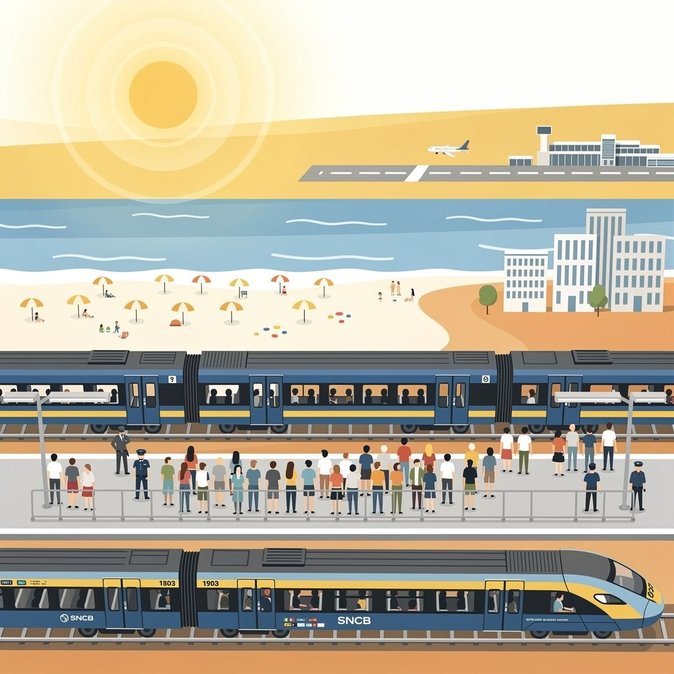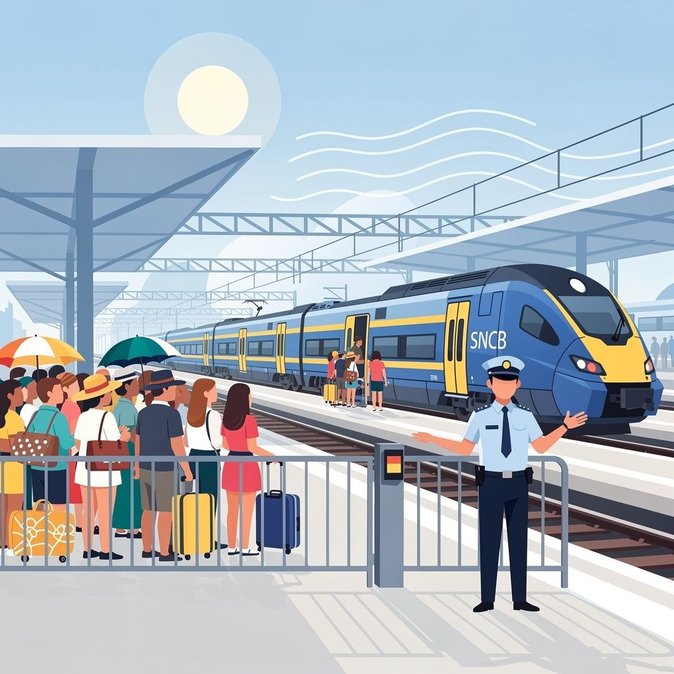
Belgium’s national rail operator SNCB triggered its crowd-management protocol – known internally as the “Plan Affluence” – after forecasts of 30 °C temperatures lured tens of thousands of day-trippers to the North-Sea coast over the weekend of 11–12 July. Under the plan, additional security staff (Securail) and roaming stewards were deployed at the country’s busiest interchange stations – Brussels-Midi, Ghent-Sint-Pieters, Bruges and Ostend – to meter passenger flows on to coastal InterCity services. Where platforms became saturated, access gates were closed temporarily and travellers were redirected to later trains to prevent dangerous overcrowding. SNCB warned that in extreme cases some passengers might be asked to wait for the next service. The rail operator also pushed real-time occupancy data to its journey-planner app and website, advising passengers to avoid peak arrival times at the coast (11:00-14:00) and peak return times (17:00-20:00). Travellers were reminded to carry sufficient water and to heed stewards’ instructions. For businesses that rely on weekend leisure traffic – from seaside restaurants to theme parks – the plan provides greater certainty that staff and customers can still reach the coast despite surging demand. Employers whose mobile workforces use the rail network were urged to monitor live updates and consider staggering shift start times. While the protocol is designed for heat-wave weekends and large public events, SNCB says it is increasingly becoming a staple of summer operations as climate change brings more frequent spikes above 30 °C. Mobility managers should expect similar crowd-control measures during upcoming public holidays, and factor potential station gating into travel-time calculations.
Source: SNCB