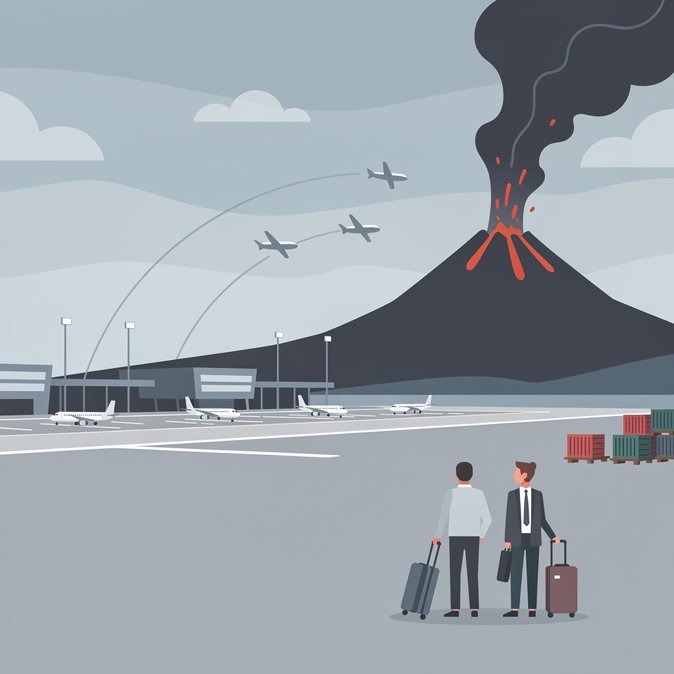
An overnight paroxysm at Mount Etna sent a dense ash plume south-eastward, prompting the airport operator SAC to impose a traffic cap at Catania–Fontanarossa (CTA) early on 24 July. Arrival slots were reduced to five movements per hour until at least 21:00 local time and dozens of flights were cancelled, diverted to Palermo and Trapani, or rescheduled. The restrictions come only weeks after a similar closure and highlight the chronic vulnerability of Sicily’s main international gateway—used by 10 million passengers a year—to volcanic events. Airlines including ITA Airways, Ryanair, Wizz Air Malta and easyJet activated disruption plans, bussing passengers to alternative airports and offering fee-free rebooking. For corporate mobility managers the disruption has immediate consequences: technicians heading to the island’s petrochemical hub in Priolo or the NATO Sigonella base face overnight delays; per-diem costs may rise, and urgent freight consignments such as pharmaceutical reagents are being rerouted through Palermo’s cargo terminal. Travellers should monitor NOTAM B4269/26 and check carrier apps for real-time gate information. SAC advises that full operations could resume tonight if ash fallout on runways remains below the 1 mm safety threshold. In the meantime, employers should authorise flexible working or remote meetings and remind staff that EU261 compensation does not apply to ‘extraordinary circumstances’ like volcanic ash, though carriers must still provide accommodation and meals. Longer-term, the episode is fuelling calls for a dedicated volcanic contingency facility at Comiso airport and for accelerating the installation of satellite-based approach procedures that allow landings under partial ash conditions, projects that could unlock more resilient connectivity for southeastern Italy.
Source: La Sicilia