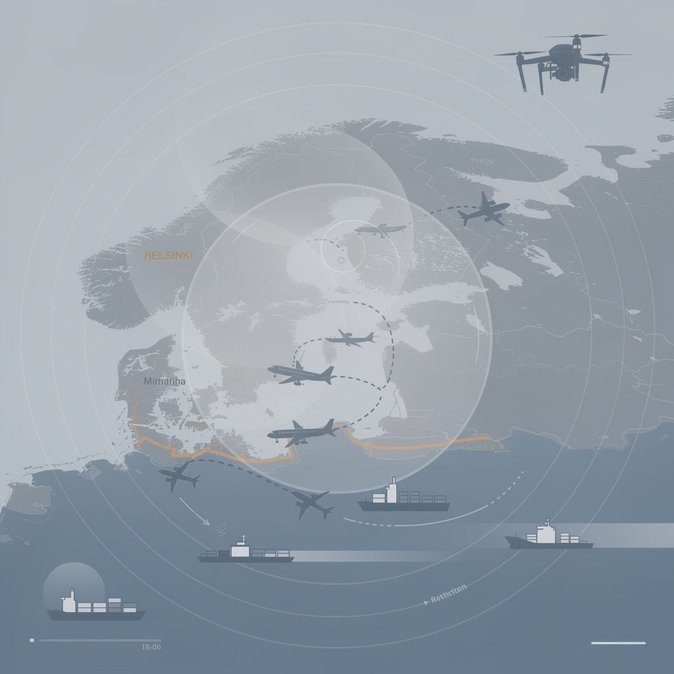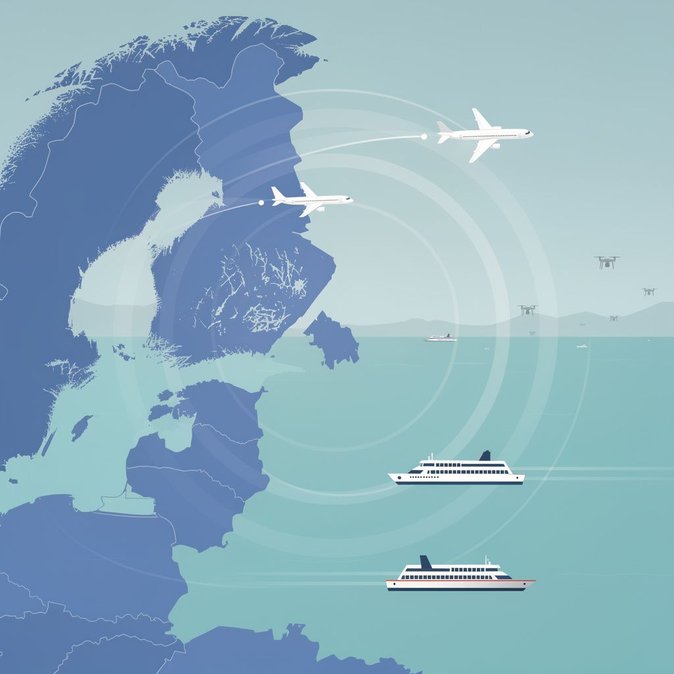
Just over two hours after imposing an emergency no-fly and no-sail zone in south-eastern Finland, the Finnish Defence Forces (FDF) lifted all restrictions at 10:30 a.m. on 28 July 2026. Public broadcaster Yle and the Polish Press Agency (PAP) reported that flights were once again cleared to approach Helsinki-Vantaa Airport, and ferries resumed normal tracks past the ports of Kotka and Hamina. The swift reopening followed confirmation that no hostile or stray drones had crossed into Finnish airspace during the window of heightened alert. Finnair told journalists it had diverted three intra-European flights and held four departures on the ground, but long-haul operations to Hong Kong and Dallas left with less than a 50-minute delay. Tallink Silja said its morning cargo-passenger service from Tallinn maintained schedule integrity by sailing south of the restricted zone. According to the Port of Kotka, only two feeder vessels were anchored offshore awaiting clearance, and container loading operations caught up by late afternoon. Defence officials stressed that repeated short-notice closures should be regarded as “the new normal” as the war in Ukraine spills over into the aerial domain of neighbouring states. Since June, Finland has declared temporary danger areas on four occasions, citing either Russian missile tests over the Baltic Sea or Ukrainian drones overshooting their intended targets. The FDF is accelerating plans—jointly funded by the EU’s Border Management and Visa Policy Instrument—to deploy fixed and mobile counter-UAS radar at every major port and at both Helsinki-Vantaa and Tampere-Pirkkala airports by early 2027. For mobility planners, Tuesday’s incident offers a cautionary but reassuring case study. The rapid stand-down demonstrated strong inter-agency coordination between the FDF, Finavia (airport operator), Traficom (transport regulator) and shipping authorities, limiting knock-on disruption across Europe’s northern skies. Nevertheless, companies with time-critical crew changes or perishable cargo moving through Finland should incorporate drone-alert clauses into vendor contracts and monitor FDF NOTAM channels in real time. Travel managers should also brief employees on possible last-minute diversions to Tampere or Turku and ensure that travellers have valid multi-entry Schengen visas to re-enter Finland by land or sea if rerouted via Estonia or Sweden. The Ministry of the Interior confirmed that because the closure lasted less than three hours and was security-related, no automatic passenger compensation schemes apply. However, airlines must still provide care—in the form of meals or hotel vouchers—if delays exceed two hours. Maritime operators, meanwhile, remain liable under EU Regulation 1177/2010 for any missed onward connections caused by the shutdown.
Source: Polska Agencja Prasowa (PAP)