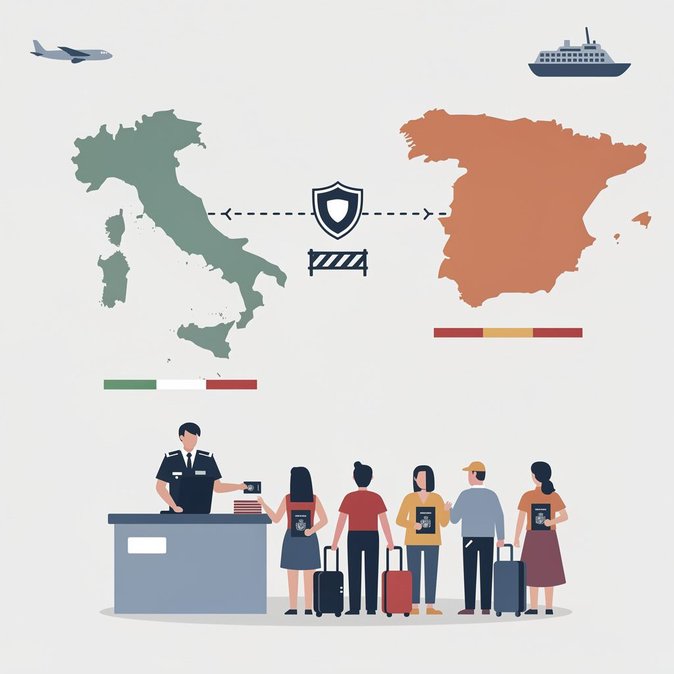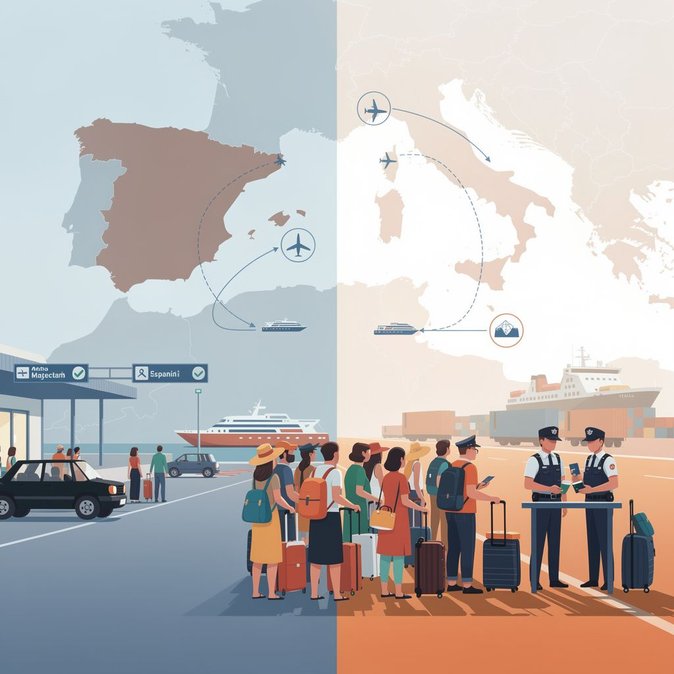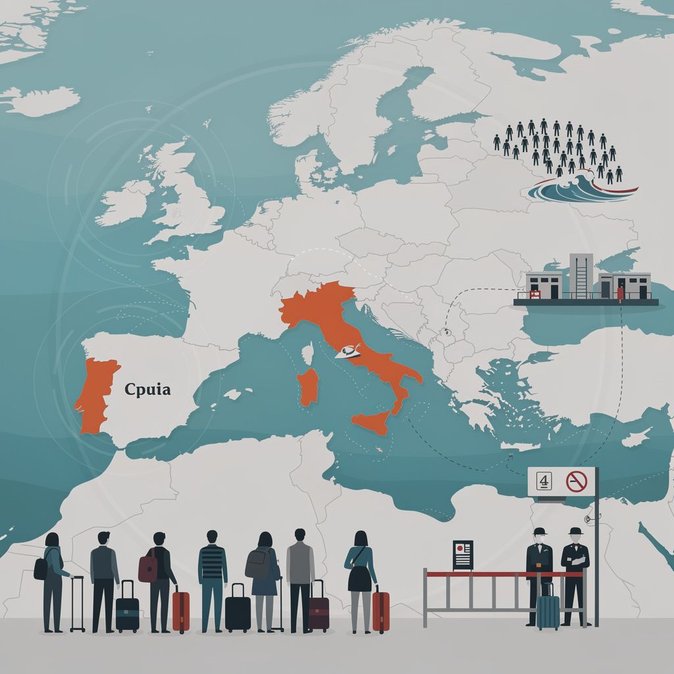
Italian Prime Minister Giorgia Meloni has doubled-down on her hard-line migration agenda in the wake of last week’s mass crossing into the Spanish enclave of Ceuta. Speaking to reporters in Rome on Monday, 3 August 2026, the premier confirmed that she will ask her EU counterparts to back a network of offshore migrant processing centres—modelled on Italy’s controversial deal with Albania—when interior ministers hold an extraordinary videoconference on Tuesday. Meloni’s move comes after Italy temporarily suspended the Schengen free-travel rules for passengers arriving from Spain and reinstated passport controls at ports and airports at midnight on Sunday. Government sources insist the measure is “targeted and proportionate”, but critics in Madrid and Brussels accuse Rome of exploiting the Ceuta tragedy for domestic political gain. In Ceuta, Spanish authorities say between 50,000 and 60,000 people tried to force the border in two days; at least 67 died. While Ceuta is outside Schengen, Rome argues that onward secondary movements could reach mainland Spain and then Italy, threatening its security. Behind the scenes, Italy is lobbying like-minded states—including Austria, Greece and several Nordic and Baltic members—to endorse its plan for EU-funded “repatriation and screening hubs” in North Africa and the Western Balkans. Diplomats say the idea revives elements of the rejected 2023 “regional disembarkation platforms” and is certain to face legal challenges over asylum rights. Spain, France and Germany are expected to oppose the proposal, calling instead for reinforced Frontex operations and development aid to Morocco. For Italian businesses, the abrupt border checks have immediate consequences: airlines were given just 36 hours to transmit passenger manifests for pre-departure vetting; ferry operators in Civitavecchia and Genoa report delays of up to 90 minutes while Guardia di Finanza officers inspect documents. Tourism associations warn that, if the suspension drags on beyond the initial 30-day window, August holiday traffic could suffer losses topping €120 million. Multinationals moving staff between Iberian and Italian hubs are already scrambling to update travel-risk policies and advise assignees to allow extra time at borders. More broadly, Meloni’s confrontational stance underscores a widening north-south rift over how to manage irregular migration just months before the EU’s new Pact on Migration and Asylum is due to enter force. If Italy succeeds in anchoring off-shore processing in tomorrow’s conclusions, it could mark a major shift in European mobility standards—one that corporate mobility managers will need to monitor closely.
Source: Le Monde (English edition)