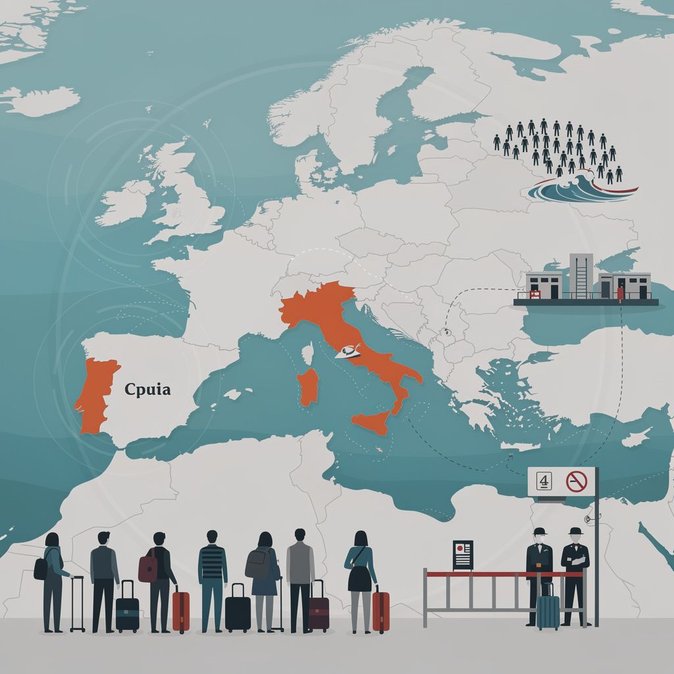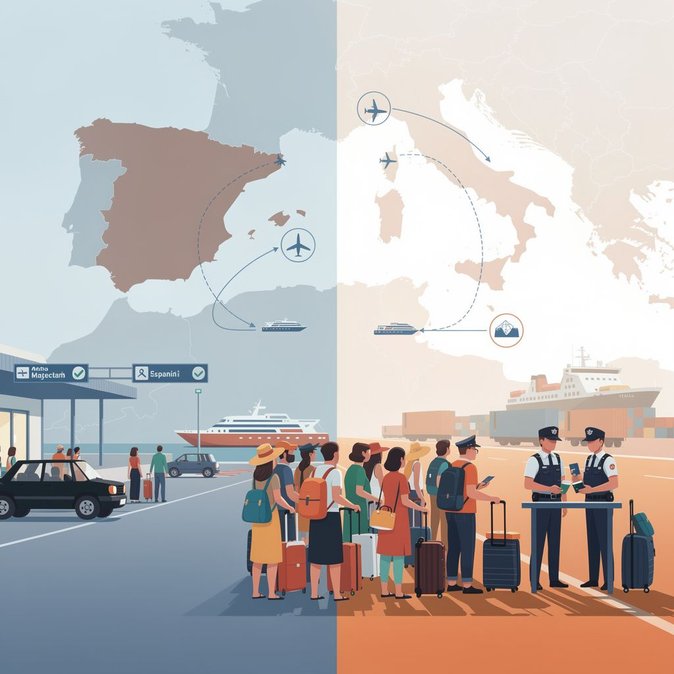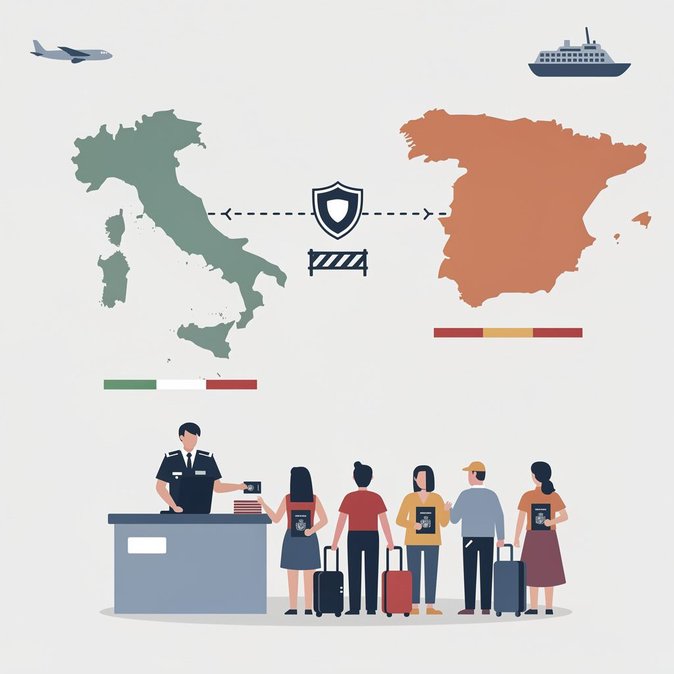
From the first flights that touched down in Rome and Milan in the early hours of 3 August, passengers arriving from Spanish airports were met by armed border-police officers, passport booths hastily re-opened after years of disuse and snaking queues that spilled into the gate areas. Shortly after midnight, a decree signed by Interior-Minister Matteo Piantedosi officially re-introduced Schengen-area border checks on all air and sea connections from Spain for an initial 30-day period. The measure, Rome argues, is needed to avoid a potential spill-over of the mass irregular migration that overwhelmed the Spanish enclave of Ceuta last week and left 67 people dead in a tragic rush at the frontier fence. Practically, the suspension transforms what were routine intra-Schengen flights and ferry crossings into ‘international’ services: airlines must now transmit advance passenger information, carriers have been told to allocate non-Schengen gates, and ferry operators are reserving extra time for embarkation checks. Business-travel consultants warn that transit itineraries routed via Madrid or Barcelona could now require up to two additional hours and that road-hauliers using “motor-way of the sea” ro-ro links between Valencia and Northern Italy will have to factor in police inspections of drivers and crews. Trade-body Assaeroporti estimates the policy affects nearly 340 daily flights in the peak-summer schedule. The decision has triggered a sharp diplomatic row. Speaking to Spanish television on Monday morning, Foreign-Minister José Manuel Albares blasted Italy for a move he said was "politically motivated and contrary to the spirit of Schengen", urging EU partners to show solidarity with Spain instead of "point-scoring". His Italian counterpart, Antonio Tajani, replied on X that the step was “absolutely in line with Articles 25-30 of the Schengen Borders Code” and already backed by 21 other Member States. Interior ministers are expected to debate the issue at an extraordinary Justice and Home Affairs Council convened for 4 August in Brussels. For companies, the immediate impact centres on mobility planning and duty-of-care. Multinationals with Iberian operations are advising staff to carry hard-copy proof of accommodation and return tickets, as secondary screening is more likely. Italian ports operator F2i Ports has activated contingency berths at Genoa and Civitavecchia to separate Spain-origin traffic from other EU flows, and the SILP-CGIL police union has warned of staff shortages that could “paralyse airport operations” if reinforcements are not deployed quickly. Longer-term, experts fear the episode may normalise the re-introduction of internal borders in response to migration spikes, eroding one of the core freedoms on which EU business supply chains depend. “If Schengen becomes an on-off switch every time there is a political crisis, the cost for logistics and tourism will be enormous,” notes Professor Paola Del Monte of Bocconi University. Companies are therefore urged to monitor the Council meeting, review crew-rotation plans and brief travellers on possible delays and documentation checks when entering Italy from Spain.
Source: El País