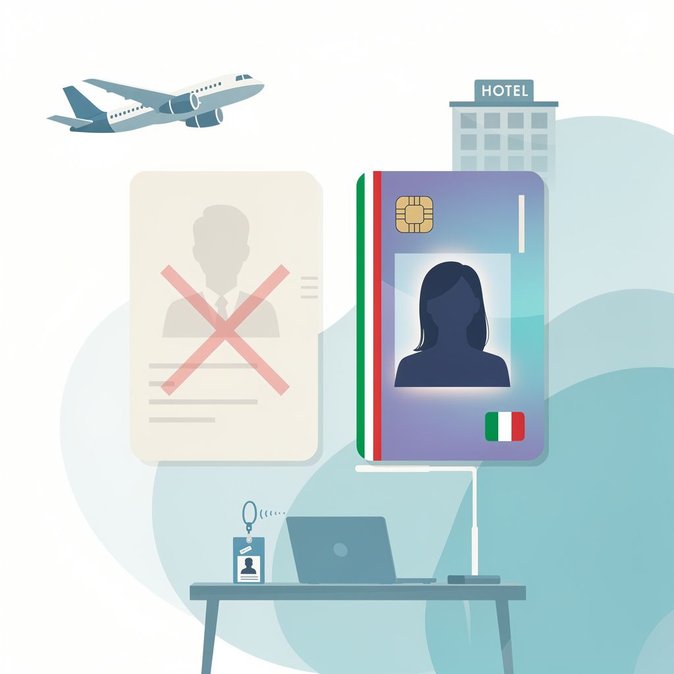
A quiet but far-reaching change takes effect across Italy this Monday: from 3 August 2026 the traditional paper identity card (carta d’identità cartacea) ceases to be a valid travel or identification document, in line with EU Regulation 2019/1157 on enhancing document security. Any card lacking a machine-readable zone must now be replaced by the micro-chipped Carta d’Identità Elettronica (CIE) before its holder can board a flight, check into a hotel abroad or even access many on-line public-administration portals. The deadline has been visible on government circulars for years, yet many citizens—and some employers—have left renewal to the last moment. According to the Interior Ministry’s demographic services directorate, about 2.8 million paper cards were still in circulation as of 1 July. Municipalities report a surge in last-minute bookings: Milan’s registry office processed 9,400 CIE appointments last week alone, triple the normal summer volume, while Rome opened Saturday pop-up counters at Termini station to cater for travellers who discovered the rule only when trying to board trains to Fiumicino. For global-mobility managers the implications are immediate. Airlines are briefing gate agents that, as of today, passengers using intra-Schengen flights must show a CIE or a biometric passport; legacy paper IDs will be refused, potentially stranding staff whose business trips begin with a domestic leg to hubs such as Frankfurt or Paris. Cruise operator MSC, in a March update to travel agents, likewise reminded that paper EU cards will not be accepted at embarkation after 3 August 2026. HR departments are therefore auditing employee travel documents and updating relocation check-lists to ensure dependants and domestic helpers obtain the new card well in advance of assignment start-dates. The switch is also pivotal for digital government. The CIE doubles as a strong e-ID credential via NFC smartphones; from mid-September, the INPS social-security portal and the Agenzia delle Entrate tax site will drop support for user names linked to paper IDs. “The real gain for companies is simpler onboarding of foreign hires,” explains Giulia Sacchi, immigration lead at consultancy PeopleMove. “With a CIE they can activate SPID level-3 credentials and sign contracts remotely within minutes instead of weeks.” Residents abroad are not exempt. Consulates have been issuing the electronic card since 2022 but many AIRE-registered Italians still travel on paper documents. The foreign ministry has warned that border guards outside the EU—accustomed to reading machine-readable zones—may refuse entry or stamp passports incorrectly if travellers present an expired format. Italians planning autumn business trips are therefore urged to verify their documents now; queues are expected to ease after the summer peak, but express appointments carry a €22 surcharge that employers may need to reimburse. In the medium term the reform will dovetail with the Schengen Entry/Exit System and ETIAS, both of which rely on biometric data captured in the CIE. While the plastic card may feel less romantic than its green paper predecessor, it is fast becoming the essential key to cross-border work and life in the digital EU.