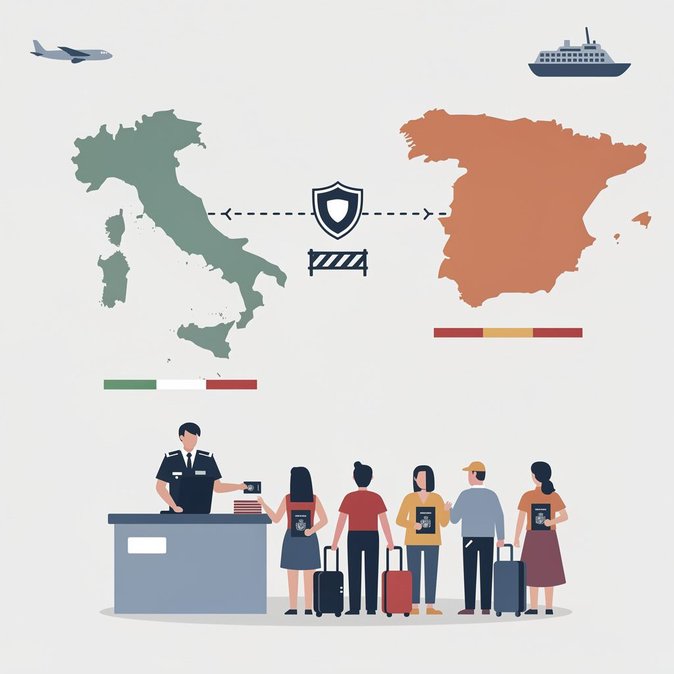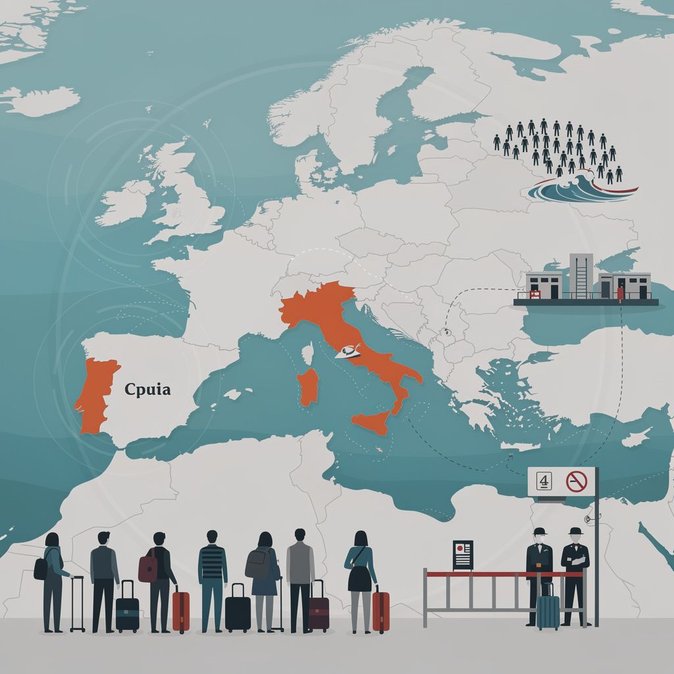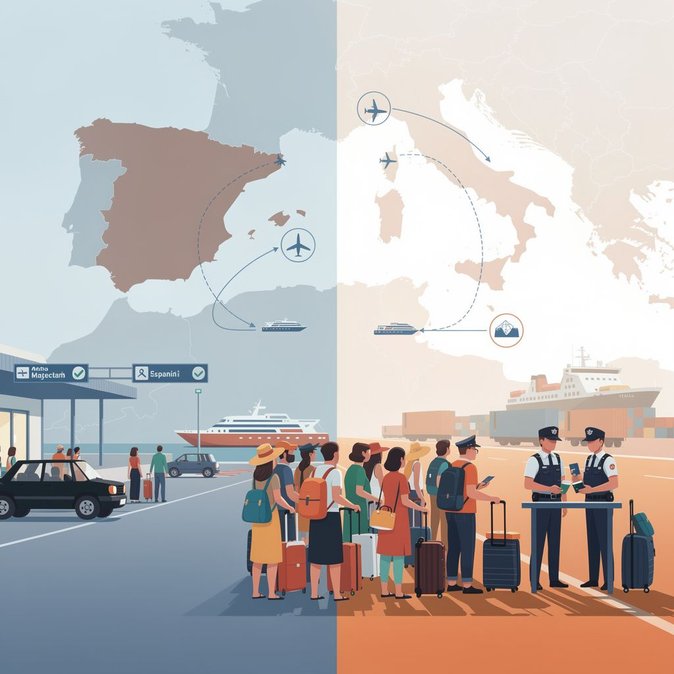
Just three days after Prime Minister Giorgia Meloni announced the month-long suspension of the Schengen free-movement rules for travellers arriving from Spain, the practical fallout is beginning to bite. Late on Monday, August 3, the first full business day since the measure took effect, passengers landing at Rome-Fiumicino, Milan-Malpensa and a dozen smaller gateways found themselves funneled into improvised document-check areas normally used only for long-haul arrivals from outside Europe. While EU nationals can still use e-gates, all third-country travellers coming off Spanish flights—including large contingents of Latin-American cruise-ship crews and North-African seasonal workers—must now undergo police verification before reclaiming luggage. Average processing times reported by airport operator Aeroporti di Roma have more than quadrupled, from 3-4 minutes per passenger to over 15. Background: Rome’s decision is a direct response to the mass crossing of some 60,000 Moroccan migrants into the Spanish enclave of Ceuta on July 29-30. Although Spanish authorities have already repatriated most of the group, Meloni argues that Madrid’s “loss of operational control” justifies temporary internal border checks under Article 25 of the Schengen Borders Code. Critics counter that Ceuta lies outside the Schengen Area and that Italy has no shared border with Spain, making the suspension largely symbolic—and deeply disruptive at the height of the summer travel peak. The police-trade-union backlash: On Sunday, the Silp CGIL union blasted the plan as “folly in August”, warning that chronically understaffed frontier units are being redeployed from land borders with Slovenia and Austria just as tourist flows hit their annual zenith. In an open letter to Interior Minister Matteo Piantedosi, the union demanded emergency reinforcements and warned that unchecked overtime could trigger wildcat strikes. Similar concerns have been echoed by ground-handling companies that fear knock-on delays for aircraft turn-around times and missed flight-connections for business travellers. Business impact: The extra checks particularly affect multinational firms shuttling Latin-American executives between Madrid hub connections and their Italian subsidiaries. One Milan-based pharmaceutical company told Open Online it had already instructed staff to route through Paris or Frankfurt until the situation stabilises, adding an estimated €400 per round trip. Freight forwarders moving just-in-time spare parts between Zaragoza’s logistics hub and northern Italy also report longer door-to-door times because truck drivers arriving by ferry at Genoa must now clear passport control. What happens next: The European Commission has reminded Rome that internal controls must remain “proportionate and time-limited”, but Brussels is unlikely to intervene formally unless the checks are extended beyond the initial 30 days. If queues worsen, the government may be forced to narrow the scope of inspections— for example, limiting them to high-risk flights— or risk both industrial action and a public-relations backlash from stranded tourists. Corporate travel managers should monitor airport advisories and consider rerouting itineraries or adding generous buffer times for connections inside Italy for the rest of August.
Source: The Atlantic / Open Online